





Walk
Cornouaille’s Capital in All Its Glory
Quimper, France
Walk
Cornouaille’s Capital in All Its Glory
Quimper, France
2.5 km
Distance
1h00
Durée
24
Audios
Loop
Parcours
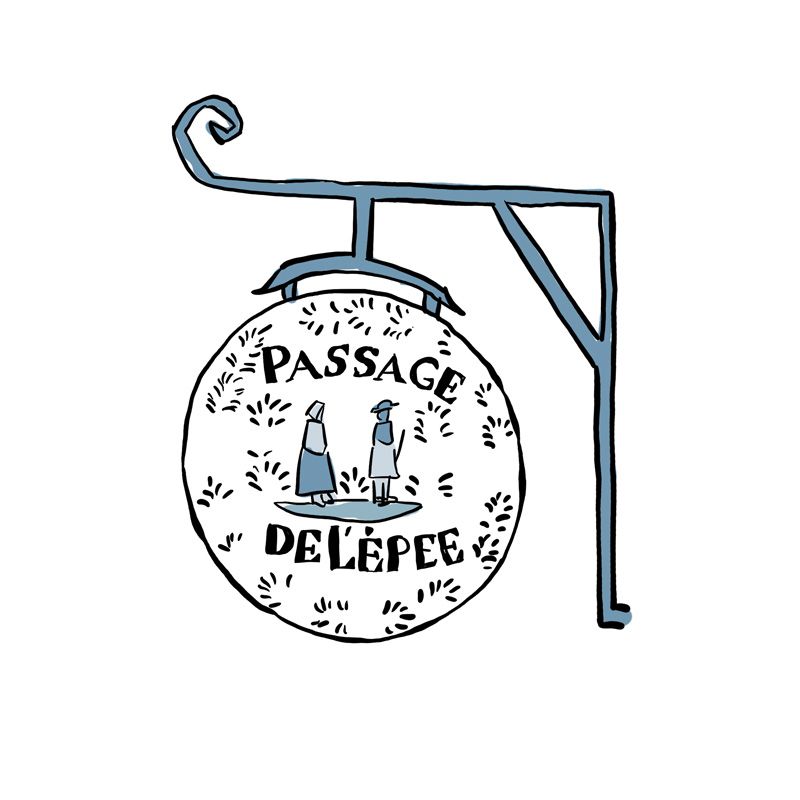
The Quimper audio-guided tour lets you discover the passage de l'Épée, on the Rue du Parc, linked to the history of the oldest establishment of the city.
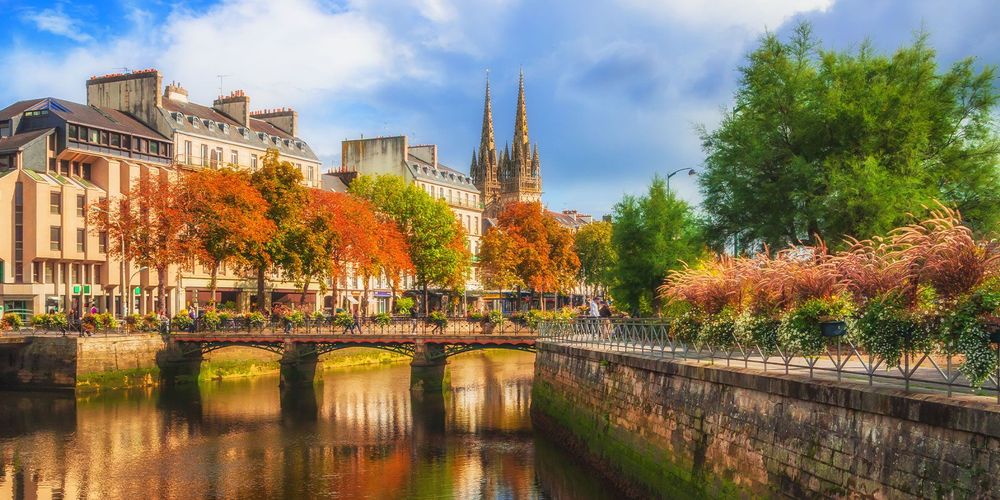
At the Belle Époque, the Odet was the preserve of aristocratic families, who established their manor houses on its banks. The Rue du Parc, where you are, displayed this trend, with its row of chestnut trees where the bourgeoisie strolled. At mealtime, industrialists, writers and wealthy politicians gathered at the oldest establishment of Quimper, the Café de l'Épée, which still operates at number 14 of the Rue du Parc, in a decor painted by Jean-Julien Lemordant on the theme of Brittany. Before sitting down there, the customers parked their carriage in the nearby passage de l'Épée, which thus owes its name to this famous café.
The passage de l'Épée and the Rue du Parc evoke the Quimper Belle Époque, when the bourgeoisie strolled under the chestnut trees and gathered at the Café de l'Épée. The latter, still in activity, preserves its decor painted on the theme of Brittany. It is a picturesque stage, laden with the refined atmosphere of the past, at the edge of the Odet.
The passage de l'Épée is on the Rue du Parc, along the Odet, in the centre of Quimper. It can be walked freely on foot at all hours; the Café de l'Épée, nearby, follows its own hours.
From the nearby Café de l'Épée, the oldest establishment of Quimper, where the customers once parked their carriage in this passage.
It is the oldest establishment of Quimper, still in activity, with a decor painted by Jean-Julien Lemordant on the theme of Brittany.
Aucun avis pour le moment
