





Walk
From the Concorde square to the Eiffel Tower
Paris, France
Walk
From the Concorde square to the Eiffel Tower
Paris, France
8.9 km
Distance
3h40
Durée
19
Audios
Loop
Parcours
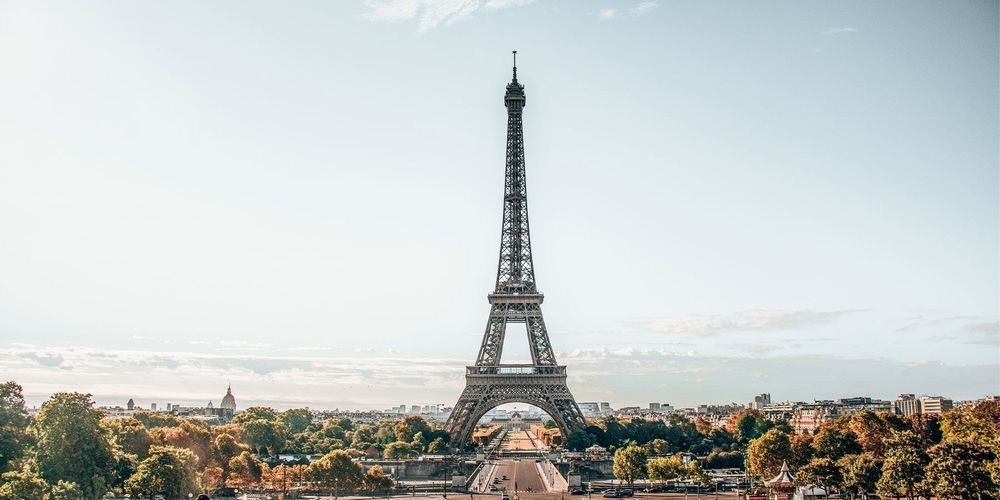
The Paris audio-guided tour offers you, facing the Pont d'Iéna, one of the finest perspectives of the Eiffel Tower, where the Seine links the hill of Chaillot to the Champ-de-Mars.
The Pont d'Iéna was willed by Napoleon I to extend the axis of the Military School and reach the hill of Chaillot. The emperor named it after his 1806 victory over Prussia, at Jena. Begun in 1808 and completed in 1814, the bridge was nearly destroyed the following year by the Prussian troops occupying Paris: it took the intervention of Tsar Alexander in person to save it. The imperial eagles were removed for a time, restored under Louis-Philippe. Since 1853, four statues of horsemen, Gaulish, Roman, Arab and Greek, frame the bridge, widened several times for the Universal Exhibitions. It is today listed as a historic monument.
From the Pont d'Iéna, the Eiffel Tower reveals itself in all its height, reflected by the Seine and framed by the gardens. The statues of horsemen and the perspective towards the Champ-de-Mars complete this emblematic picture of Paris. It is a privileged viewpoint to photograph the Iron Lady and grasp the harmony of this monumental axis.
The Pont d'Iéna spans the Seine between the Trocadéro esplanade and the Champ-de-Mars, at the foot of the Eiffel Tower, in the 7th and 16th arrondissements of Paris. It can be walked freely on foot at all hours and offers viewpoints accessible on the level.
In memory of Napoleon I's victory over Prussia at Jena, in 1806; the emperor himself chose this name.
Thanks to the intervention of Tsar Alexander, who opposed in 1815 the Prussian troops' plan to blow it up.
Aucun avis pour le moment
