





Walk
The Rome of Franconia
Bamberg, Germany
Walk
The Rome of Franconia
Bamberg, Germany
4 km
Distance
1h40
Durée
21
Audios
Loop
Parcours
Shutterstock
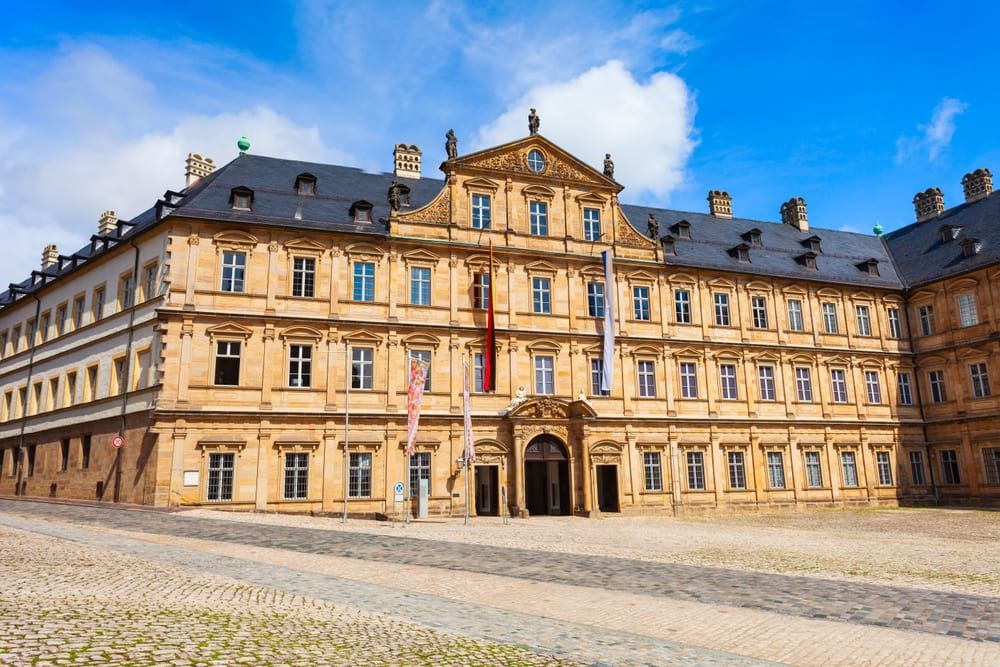
The New Residence is the great baroque palace of the prince-bishops of Bamberg. The Bamberg audio-guided tour stops here to evoke this sumptuous building, its state apartments and its famous rose garden overlooking the town.
German, Franconian, baroque, cultural, medieval and brewing, Bamberg is a fine blend of all this. The New Residence is one of its jewels. This vast baroque palace, built in the seventeenth and eighteenth centuries, was the residence of the prince-bishops who long governed the town and its territory. It is organised around several wings and shelters sumptuous state apartments, including the Emperor's Hall adorned with frescoes, as well as a rich collection of paintings. Dominating the cathedral square, on the episcopal hill, the New Residence testifies to the power and the splendour of the Church in Bamberg. It is a major monument of the town.
You admire the vast baroque palace of the prince-bishops, its sumptuous state apartments including the Emperor's Hall adorned with frescoes, its collection of paintings and its rose garden, dominating the cathedral square. The New Residence testifies to the episcopal splendour of Bamberg. It is a major stop, to be explored on foot.
The New Residence lies on the cathedral square, on the episcopal hill of Bamberg, reachable on foot. The visit of the apartments follows its own hours and conditions, which vary with the season; the rose garden is generally accessible. It is best to check the arrangements before coming.
The vast baroque palace, built in the seventeenth and eighteenth centuries, which was the residence of the prince-bishops governing the town; it shelters sumptuous state apartments, a collection of paintings and a famous rose garden.
On the cathedral square, on the episcopal hill of Bamberg, in Germany.
Aucun avis pour le moment
