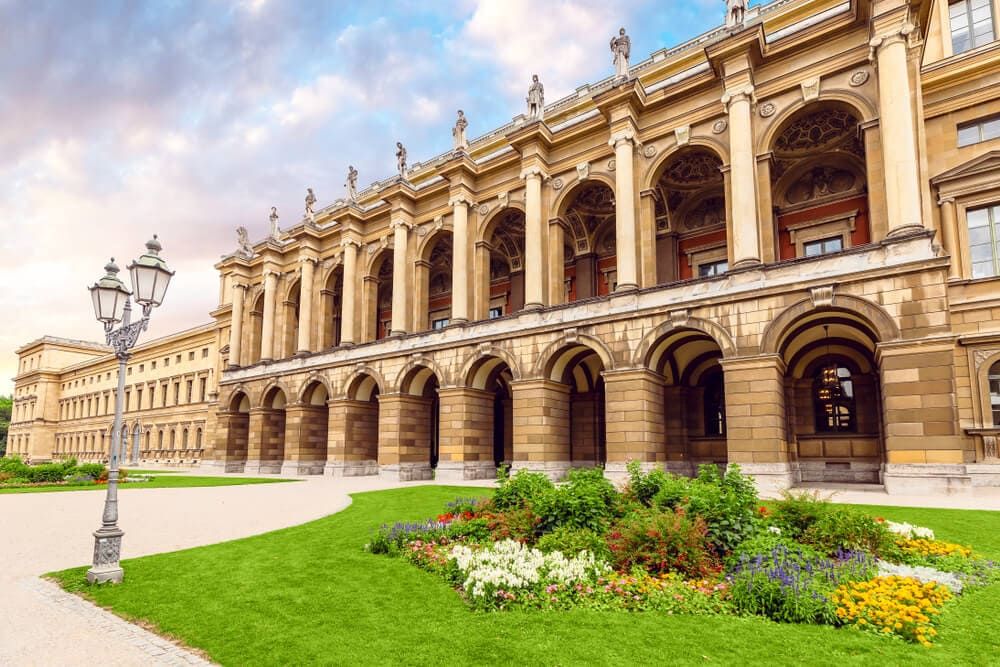
The Residenz
Shutterstock
Before you stands Munich’s most emblematic monument: the Residenz, the largest city palace in Germany. As its name suggests, this was the residence of dukes, princes, and kings of the Wittelsbach family, who ruled Bavaria until 1918. Located in the heart of the city, the palace presents a fascinating mix of architectural styles, shaped by centuries of expansion and transformation. Construction began in the 14th century, although it was much smaller back then. The palace began to take on its current form in 1623, under Maximilian I. It continued to expand with each successive Bavarian ruler, which is why you'll find Renaissance, Baroque, Rococo, and Neoclassical elements all in one place. The façade facing Max-Joseph Square was added during the reign of King Ludwig I, who wanted to expand the palace. Architect Leo von Klenze designed this new wing in Renaissance style, drawing inspiration from the Pitti Palace in Florence, Italy. The Wittelsbach dynasty ultimately fell at the end of World War I in 1918. The palace was almost entirely destroyed during the Second World War. Its reconstruction took many years, with the goal of restoring the building to its former grandeur, which was largely achieved. Today, the Residenz has more than 130 rooms, all furnished and decorated with works by the finest artists of the time. It also boasts 10 beautiful inner courtyards, making it one of the must-see landmarks of Munich. As if that weren’t enough, to the right of this historic palace stands the majestic National Theatre, home to the Bavarian State Opera. Built in the 19th century, it was modelled after Paris’s Odéon Theatre. This is where locals come to enjoy Munich’s greatest theatre, opera, and ballet performances.






Vos commentaires, idées et suggestions
Aucun avis pour le moment
