



Walk
A Maze of Pirates and Heroines
Mykonos, Grèce
Walk
A Maze of Pirates and Heroines
Mykonos, Grèce
Distance
2 kmDurée
1h00Audios
19Parcours
Loop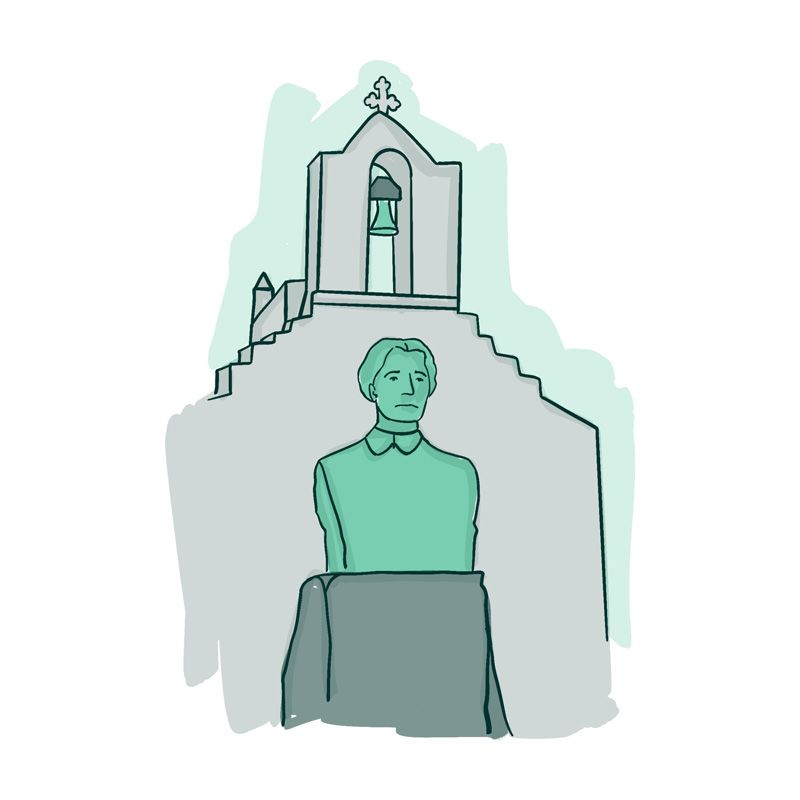
Mykonos was home to one of the most powerful, groundbreaking, and politically outspoken voices in 20th-century Greek literature: Melpo Axioti. Born in 1905 into a prominent Mykonian family, she was the daughter of the celebrated musician and composer Georgios Axiotis. She spent her childhood on the island before continuing her education with the Ursuline nuns on neighboring Tinos. But her family roots and cultural identity remained deeply tied to the Cyclades throughout her life. And here, in the square where you're standing, a bust honors this remarkable woman. When Axioti moved to Athens to pursue her writing career, she quickly shook up the literary world. A leading figure of the famous Generation of the 1930s, she became one of the pioneers of Greek modernism. Her first major work, Difficult Nights, published in the late 1930s, is now widely regarded by critics as the first Greek surrealist novel. The award-winning book established her as a major literary voice, and her reputation soon spread beyond Greece with another important work, Twentieth Century, which was translated into several languages. But Axioti was far more than a writer who spent her days in literary circles. She was a passionate intellectual with strong political convictions. A committed leftist and communist, she played an active role in the resistance during the occupation of Greece. Sadly, those beliefs would come at a heavy price. In the aftermath of the Greek Civil War, she was forced into an eighteen-year exile that began in 1947. She lived first in France, then moved to East Berlin, where she taught modern Greek and literature at the prestigious Humboldt University. During her years abroad, her writing earned her the respect and friendship of some of Europe's greatest creative figures, including Louis Aragon, Paul Éluard, Pablo Neruda, and Pablo Picasso. In 1964, she was finally allowed to return to Greece, but the final chapter of her life was marked by poverty and obscurity. Having chosen to give up her fortune rather than compromise her political ideals, this brilliant woman spent her last years in extremely difficult circumstances, staying in hotels or relying on friends for a place to live. When she died in a nursing home in 1973, she had almost been forgotten. So as you wander through the streets of Mykonos, remember that these same alleyways were once the childhood home of a fiercely independent woman, a courageous and uncompromising artist who traded her aristocratic inheritance for writing, poetry, and freedom.
Aucun avis pour le moment
