






Walk
Visiting the Queen of the Danube
Budapest, Hungary
Walk
Visiting the Queen of the Danube
Budapest, Hungary
8.5 km
Distance
3h30
Durée
24
Audios
Loop
Parcours
Shutterstock
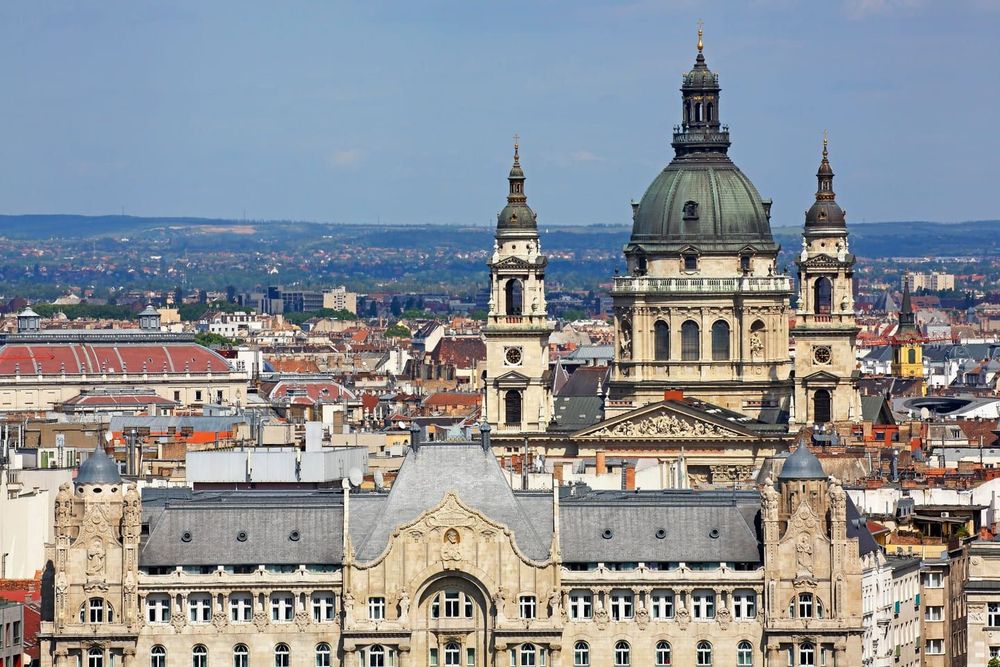
Pest is the flat and lively side of Budapest, on the east bank of the Danube, the beating heart of the Hungarian capital. The Budapest audio-guided tour stops here to evoke this former commercial and bourgeois city, that merged in 1873 with Buda and Óbuda to form Budapest, and where today the Parliament, the Opera, the great avenues, the historic cafés and the famous ruin bars are concentrated.
In Budapest, it is the Danube that traces the border between the different facets of the city, a separation at once geographical and social. It has always been so, or almost. Until the nineteenth century, the city did not yet exist as such: it was divided into three quite distinct entities, Buda, the aristocratic and political hill, Pest, the commercial and bourgeois plain, and Óbuda, even older, with provincial charm and Roman roots. It is in 1873 that these three agglomerations merged to give birth to the modern Hungarian capital, Budapest. And it is precisely Pest that you explore. Pest is the flat and lively side of the city, all eras combined. Formerly, it hosted both a flourishing bourgeoisie and the working classes. Even today, it is here that the heart of the capital beats: you find there the Parliament, the State Opera, the great commercial avenues like Andrássy, the historic cafés, the museums, the theatres, the famous ruin bars and innumerable gourmet addresses. Gridded with wide boulevards and elegant squares, lively by day as by night, Pest concentrates the essence of the urban, cultural and night life of Budapest. It is the district of effervescence and modernity, that contrasts with the historic quietness of Buda, on the other bank. A lively district and a heart of the city, the district of Pest is a fine stop of the discovery of Budapest.
Here you discover the flat and lively side of Budapest, on the east bank of the Danube, a former commercial and bourgeois city that merged in 1873 with Buda and Óbuda; the beating heart of the capital, it concentrates the Parliament, the Opera, the great avenues like Andrássy, the historic cafés, the museums and the famous ruin bars. The district of Pest is the living centre of Budapest. It is a fine stop, to be explored on foot.
The district of Pest occupies the east bank of the Danube, in the heart of Budapest, reachable on foot, by metro or by tram. It is a district freely accessible, lively by day as by night, where monuments, commercial avenues, cafés and ruin bars are concentrated. You discover it during a stroll in the centre.
The Danube separates the two: Buda, on the west bank, is the aristocratic and historic hill, with its palaces and its castle; Pest, on the east bank, is the commercial and bourgeois plain, lively and modern, where the Parliament, the Opera and the great avenues beat. With Óbuda, older, they merged in 1873 to form Budapest.
On the east bank of the Danube, in the heart of Budapest, in Hungary.
Aucun avis pour le moment
