






Walk
From Celtic charm to dynamic streets
Dublin, Ireland
Walk
From Celtic charm to dynamic streets
Dublin, Ireland
8 km
Distance
3h45
Durée
29
Audios
Loop
Parcours
Shutterstock
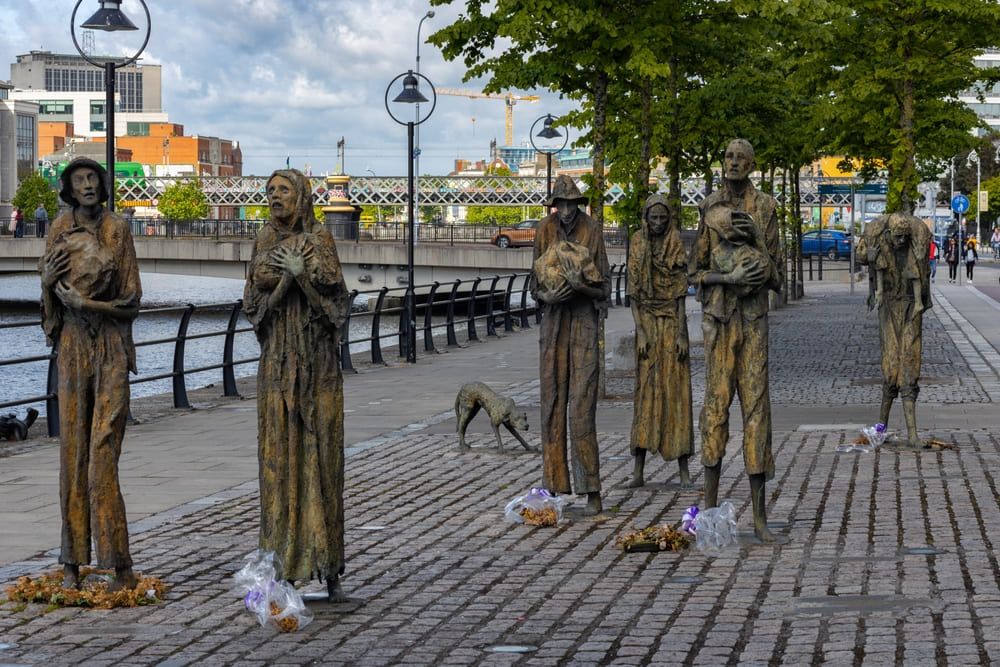
The Dublin audio-guided tour leads you, along the Liffey, before the Famine Memorial, approached with gravity and quiet respect. Discreet but deeply rooted in the memory of Dubliners, this monument pays tribute to the victims of the Great Famine of 1845 to 1849.
Between 1845 and 1849, the Irish people suffered terrible and deadly misery. The potato blight destroyed the country's main source of food, while the Irish depended on land rented from English landlords. The famine caused the death of a great many people and drove hundreds of thousands of Irish into exile. It is one of the most painful episodes in the history of Ireland.
The memorial consists of bronze statues representing emaciated men, women and a child, carrying meagre belongings, walking towards the emigration ships. These striking silhouettes, set on the quays, powerfully evoke distress and departure. They are contemplated with respect, in memory of the victims and exiles of the Great Famine.
The Famine Memorial is on Custom House Quay, along the Liffey, in the Docks district of Dublin. It can be discovered freely at all hours and on the level, with the respect owed to this place of memory. It is near the EPIC Museum and the Jeanie Johnston ship.
It pays tribute to the victims of the Great Irish Famine of 1845 to 1849, caused by the potato blight, which killed many and drove many Irish into exile.
They represent emaciated men, women and a child, walking with meagre belongings towards the emigration ships, evoking the distress of the Great Famine.
Aucun avis pour le moment
