





Walk
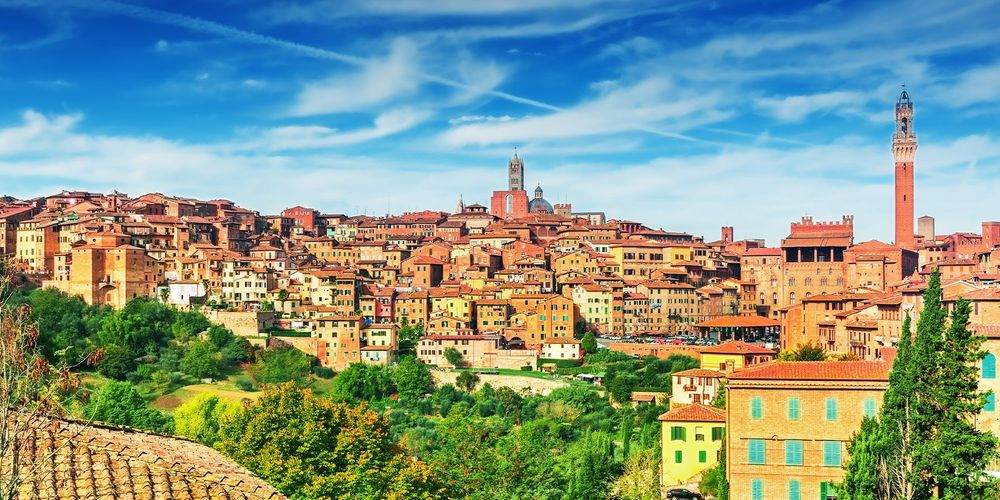
Timeless Medieval Beauty
Siena, Italy
Walk
Timeless Medieval Beauty
Siena, Italy
3 km
Distance
1h30
Durée
21
Audios
Loop
Parcours

Let’s pause for a moment to mention a few other highlights that didn’t fit into this walking route but are well worth your time. Beyond Piazza del Campo and the cathedral, Siena overflows with places to explore. History lovers can walk along the medieval walls, built between the 12th and 14th centuries, much of which still encircle the city.
Monumental gates like Porta Romana and Porta Camollia mark the old entrances to town. Another pleasant spot for a stroll is the Medici Fortress, built in the 16th century and now transformed into a large green space. Its ramparts offer sweeping views of Siena and the Tuscan hills, and the site often hosts cultural events.
Just a few kilometers away, Monteriggioni is a tiny medieval village perfectly enclosed by circular walls, a place that feels like stepping back in time. About forty-five minutes’ drive brings you to San Gimignano, famous for its tall medieval towers that earned it the nickname “the Manhattan of the Middle Ages.” If it’s countryside you’re after, the Chianti hills between Siena and Florence combine landscapes and gastronomy, with villages like Castellina, Radda, or Gaiole where you can taste world-renowned wines and visit castles. South of Siena, the village of Montalcino looks out over the Val d’Orcia and is known worldwide for Brunello, one of Italy’s greatest wines.
In the same UNESCO-listed valley, the small town of Pienza, designed by Pope Pius II as an ideal Renaissance city, offers a perfect harmony of architecture and landscape. All around, the Crete Senesi and the Val d’Orcia reveal some of Tuscany’s most iconic views: rolling hills, cypress-lined roads, and stunning hilltop villages. These excursions around Siena give you a chance to experience every side of Tuscany: its medieval heritage, breathtaking landscapes, and unforgettable food and wine traditions.
Aucun avis pour le moment
