






Walk
See Naples and Die
Naples, Italy
Walk
See Naples and Die
Naples, Italy
3.8 km
Distance
1h30
Durée
19
Audios
Loop
Parcours
Shutterstock
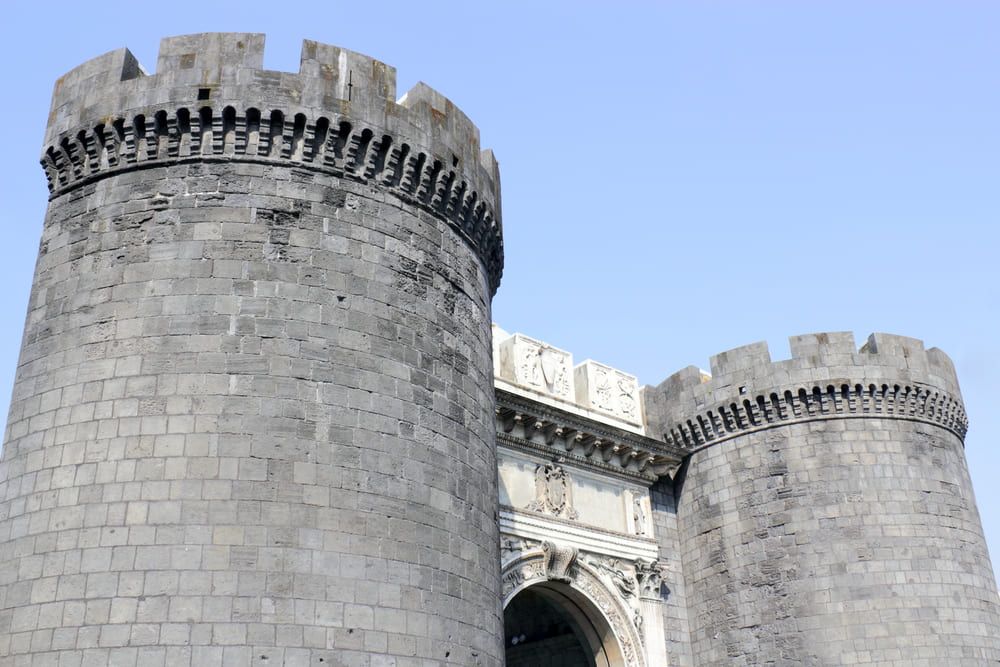
The Naples audio-guided tour leads you before Castel Capuano, one of the oldest castles in the city. It owes its name to the road that once led to Capua, and stands at the end of Via dei Tribunali, the ancient decumanus maximus.
The castle was built in 1154 by the Norman king William I, then restored several times. Via dei Tribunali, which leads to it, is one of the urban axes existing since Antiquity: the decumanus maximus. In Greek and then Roman times, the city was organised in a grid, with three great parallel decumani, crossed by perpendicular streets, the cardini. In the 16th century, the viceroy installed the city's courts at Castel Capuano, which it long housed.
Castel Capuano, massive and steeped in history, illustrates the evolution of Naples, from ancient city to capital of the kingdom. Nearby is the Porta Capuana, one of the city's fine Renaissance gates. The district, crossed by the decumanus maximus, lets you read in the street plan the grid inherited from the Greeks and Romans.
Castel Capuano is at the end of Via dei Tribunali, in the historic centre of Naples, near the Porta Capuana. Its facade can be seen freely from the outside. Interior access depends on the institutional use of the building and possible exhibitions; it is best to check locally.
From its position on the old road that led to the city of Capua; it was built in 1154 by the Norman king William I.
It is the main axis of the ancient plan of Naples, today Via dei Tribunali, inherited from the Greek and Roman grid.
Aucun avis pour le moment
