



Walk
The Vertical City
Matera, Italie
Walk
The Vertical City
Matera, Italie
Distance
3.7 kmDurée
1h30Audios
15Parcours
Loop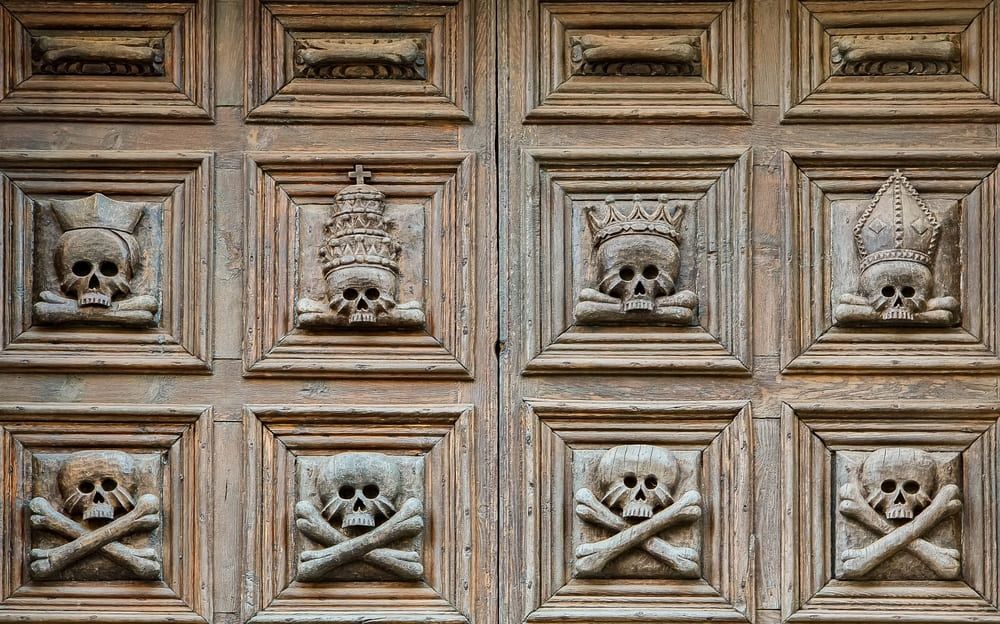
Shutterstock
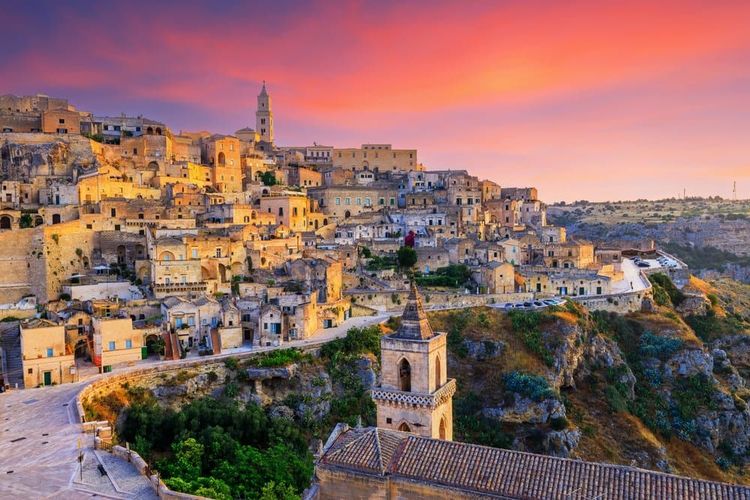
The Church of Purgatory certainly knows how to make an impression! Built in the 18th century with funding from the Confraternity of Purgatory, its elaborate Baroque facade elevates the concept of memento mori to dramatic new heights. In case your Latin is a bit rusty—and the carved skulls haven't already made it clear—memento mori translates to "remember that you will die." There is certainly no mistaking that message! As you approach the wooden door, you are greeted by a striking parade of sculpted skulls and skeletons. Take a closer look: high above, several skulls proudly wear bishops' miters and royal crowns, while those below remain completely bare. The message couldn't be clearer: rich or poor, noble or commoner, death comes for us all. In those times, purgatory was envisioned as a long waiting room—a place where souls underwent purification before reaching heaven, and where prayers from the living were deeply cherished. Religious brotherhoods even organized acts of solidarity that crossed into the afterlife, offering prayers, arranging Masses, and conducting charitable works to help ease the wait for departed souls. In its own unsettling yet profound way, this facade stood as a vivid reminder to passersby to prepare for their ultimate journey. Continuing a little farther down the street, you will come across another striking facade, home to the Domenico Ridola National Archaeological Museum. Founded by a physician with a deep passion for archaeology, the museum offers a fascinating journey through time. From Paleolithic flint tools and ancient Neolithic villages to the exquisite pottery of Magna Graecia, its collections reveal that our ancestors recognized a great advantage: the natural warmth and protection offered by the cliffs and caves of the gravina, Matera's dramatic ravine, available free of charge! It is no wonder Matera is recognized as one of the oldest continuously inhabited settlements on Earth. Archaeological evidence confirms a human presence extending back to the Paleolithic period, reflecting thousands of years of continuous life before the ancient Sassi districts were evacuated in the 1950s and later thoughtfully revitalized.
Aucun avis pour le moment
