




Créé par Camille, le 16 nov. 2026
Votre guide Ryo
Matera, Italy
The Vertical City
Parcours audioguidé pour visiter Matera en 1 jour
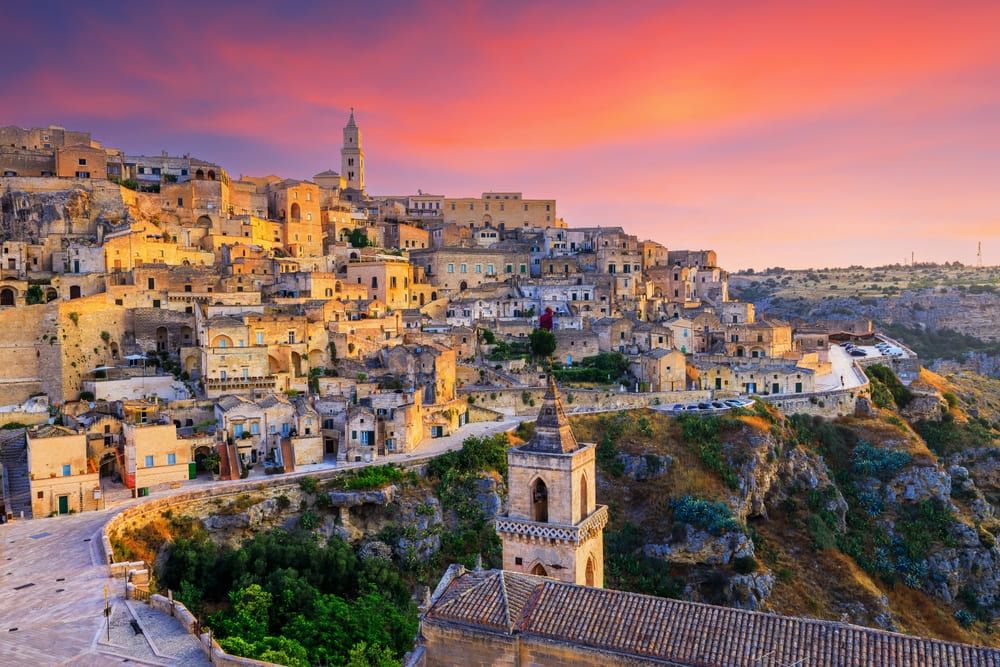
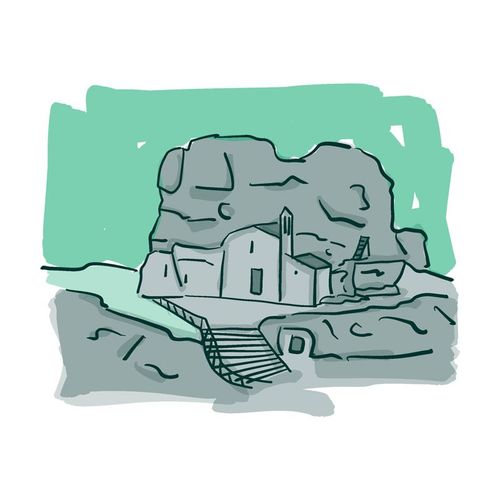
Matera is one of Italy’s most distinctive cities, famous for the Sassi, its ancient cave districts carved into the rock and listed as a UNESCO World Heritage Site. With its spectacular stone landscape of winding lanes, rock churches and stone houses, the city has an atmosphere that feels almost suspended in time.
Quand partir à Matera ?
Jan.
10°
6
Feb.
11°
7
March
15°
6
April
19°
6
May
24°
5
June
29°
3
July
33°
3
Aug.
33°
4
Sept.
27°
6
Oct.
22°
7
Nov.
16°
8
Dec.
12°
7
Matera has a Mediterranean climate with some continental influence. Summers are hot, dry, and very sunny, with temperatures regularly climbing above 30°C. Winters are cooler and wetter, and nights can sometimes be quite cold. Spring and autumn generally offer the most pleasant conditions for exploring the city.
Départ conseillé
Our tours are designed as loops, so you can easily start at whichever point is closest to you, and the directions will adjust automatically. If you’re nearby, we recommend the ideal place to begin: Piazza Vittorio Veneto.
Parking à proximité
Parcheggio Via Saragat, Via Giuseppe Saragat, 75100 Matera MT, Italy Parking Sant'Isidoro, Via Lanera, 16, 75100 Matera MT, Italy
To park without any risk of accidentally entering the ZTL, your best option is Parking Via Saragat. It’s a little farther from the centre, but it’s affordable, with a daily rate capped at around €5. Alternatively, you can use Parking Sant’Isidoro. It’s more expensive, but it’s better located and monitored.
À savoir
Bear in mind that you’ll need to pay to visit Matera’s churches. If you’re especially interested in the rock churches, go for the full €25 pass, which gives you access to several of them as well as other must-see sights. If you’re only going to choose one church, though, make it Matera Cathedral. Individual tickets are also available for one, two, or three rock churches, costing between €4 and €8, with reduced rates for certain visitors. Admission is free for children under 15 when accompanied by an adult.
Découvrez 15 lieux d'intérêt pour visiter Matera

What to see in Matera on your 1h30 tour?
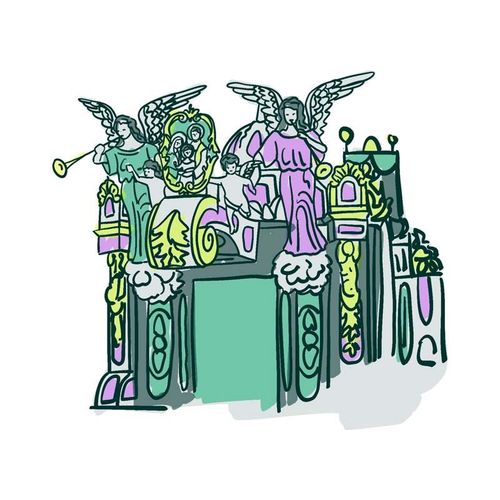
This 3.7 km loop takes about 1 hour 30 minutes and links 11 sights. It starts on the Piano, the modern plateau above the Sassi, passes Tramontano Castle and the Church of Purgatory, then drops from the Pascoli viewpoint into the ravine, past an old olive mill, a rock-hewn church and a cave house. It climbs back up to the cathedral crowning the Civita and ends near the Sant'Agostino monastery. With the Ryo app in your ears, every lane and every cave tells its own story.
Information checked in November 2026 and subject to change.
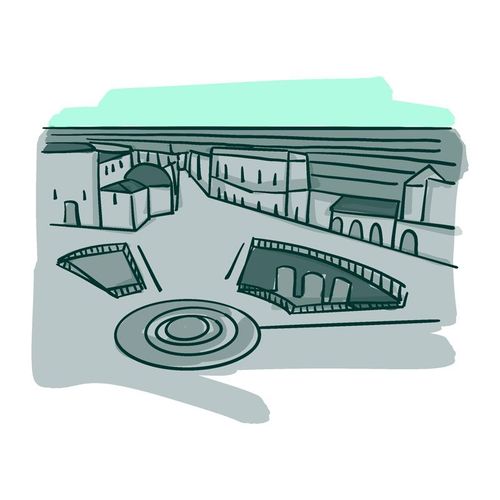
1 - Piazza Vittorio Veneto and the Palombaro Lungo
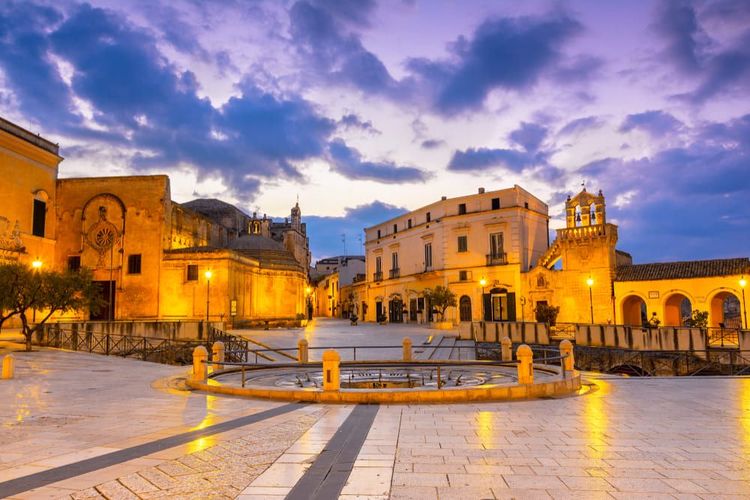
From this busy square on the Piano, one step forward leaps back in time: the belvedere beneath its three arches opens onto the Sassi, two ravines carved into soft limestone where a growing population chose to build upward rather than outward, stacking lanes on top of homes. Beneath the square, a vast underground cistern, sealed with lime and crushed tile, stored the region's scarce rainfall for residents, drawn through small openings from street level.
Free to see from outside
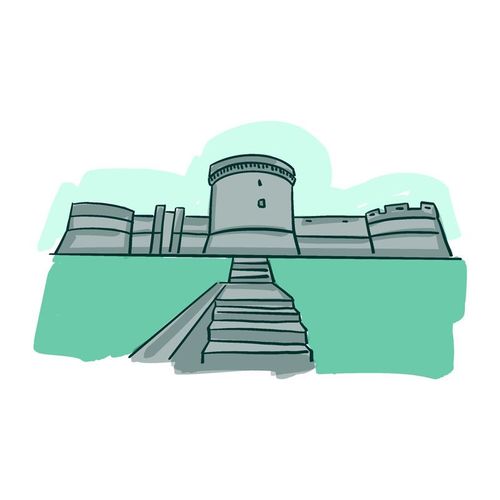
2 - Tramontano Castle
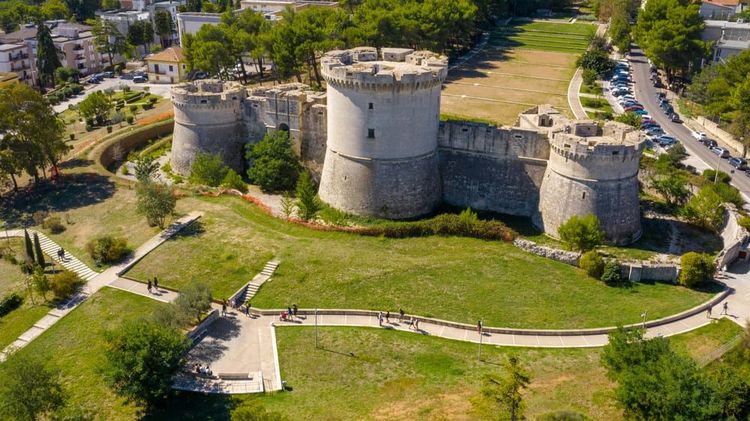
Perched on Lapillo Hill above the city, this Aragonese fortress was commissioned by Count Gian Carlo Tramontano, who took control of Matera in 1497, to display his power over subjects he distrusted. To pay for the works, he crushed the population with taxes, until one final demand proved too much: in late 1514, residents ambushed and killed him as he left Mass. Building stopped at once, leaving the castle unfinished to this day.
Free to see from outside
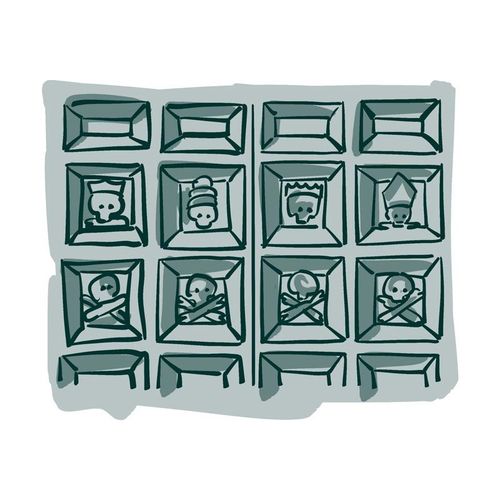
3 - Church of Purgatory
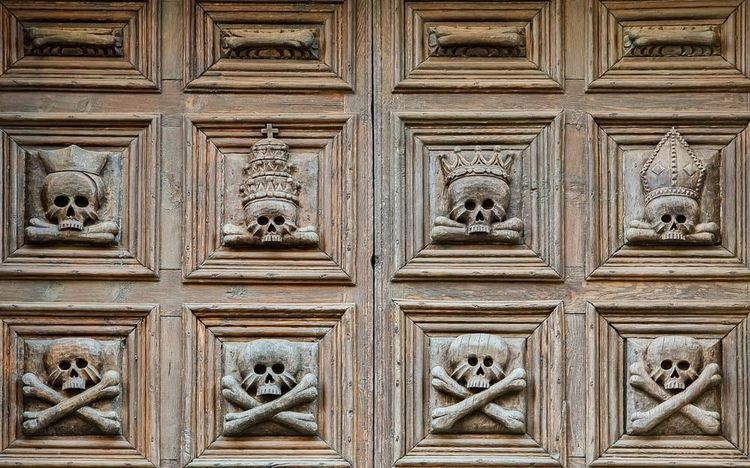
Its baroque facade, bristling with carved skulls and skeletons, spells out the memento mori theme plainly: remember that you will die. Up top, the skulls wear miters and crowns; lower down, they are bare, a reminder that death erases every rank. Built in the 18th century by a brotherhood, the church reflects an age when prayers were offered to shorten souls' time in purgatory. A little further down, the Domenico Ridola museum facade is worth a glance too.
Free entry
4 - Pascoli Viewpoint and Palazzo Lanfranchi
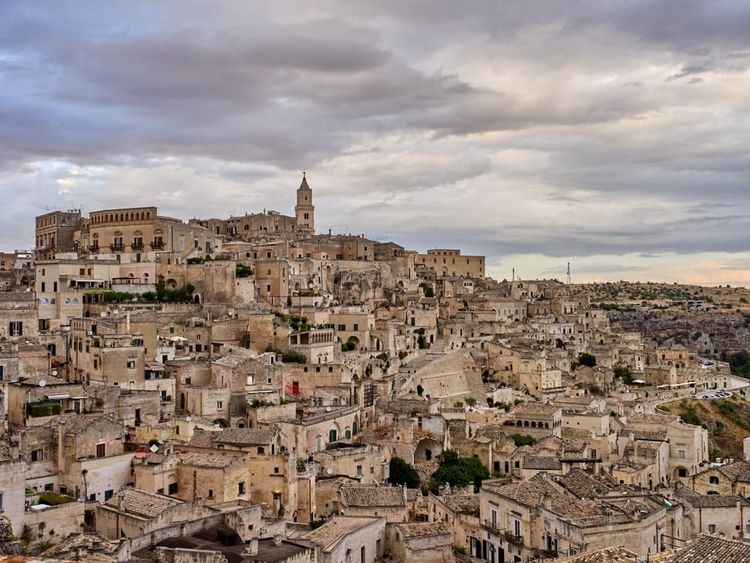
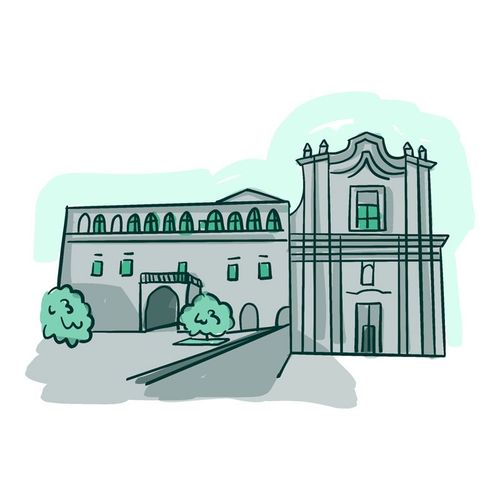
This balcony offers one of Matera's most striking panoramas, especially at sunset when the stone turns gold. Beside you stands Palazzo Lanfranchi, built in the late 17th century for a seminary, embodying the upper Piano of palaces, paved squares and power. Down in the ravine below, dwellings hollowed from the rock tell a far harsher story, with no running water, shared with livestock. The palace now houses a museum devoted to writer Carlo Levi, exiled to the region and author of a novel that later became famous.
Free to see from outside · Best late in the day
5 - MOOM – Olive Oil Museum

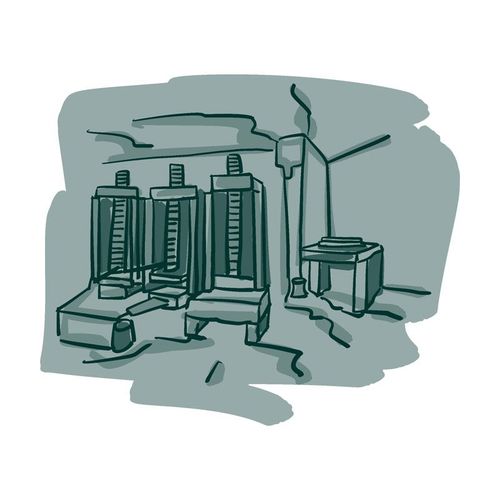
Tucked down this lane lies a former mill from the 16th and 17th centuries, hollowed into a genuine underground factory. Donkeys walked in the dark to turn huge stone wheels, crushing olives into a paste that was then squeezed under wooden weights. Rather than machinery, plain gravity separated the oil from the water, thanks to a sloping floor and cisterns carved into the rock: the heavier water settled below while the oil rose to the surface. Workers slept on site, in quarters even tighter than those kept for the animals.
Paid entry (about €10)
6 - Church of Santa Lucia alle Malve
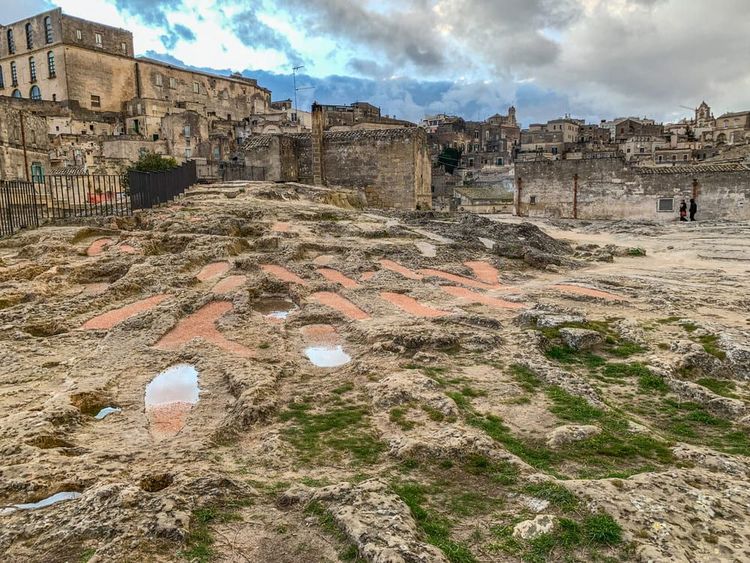
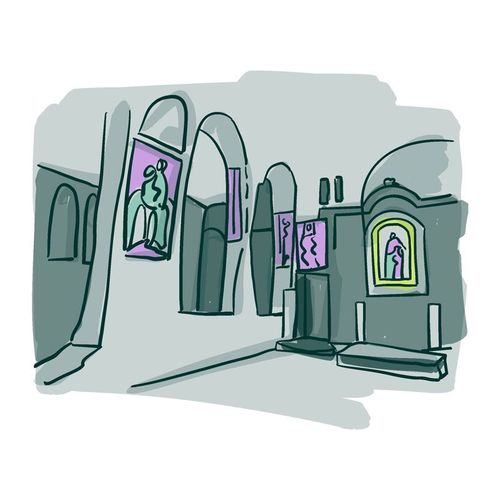
Beneath this terrace lies a medieval cemetery, carved into the rock as early as the 7th century, which inspired writer Carlo Levi's line that in Matera the dead stand above the living. Further down, the church housed the city's first community of nuns in the early Middle Ages, who later relocated twice as they moved higher up. Inside, three hollowed naves and frescoes painted around 1250 reveal a blend of Latin and Byzantine traditions, later used as barns, except the right-hand nave, still consecrated today.
Paid entry
7 - Casa Grotta – The Cave House
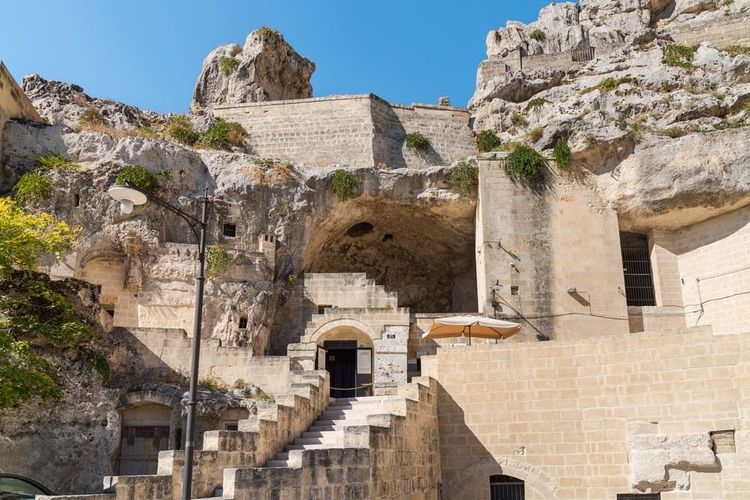
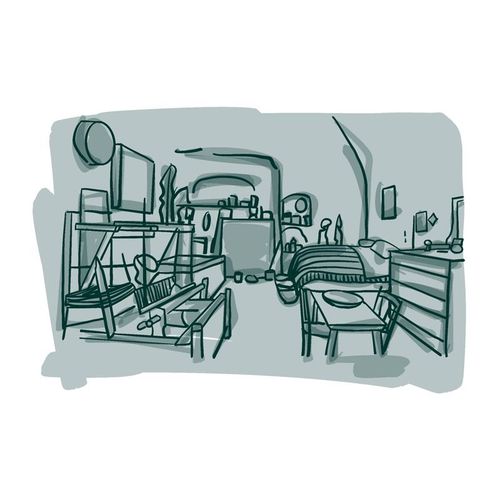
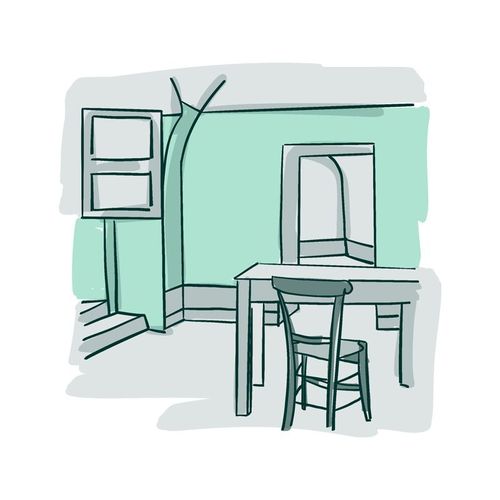
Step through this door into the daily life of a large family who, until the mid-20th century, shared a single room carved from the rock with their mule. By the window, the cooking corner sat beside a small round table for shared meals. The bed, raised to escape the damp floor, hid a linen chest beneath it and a tiny corner for chicks. Further back, the air thinned near the stable. In 1952, a public health law forced residents to leave these homes for modern housing.
Paid entry (about €8)
8 - Matera Cathedral
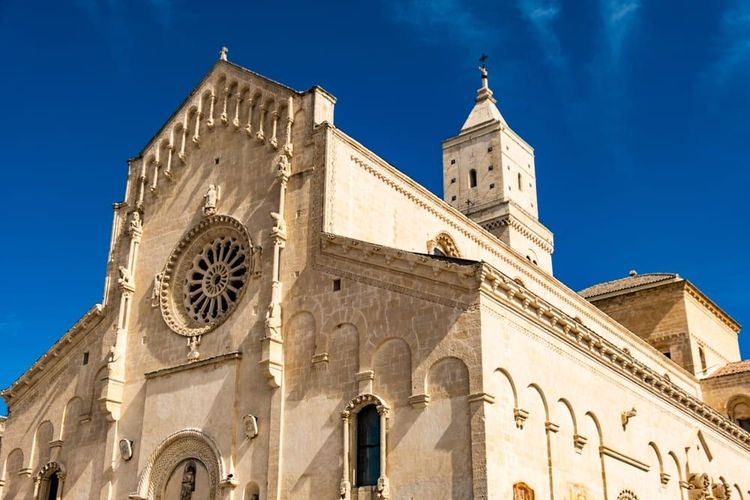
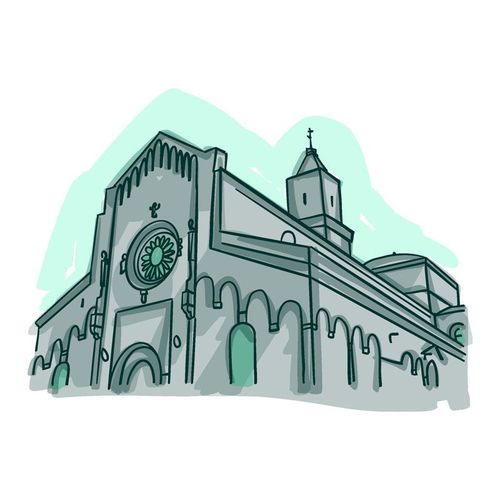
At the top of the ridge separating the two Sassi, this 13th-century Romanesque cathedral, typical of the Puglia style, towers over the city as its spiritual heart. Its facade carries a sixteen-spoke rose window, symbolising the wheel of fortune, while a bronze tree-of-life sculpture stands on the adjoining square. Inside, later baroque ornament surrounds a 1270 Byzantine fresco devoted to the Virgin, together with a sculpted stone nativity scene. Every July 2nd, the building marks both the start and end of the city's grandest feast.
Paid entry
9 - Matera's Food and Culinary Traditions
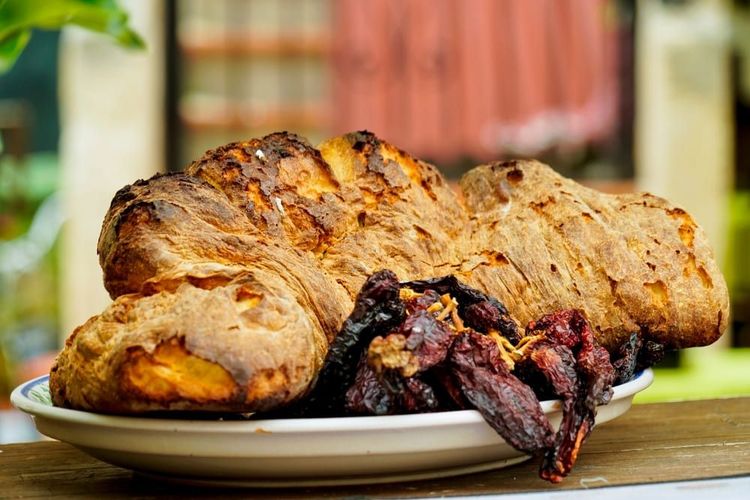
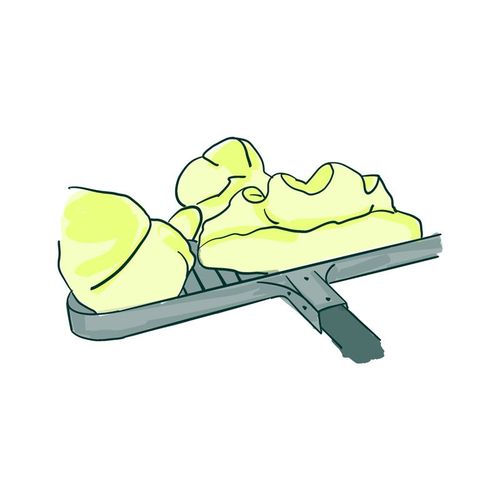
Along this street, pause for a food break before climbing back up. Local cooking turns necessity into virtue: nothing goes to waste. Pane di Matera, made from durum wheat and a fig-based starter, shows a golden crust and a shape echoing the surrounding landscape; families once pressed their own stamp into the dough before baking it in the communal oven. Around it gather cialledda, a salad of stale bread and tomatoes, crapiata, a legume soup, and fried dried peppers, crisp as chips.
Free entry
10 - Church and Monastery of Sant'Agostino
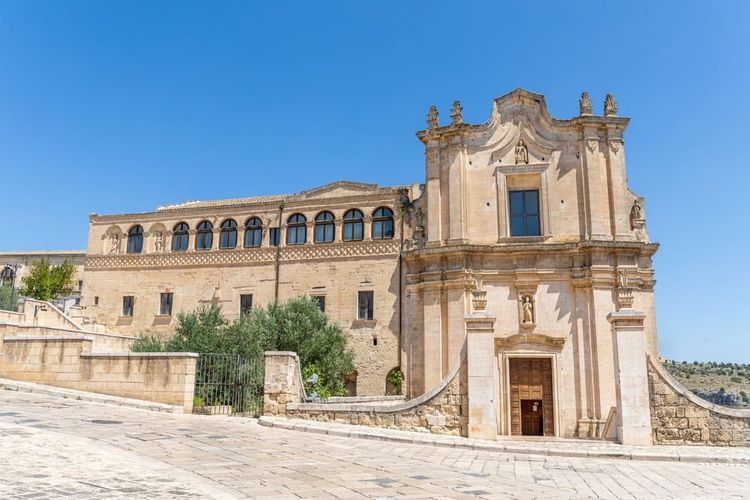
Augustinian monks raised this complex at the close of the 16th century over an older medieval core, proof that Matera has never stood still: a quake wrecked the site in 1734, and locals rebuilt it, returned to worship in 1750. Its dramatic facade carries statues of saints at the top. Inside, a single nave holds marble altars carved by craftsmen from Naples, plus a 1595 Marian painting moved here from a nearby rock-cut chapel. On your way out, enjoy the scenery, especially at sunset.
Free entry · Best late in the day
Which neighbourhoods does the tour cross?
In one loop, the route swings between Matera's two faces: the Piano, its modern plateau, and the Sassi, the cave-cut ravines dropping away beneath it.
It starts at Piazza Vittorio Veneto and the Palombaro Lungo, then passes below Tramontano Castle before reaching the Church of Purgatory, still up on the Piano (stops 1 to 3).
The Pascoli Viewpoint marks the tip into the ravine: the route then drops to MOOM, the old olive mill, then to the Church of Santa Lucia alle Malve and the Casa Grotta, deep in the Sasso Caveoso (stops 4 to 7).
It climbs back up to the cathedral, perched on the Civita ridge, before reaching Via Sant'Antonio Abate, where the commentary turns to Matera's peasant cooking (stops 8 and 9).
The loop ends at the Sant'Agostino monastery, not far from the starting point (stop 10).
How much does it cost to visit Matera?
Of the route's 10 stops, three can be visited freely, three more are only admired from the outside without going through the door, and the remaining four call for a ticket.
Two of those paid stops, the cathedral and the rock church of Santa Lucia alle Malve, are among Matera's churches, all of which charge admission. The full pass, at €25, opens several of them along with other must-see sites around town, and single tickets costing €4 to €8 cover one, two or three rock churches. If you only pick one, make it the cathedral; admission stays free for under-15s with an adult.
The other two paid stops are visited separately: the Casa Grotta charges €8, and MOOM, the olive oil museum set in an old mill, charges €10 and takes bookings only. Under Piazza Vittorio Veneto, the underground Palombaro Lungo cistern can be visited as an optional extra, with a €3 ticket.
Information checked in November 2026 and subject to change.
Where to stop for a bite along the tour?
At the ninth stop, on Via Sant'Antonio Abate, the audio commentary turns to Matera's peasant cooking, built on one simple rule: nothing goes to waste, everything gets reused.
Matera bread sets the tone: kneaded from local durum wheat and a fig-and-grape starter, its knobbly shape echoes the relief of the Murgia plateau. Around it grew the cialledda, a salad of soaked stale bread, tomatoes and olive oil, and the crapiata, a soup of pulses and grains once made for the end-of-harvest festivities.
Food lovers can also try peperone crusco, a small pepper left to dry before a few seconds in hot oil, or lamb cooked for hours in the pignata, a terracotta pot.
What should you know before visiting Matera?
A few practical details help you avoid surprises on this route through a cistern, an old mill and a rock church.
The ipogei on Piazza Vittorio Veneto, an underground site next to the Palombaro Lungo, are currently closed for restoration work. Tramontano Castle can only be seen from the outside, as its interior stays closed to the public.
MOOM only takes visitors by reservation, to be sent at least two days ahead of the chosen date, except on certain public holidays.
As for the climate, Matera has hot, dry and very sunny summers, when temperatures regularly climb past 30 °C, and cooler, wetter winters with some cold nights; spring and autumn generally offer the most pleasant conditions for a visit.
Le plein d'inspirations
Explorez le monde en totale liberté, à pied au cœur des villes ou au fil des routes. Nos guides audios transforment chaque destination en une découverte culturelle immersive et unique.










Vos commentaires, idées et suggestions
Aucun avis pour le moment
