





Walk
Tuscany’s hidden surprise
Pistoia, Italy
Walk
Tuscany’s hidden surprise
Pistoia, Italy
3 km
Distance
1h20
Durée
23
Audios
Loop
Parcours
Shutterstock
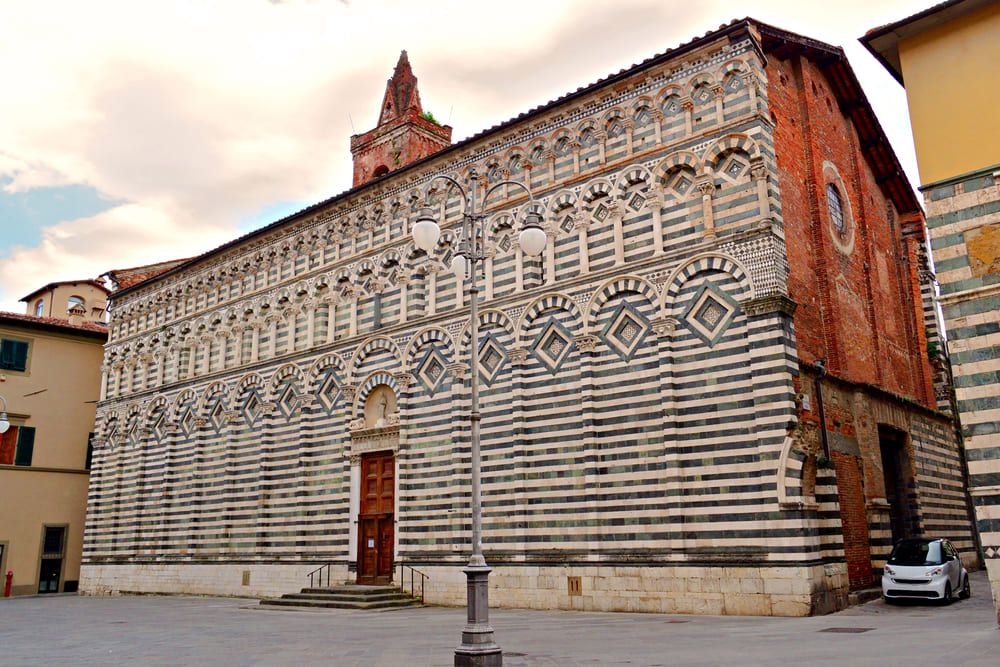
It’s impossible to walk past the Church of San Giovanni Fuorcivitas without noticing it. Its name means “Saint John outside the city,” because it originally stood beyond the medieval walls. Today, the city has grown around it, and it now sits right in the heart of the historic center.
Take a moment to look at its façade. Interestingly, what you see here isn’t the main entrance, but the northern side, which over time has become the true façade. The first thing that catches your eye is the pattern of horizontal bands in white and dark green marble.
This striped effect is typical of Pistoia and shows the influence of Pisan architecture. The rows of small arches, diamond-shaped motifs, and carved details give the whole building a very elegant, almost graphic look. Step a little closer to the portal.
Just above it, you’ll see a marble bas-relief of the Last Supper, carved in 1166 by the artist Gruamonte, whose signature is still visible, something quite rare for that period. The church as it stands today was built between the 12th and 14th centuries, and if you have the chance to go inside, there are several remarkable works to see. Among them is a glazed terracotta sculpture of the Visitation, created around 1445 by Luca della Robbia, one of the earliest pieces of its kind.
You can also see a marble pulpit from around 1270, supported by lions, take a moment to notice the finely carved details.
Aucun avis pour le moment
