






Créé par Camille, le 4 oct. 2026
Votre guide Ryo
Pistoia, Italy
Tuscany’s hidden surprise
Parcours audioguidé pour visiter Pistoia en 1 jour
This visit to Pistoia invites you to discover a discreet Tuscan town, rich in art and history, away from the main tourist crowds. As you wander through its medieval streets, explore lively squares, its Romanesque cathedral, and churches with marble façades that reflect a prosperous past. A simple and authentic experience to enjoy the peaceful charm of Tuscany at your own pace.
Quand partir à Pistoia ?
Jan.
8°
8
Feb.
10°
7
March
14°
8
April
17°
9
May
22°
8
June
27°
6
July
31°
3
Aug.
31°
4
Sept.
26°
6
Oct.
20°
9
Nov.
14°
10
Dec.
9°
9
Pistoia has a Mediterranean climate, much like the rest of Tuscany, with generally mild winters, where temperatures rarely drop below 5°C between December and February, and hot, sunny summers, often climbing above 30°C from June to August. Spring and early autumn are the most pleasant times to visit, with temperatures usually between 15 and 25°C and fewer visitors around. April, May, June, and September are especially good months to discover Pistoia in comfortable conditions.
Départ conseillé
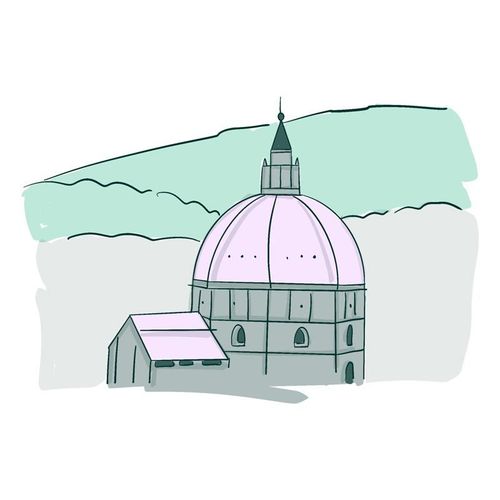
We design our tours as loops, so you can easily start from wherever you are, and the guidance will adjust automatically. If you’re nearby, a great place to begin is the Baptistery of San Giovanni in Corte.
Parking à proximité
Parcheggio privato Lingottino, Via Atto Vannucci, 44, 51100 Pistoia
In Pistoia, most of the historic center is a ZTL, a limited traffic zone, so it’s best to park outside. Parcheggio Lingottino is a convenient paid option, just a short walk from the center. Street parking follows the usual system: blue lines mean paid parking, often during the day, white lines are free, and yellow lines are reserved for permit holders. Make sure to check the signs and time limits carefully, as fines are quite common.
À savoir
To explore Pistoia at a relaxed pace, it’s good to know that the entire historic center within the city walls is a ZTL, a limited traffic zone where driving without authorization is prohibited and monitored by cameras, so it’s best to park outside. Also keep in mind that many shops close between 1 pm and 3:30 pm, and that churches require appropriate clothing. In restaurants, you’ll often see a “coperto” on the bill: this is a standard cover charge per person, usually between €1 and €3. It’s not a tip, but a fixed fee automatically added to your bill.
Découvrez 23 lieux d'intérêt pour visiter Pistoia

Le plein d'inspirations
Explorez le monde en totale liberté, à pied au cœur des villes ou au fil des routes. Nos guides audios transforment chaque destination en une découverte culturelle immersive et unique.
FAQ for visiting Pistoia
When is the best time to visit Pistoia?
Spring and early autumn are the most pleasant times: temperatures stay mild, the hills around the town turn green or take on their autumn colours, and the historic centre can be explored without suffering from the heat. The Tuscan summer can feel heavy down on the plain, even if July evenings, enlivened by festivals and concerts, have plenty of charm.
Winter is quiet and damp, with few visitors: it is the ideal season if you prefer museums, churches and cafés to long walks. The nearby Pistoia mountains then take on the air of a ski resort, which makes it possible to combine a city of art with fresh air in a single trip. Whatever the season, market mornings give the centre a particular buzz.
How many days do you need to visit Pistoia?
A full day is enough for the essentials: Cathedral Square and its monuments, the great medieval churches, the Ospedale del Ceppo and a break on Piazza della Sala, where the market is held. Distances are short and everything can be done on foot, without needing any transport.
Two days let you go further: visiting the museums, going down into the underground passages beneath the former hospital, climbing the bell tower for the view over the rooftops and wandering the shopping streets without watching the clock. If you add an escape into the hills covered with plant nurseries or up into the mountains, count on a long weekend instead. Many visitors stop for only half a day, which is short for such a dense town.
How do you get to Pistoia?
Pistoia sits on the railway line linking Florence to Lucca and the coast: regional trains are frequent and the station is a few minutes' walk from the town walls, which makes it the simplest way to arrive. Coming from Florence, the journey is short and requires no change.
By car, the motorway between Florence and the sea serves the town, but traffic in the historic centre is restricted: it is better to park in the car parks outside and finish on foot. The most convenient airports are those of Florence and Pisa, both connected to the rail network. Coaches complete the service from the surrounding villages and the mountains.
What are the absolute must-sees in Pistoia?
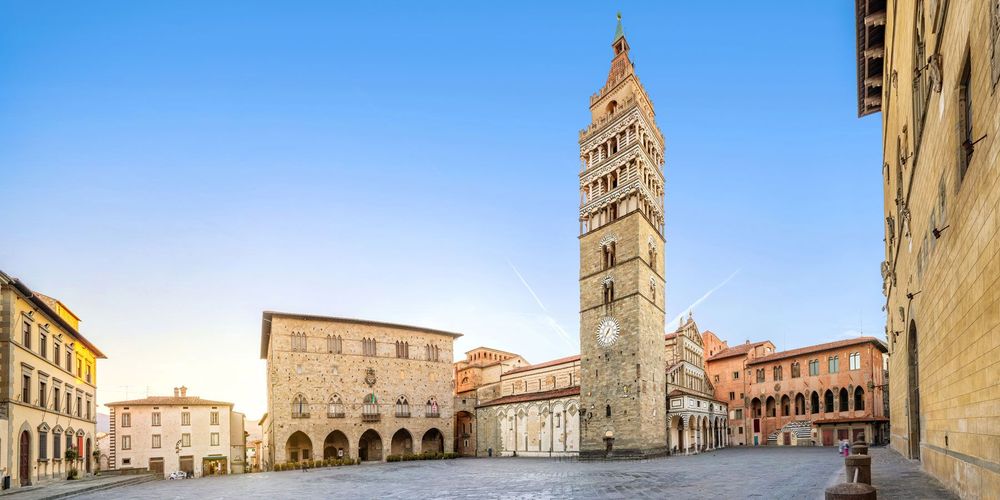
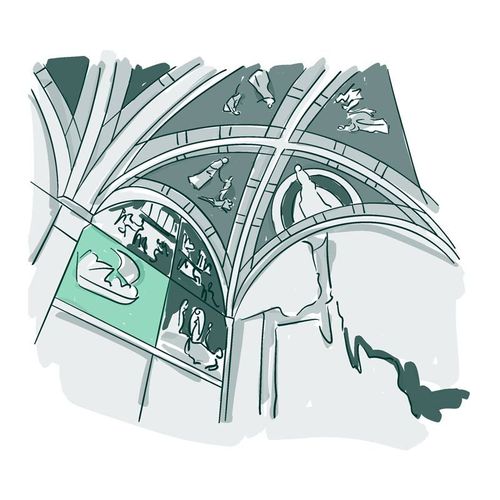
The heart of the town is Piazza del Duomo, often named among the finest squares in Italy: facing one another stand the cathedral of San Zeno, with its striped marble porch and its silver altar dedicated to Saint James, the octagonal baptistery, the bell tower and two medieval palaces, the bishops' palace and the town hall.
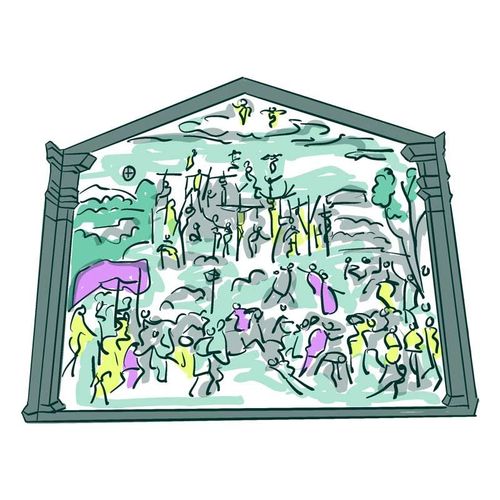
A few steps away, the Ospedale del Ceppo displays a long glazed terracotta frieze from the della Robbia workshops, while the churches of San Giovanni Fuorcivitas and Sant'Andrea preserve remarkable carved pulpits, including one by Giovanni Pisano. Piazza della Sala, with its well and market stalls, completes the picture. The Ryo audio guide offers a dedicated Pistoia route that links these monuments and tells their story.
Is Pistoia easy to explore on foot?
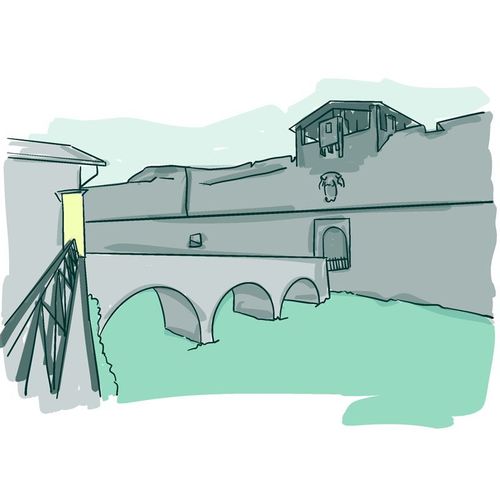
Yes, and it is by far the best way to discover it. The centre fits entirely within the old walls and can be crossed in about twenty minutes on foot: monuments, churches and squares are linked by paved streets, often pedestrian or quiet, and you move from one site to the next without ever needing a bus.
Car traffic is restricted, as in most Italian towns of art; if you arrive by car, leave it in a car park outside the walls and walk in. Bring comfortable shoes for the cobbles and a little stamina if you climb the bell tower. The railway station and the coach stops are also a short distance from the centre.
Why is Pistoia nicknamed little Florence?
The nickname comes from its artistic density: within a tiny area you find a cathedral, a baptistery, several medieval churches and palaces that rival those of the great Tuscan cities. The façades striped in white and green marble, the carved pulpits and the glazed terracottas belong to the same world as those of its famous neighbour, only far more compact.
Long a rival before falling into Florence's orbit, Pistoia has kept from that history a heritage unexpectedly rich for its size, brought back into the spotlight when it was named Italian capital of culture. The real difference lies in the atmosphere: the squares stay lively and full of locals, and you can visit the monuments without the crowds of the big destinations.
Which specialities should you try in Pistoia?
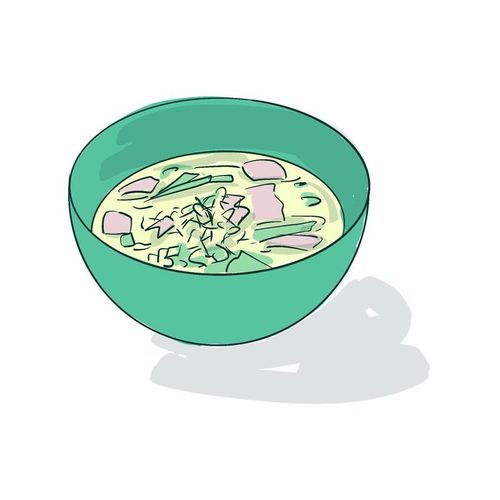
Pistoia's cooking is Tuscan country fare, built on unsalted bread, olive oil from the hills and seasonal vegetables. Its most emblematic dish, carcerato, is a soup of bread and offal said to have been born around the town's former prison. You will also find thick vegetable soups, grilled meats and matured sheep's cheeses.
On the sweet side, the colourful sugared confetti of Pistoia and berlingozzo, a ring-shaped cake, can be bought from the pastry shops in the centre, while the thin aniseed wafers of the neighbouring villages go well with a coffee. The surrounding hills produce red wines and olive oil, and the market on Piazza della Sala, lively in the mornings, remains the best place to see it all in one go.
What can you do in Pistoia with children?
Pistoia lends itself well to family stays. The zoological garden, on the edge of town and easy to reach by car, remains children's favourite outing and easily fills half a day. In town, the underground route laid out beneath the former hospital, along the covered stream, is visited with a guide and makes a strong impression on older children.
Climbing the bell tower, hunting for the carved animals on church façades and studying the terracotta frieze of the Ospedale del Ceppo, which tells very vivid scenes, turn the visit into a game of observation. The central squares leave room to run around and have ice cream shops for a break, while the nearby mountains add easy trails and snow in winter.
Which museums are worth visiting in Pistoia?
The civic museum, housed in the town hall on Cathedral Square, brings together paintings and sculptures from the Middle Ages to the nineteenth century. Right next door, the former bishops' palace lets you go down to the level of the excavations, where Roman and medieval remains come to light, and preserves the goldsmith's work connected with the cathedral.
The town also champions modern art: one centre is devoted to the sculptor Marino Marini, born here, whose whole career is traced, while Palazzo Fabroni hosts contemporary collections and exhibitions. At the Ospedale del Ceppo, the former anatomical theatre and the space devoted to the history of medicine make for an unexpected visit, ideal on a rainy afternoon.
Which traditional festivals mark the year in Pistoia?
The most eagerly awaited event is the Giostra dell'Orso, a mounted joust held in July on Cathedral Square: riders from the historic quarters compete in costume, after a procession crossing the centre. The whole summer season comes with open-air concerts, including a blues festival staged on that same main square.
For the rest of the year, local life plays out mainly on Piazza della Sala, whose market enlivens the mornings, and around the celebrations linked to Saint James, the town's patron, whose relics are kept in the cathedral. In December, the streets of the centre fill with lights and small stalls, in a very family-friendly atmosphere that contrasts with the calm of the low season.
Vos commentaires, idées et suggestions
Aucun avis pour le moment
