



Walk
Through ramparts and secret alleyways
Lucca, Italy
Walk
Through ramparts and secret alleyways
Lucca, Italy
3.5 km
Distance
1h30
Durée
17
Audios
Loop
Parcours
Shutterstock
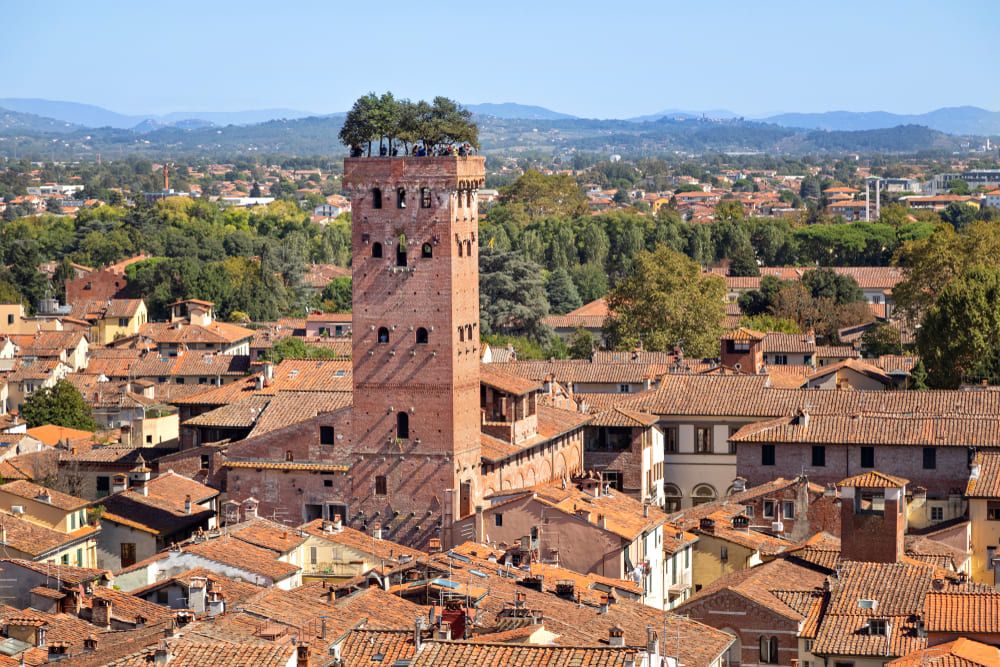
The Guinigi Tower is the most famous tower of Lucca, recognisable by the holm oaks that grow on its top. The Lucca audio-guided tour stops here to evoke this unusual monument, a symbol of the town, which offers a unique panorama.
The Guinigi Tower is one of the most original symbols of Lucca. This high brick tower was built in the Middle Ages by the Guinigi family, one of the most powerful of the town, who wanted to display their wealth and their rank. At a time when Lucca bristled with numerous towers, signs of prestige of the great families, this one stands out by an extraordinary detail: on its top grows a small grove of holm oaks, a true hanging garden above the roofs. These trees, symbols of rebirth and continuity, make all the singularity of the monument. By climbing its steps, you reach a terrace that offers a magnificent panorama over Lucca, its roofs and the Tuscan countryside.
You admire the high medieval brick tower of the Guinigi family, crowned with a small grove of holm oaks forming a hanging garden, and you climb its steps to the terrace offering a magnificent panorama over Lucca and the Tuscan countryside. The Guinigi Tower is an unusual symbol of the town. It is a must-see stop, to be explored on foot.
The Guinigi Tower lies in the heart of the old town of Lucca, reachable on foot. The ascent of the tower and the access to the panoramic terrace follow their own hours and conditions, which vary with the season; the climb is by a staircase. It is best to check the arrangements before coming.
On its top grows a small grove of holm oaks, forming a hanging garden wanted by the Guinigi family; these trees, symbols of rebirth and continuity, make the singularity of this medieval tower.
In the heart of the old town of Lucca, in Italy.
Aucun avis pour le moment