



Walk
The Vertical City
Matera, Italie
Walk
The Vertical City
Matera, Italie
Distance
3.7 kmDurée
1h30Audios
15Parcours
Loop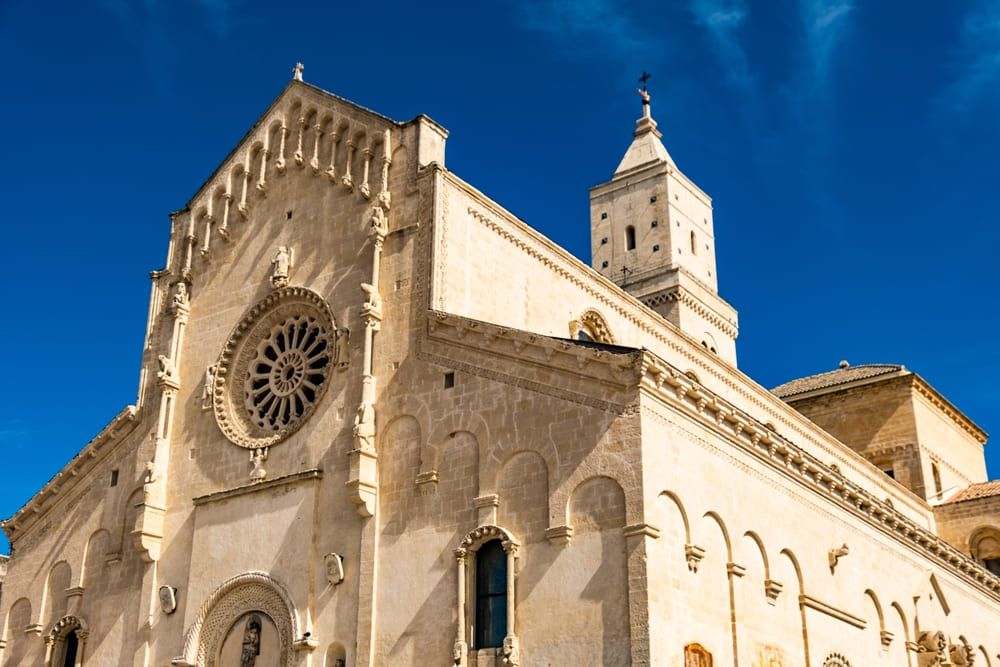
Shutterstock
You have reached the pinnacle of Civita, the high ridge separating Sasso Barisano from Sasso Caveoso. Rising proudly above the rooftops stands Matera Cathedral. Built in the 13th century in the Pugliese Romanesque style, its majestic silhouette shapes the skyline, standing as a symbol of Matera's religious and historical identity. Before stepping inside, take a moment to admire the facade. Its crowning glory is the magnificent rose window, where sixteen carved stone spokes radiate outward, evoking the wheel of fortune and the divine light shining over the city. Turning toward the square, you will see a bronze sculpture by Andrea Roggi from his Tree of Life series. With roots embedded deep in the stone and branches reaching skyward, it captures the spirit of Matera itself: a city anchored in prehistory yet reaching boldly into the present. Now step inside, and the atmosphere completely changes. Over the centuries, successive bishops layered the interior with rich Baroque ornament, choosing dramatic splendor over Romanesque restraint. As you walk down the nave, look for the 13th-century Byzantine fresco of the Madonna della Bruna, which remains the center of local devotion. Be sure to visit the Chapel of the Nativity as well, where a remarkable stone Nativity scene carved in the 16th century by Altobello Persio and Sannazzaro di Alessano seems to echo the rocky caves of the Sassi below. The cathedral also sits at the center of Matera’s grandest celebration, the Festa della Bruna, held every July 2nd. If you are wondering why the crowd eagerly tears the elaborate papier-mâché float to pieces at the end of the procession, local legend offers an answer. It is said that townspeople once hid the sacred image of the Virgin Mary inside the float to protect it from a Saracen raid. Once the image was safely secured within the cathedral walls, they destroyed the float so it would never fall into enemy hands. That moment of frantic devotion lives on in today’s vibrant, joyful ritual—a truly spirited way to conclude the feast!
Aucun avis pour le moment
