




Walk
The City of Knowledge
Bologna, Italy
Walk
The City of Knowledge
Bologna, Italy
3.8 km
Distance
1h30
Durée
25
Audios
Loop
Parcours
Shutterstock
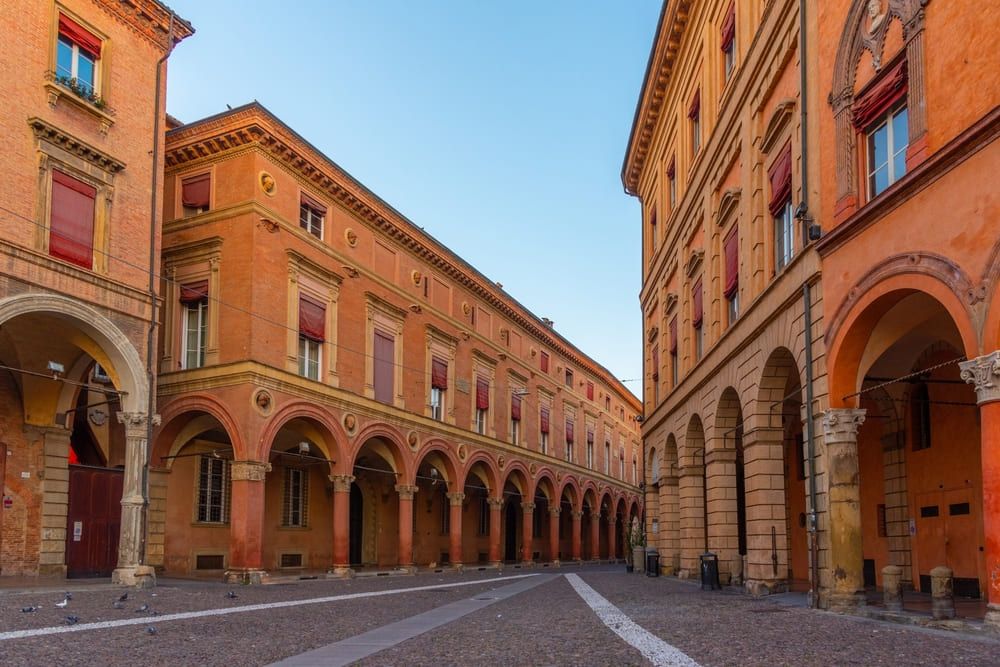
The Palazzo Poggi is an elegant Renaissance palace of Bologna, the historic seat of the university and its scientific museums. The Bologna audio-guided tour stops here to evoke this high place of knowledge, which keeps astonishing collections of science and curiosities.
The Palazzo Poggi is a fine Renaissance palace of the sixteenth century, become the central seat of the University of Bologna and its prestigious scientific institutions. Its halls, adorned with magnificent period frescoes, today shelter the museums of the university, among the most fascinating of the town. There you discover extraordinary collections: anatomical wax models of a striking realism, formerly used for the teaching of medicine, scientific instruments, old maps and globes, specimens of natural history, as well as models of military and naval architecture. This ensemble illustrates the spirit of curiosity and research that animated Bologna, the capital of knowledge. The palace also shelters the observatory and the famous Specola tower. The Palazzo Poggi is a fascinating dive into the history of sciences in Bologna.
You admire the fine Renaissance palace with period frescoes, the seat of the university, and its extraordinary museums: anatomical wax models of a striking realism, scientific instruments, old maps and globes, specimens of natural history and models, as well as the observatory and the Specola tower. The Palazzo Poggi is a high place of knowledge of Bologna. It is a fascinating stop, to be explored on foot.
The Palazzo Poggi lies on Via Zamboni, in the university quarter of Bologna, reachable on foot. The visit of the museums follows its own hours and conditions, which vary with the season. It is best to check the arrangements before coming.
The museums of the University of Bologna, with extraordinary collections: anatomical wax models, scientific instruments, old maps and globes, specimens of natural history and models, as well as the observatory and the Specola tower, in a Renaissance palace adorned with frescoes.
On Via Zamboni, in the university quarter of Bologna, in Italy.
Aucun avis pour le moment
