



Walk
The Vertical City
Matera, Italie
Walk
The Vertical City
Matera, Italie
Distance
3.7 kmDurée
1h30Audios
15Parcours
Loop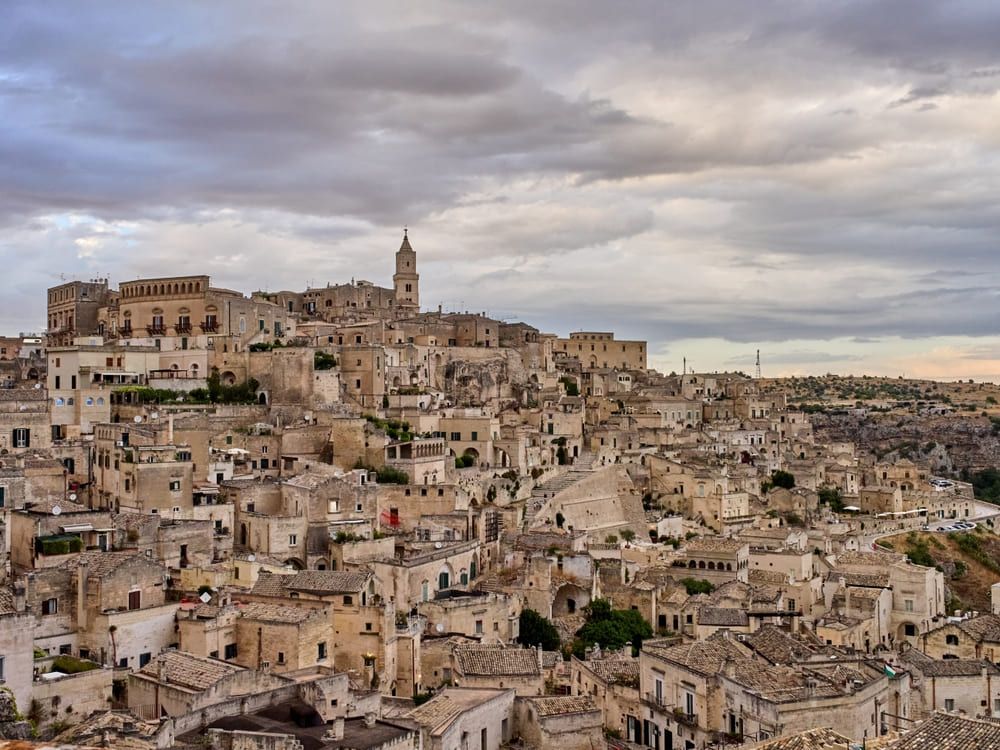
Shutterstock
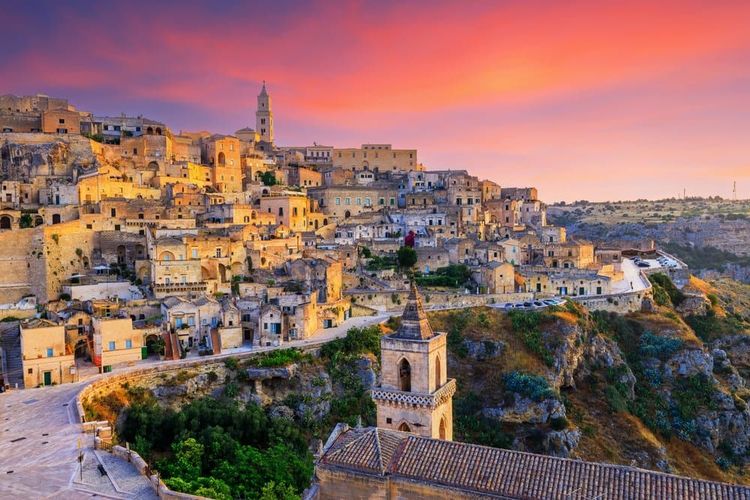
Piazzetta Pascoli offers one of Matera's most breathtaking panoramas. Take a moment to step closer and immerse yourself in the view—especially as late afternoon unfolds, when the setting sun bathes the ancient stone in warm, golden light. Yet behind this sweeping beauty lies a Tale of Two Cities, divided not merely by geology, but by social class. Beside you stands the grand Palazzo Lanfranchi, commissioned in the late 17th century by Bishop Vincenzo Lanfranchi for the diocesan seminary. It anchors the high plateau known as the Piano—the realm of the elite, adorned with noble palaces, religious institutions, paved squares, and elegant residences. Up here, power was wielded, civic order maintained, and high culture flourished. Now, let your eyes wander down into the ravine, where a strikingly different world emerges. Here, ornate Baroque facades give way to intricate networks of cave dwellings carved directly into the rock, stacked one upon another. Life in the Sassi was harsh and claustrophobic. Families endured cramped, damp spaces, sharing single rooms with their livestock, stables, and cisterns, completely devoid of running water. From this single vantage point, Matera's entire social hierarchy is laid bare—from the affluent heights above to the humble cave dwellings below. Yet, these realms were deeply intertwined, functioning together as one living community where one's place on the hillside defined one's place in society. Today, Palazzo Lanfranchi safeguards the memory of this intricate past. As the National Museum of Medieval and Modern Art of Basilicata—part of the National Museums of Matera—it houses an extraordinary collection dedicated to Carlo Levi, the writer, painter, and outspoken anti-fascist. Exiled by the Fascist regime to Lucania in the mid-1930s, Levi penned his literary masterpiece, “Christ Stopped at Eboli.” His haunting title captured a stark observation: beyond Eboli, a town south of Naples, it seemed history, progress, the Italian state, and even Christian redemption had forgotten these remote lands. Following the book's publication, Matera turned into a powerful symbol of what post-war Italy came to view as a source of national shame. Inside the museum, visitors can behold Lucania '61, Levi's monumental canvas that vividly captures the spirit, memories, and struggles of the region's rural communities.
Aucun avis pour le moment
