





Walk
A world of art
Florence, Italy
Walk
A world of art
Florence, Italy
7.8 km
Distance
3h10
Durée
26
Audios
Loop
Parcours
Shutterstock
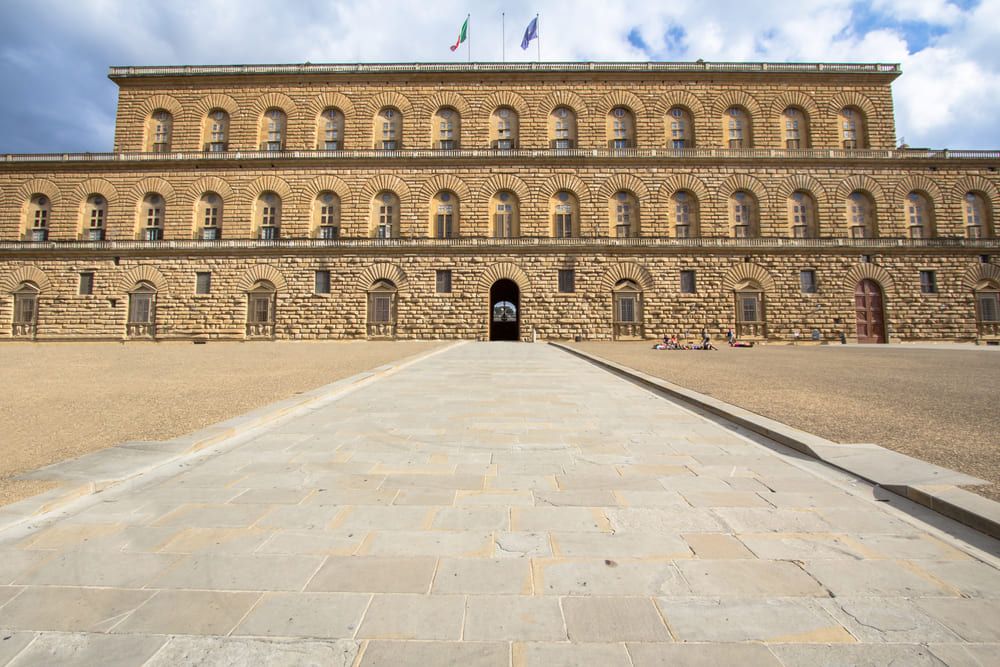
The Pitti Palace is a majestic Renaissance palace of Florence, the former residence of the Medici grand dukes, become a vast ensemble of museums. The Florence audio-guided tour stops here to evoke this imposing monument of the Oltrarno, lined by the famous Boboli Gardens.
The Pitti Palace is one of the vastest and most imposing palaces of Florence, on the left bank of the Arno, in the Oltrarno district. It was built in the fifteenth century for the rich Pitti family, rivals of the Medici, and its design is linked to Filippo Brunelleschi, the great architect of the Florentine Renaissance. Later, the Medici themselves acquired the palace and made it their sumptuous grand-ducal residence, enlarging it considerably over the centuries. Massive and powerful, with its long stone façade with rustication, the palace testifies to the splendour of the court. It today shelters several first-rate museums, including the Palatine Gallery, rich in masterpieces by Raphael and Titian, royal apartments and collections of modern art and costumes. Behind the palace extend the famous Boboli Gardens. A major monument and a setting of art, the Pitti Palace is a must-see stop of Florence.
You admire the vast Renaissance palace with the long stone façade with rustication, built for the Pitti family and become the grand-ducal residence of the Medici, which today shelters several museums including the Palatine Gallery and its masterpieces by Raphael and Titian, the royal apartments and the Boboli Gardens at the back. The Pitti Palace is a major monument of Florence. It is a must-see stop, to be explored on foot.
The Pitti Palace lies on the left bank of the Arno, in the Oltrarno district, in Florence, reachable on foot. The visit of the museums and the Boboli Gardens follows its own hours and conditions, which vary. It is best to check the arrangements and to allow time before coming.
Several first-rate museums, including the Palatine Gallery rich in masterpieces by Raphael and Titian, royal apartments and collections of modern art and costumes; the former grand-ducal residence of the Medici, it is lined by the famous Boboli Gardens.
On the left bank of the Arno, in the Oltrarno district, in Florence, in Italy.
Aucun avis pour le moment
