



Walk
See Naples and Die
Naples, Italy
Walk
See Naples and Die
Naples, Italy
3.8 km
Distance
1h30
Durée
19
Audios
Loop
Parcours
©Raffaella from Napoli - CC BY-SA 2.0 <https://creativecommons.org/licenses/by-sa/2.0/deed.fr>via Wikipedia Commons
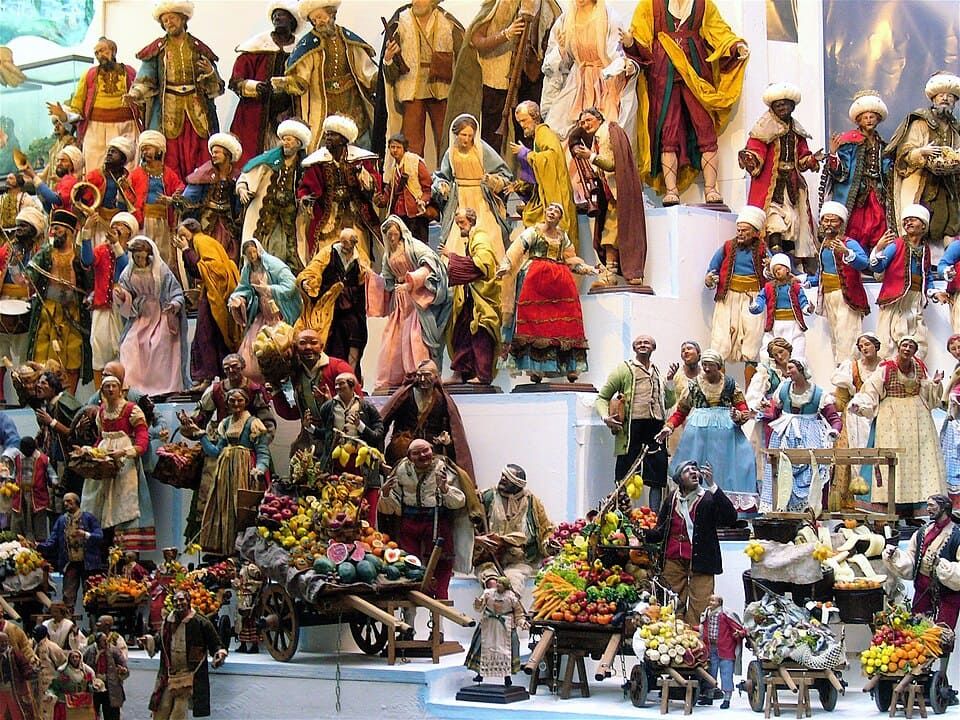
The Naples audio-guided tour takes you along the famous Via San Gregorio Armeno, nicknamed the street of nativity scenes or Christmas Alley. Lined with workshops of nativity-figure craftsmen, it is one of the liveliest in the historic centre, especially at Christmas time.
The street takes its name from the church of San Gregorio Armeno, built around 930. The art of the nativity scene is a very important tradition in Naples: the first written mention of a nativity scene dates back to 1205, but the custom of nativity figures has even older roots, in Roman times, when the street housed craftsmen's workshops. Today, the craftsmen shape religious figurines and contemporary characters there, in a living tradition passed down from generation to generation.
The shop windows overflow with nativity figures, miniature cribs and handmade accessories, blending sacred figures, shepherds, craftsmen and celebrities of the moment. The church of San Gregorio Armeno, a richly decorated Baroque monastery, is also worth a visit, in respect of the place of worship. The narrow, colourful street offers a unique immersion in Neapolitan popular culture.
Via San Gregorio Armeno is freely walkable on foot, in the historic centre of Naples, between the decumani. Very busy, especially as Christmas approaches, it is accessible at any time; the shops follow their own hours. The church of San Gregorio Armeno can be visited in respect of services, with proper dress.
Because it concentrates the workshops of Neapolitan nativity-figure makers, who shape cribs and figurines there all year round, especially at Christmas.
From the name of the church of San Gregorio Armeno, built around 930, which lines the street.
Aucun avis pour le moment