





Walk
The Parthenopean City
Naples, Italy
Walk
The Parthenopean City
Naples, Italy
5.7 km
Distance
2h15
Durée
19
Audios
Loop
Parcours
Shutterstock
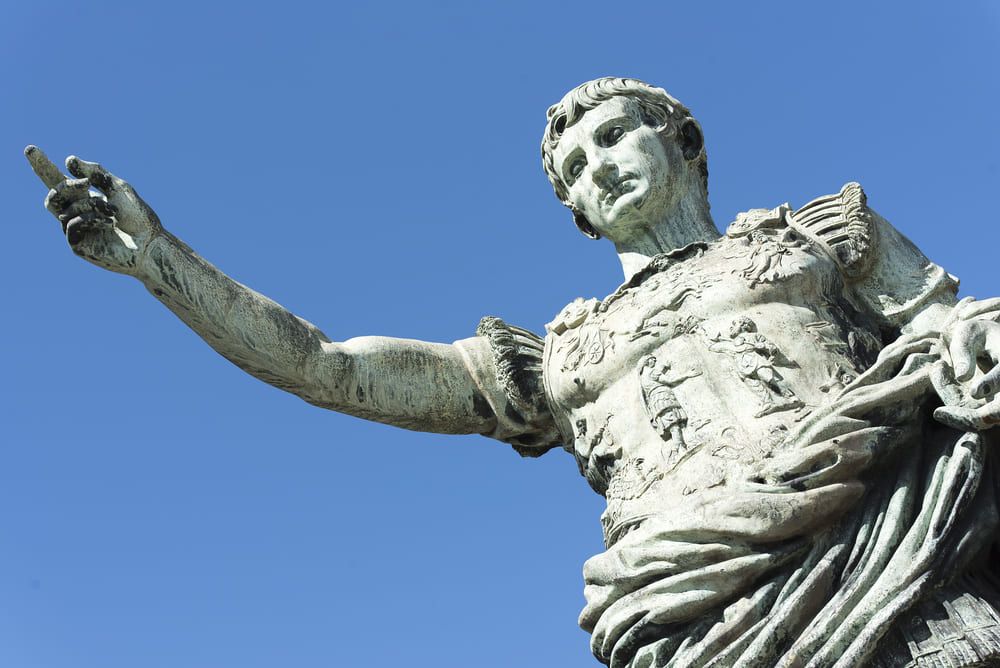
The statue of Augustus, with arm raised facing the sea, evokes the ancient past of Naples. The Naples audio-guided tour stops here to evoke this monument and the Roman history of the town, once a prized town of the Empire.
The statue of Augustus, representing the first Roman emperor with arm raised facing the sea, is the occasion to evoke the rich ancient past of Naples. Before the numerous dominations that marked its history, the town, founded by the Greeks under the name of Neapolis, became a prized town of the Romans. The whole region of the gulf of Naples, from islands like Capri to coastal towns like Sorrento, was a prized holiday place of the Roman aristocracy and the emperors, seduced by the gentleness of the climate, the beauty of the landscapes and the art of living. Augustus himself stayed there and died there. This statue pays tribute to this ancient heritage that still pervades the identity of Naples and its bay.
You admire the statue of the first Roman emperor Augustus, with arm raised facing the sea, which evokes the ancient past of Naples, founded by the Greeks then a prized town of the Romans and their emperors, in a holiday region prized by the ancient aristocracy. The statue pays tribute to this heritage. It is a stop for those curious about history, to be explored on foot.
The statue of Augustus lies on the seafront of Naples, facing the bay, reachable on foot. It is an open-air monument, freely visible from the public space. You discover it during a walk along the seaside.
The ancient past of Naples, founded by the Greeks under the name of Neapolis then become a prized town of the Romans; the gulf and its islands were a prized holiday place of the emperors, including Augustus, who stayed there and died there.
On the seafront of Naples, facing the bay, in Italy.
Aucun avis pour le moment
