



Walk
The Eternal City
Roma, Italy
Walk
The Eternal City
Roma, Italy
6.7 km
Distance
2h40
Durée
24
Audios
Loop
Parcours
Shutterstock
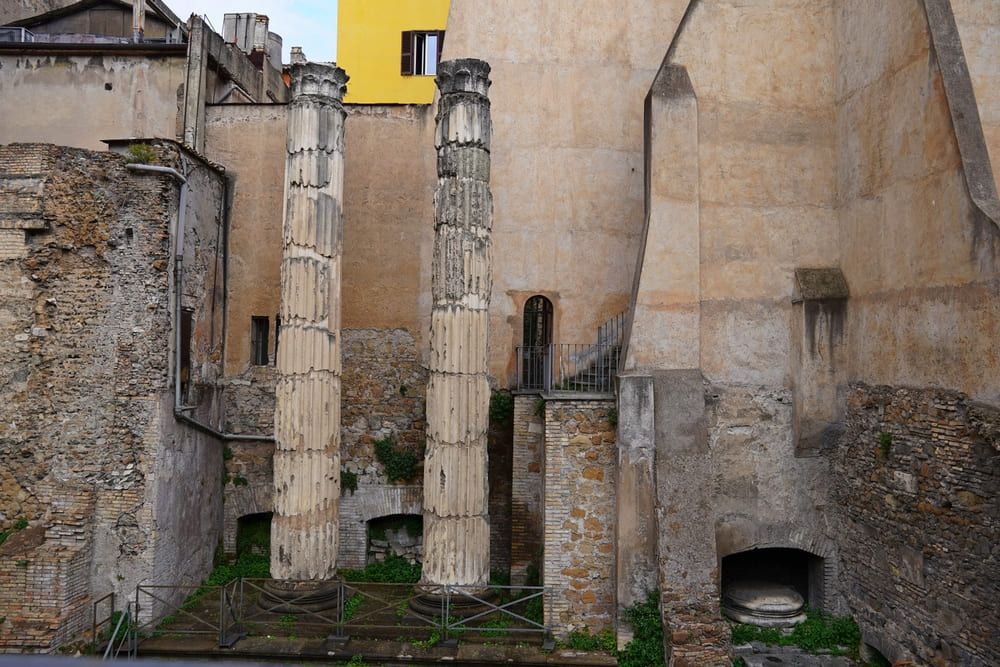
The Rome audio-guided tour presents you, on your left, with the vestiges of the columns of the former Temple of the Nymphs.
In ancient mythology, the nymphs are personifications of nature, represented as young girls and often associated with a precise place, spring, river or wood. Built probably towards the end of the third century before Jesus Christ, the temple dedicated to them was damaged in the first century before our era. It is said to have been definitively closed at the end of the Roman Empire, at the time when the pagan cult was declining: Constantius II, son of the first Christian emperor Constantine, signed several edicts forbidding sacrifices and ordering the closure of the temples. The columns one glimpses today are the silent witnesses of this ancient history, vestiges of a sanctuary that, like so many others in Rome, went through the religious upheavals of late Antiquity.
The Temple of the Nymphs reveals itself today by a few columns, vestiges of an ancient sanctuary dedicated to the divinities of nature. It evokes the religious richness of pagan Rome and the upheavals of late Antiquity. It is a stage for archaeology enthusiasts, to contemplate along the walk.
The vestiges of the Temple of the Nymphs are in the heart of Rome; the columns can be contemplated from the street, along the walk. The surrounding archaeological spaces may have their own hours, to be checked on site.
To the nymphs, divinities of nature of ancient mythology, represented as young girls linked to a place.
At the end of the Roman Empire, when imperial edicts forbade sacrifices and ordered the closure of the pagan temples.
Aucun avis pour le moment