





Walk
The City of Knowledge
Bologna, Italy
Walk
The City of Knowledge
Bologna, Italy
3.8 km
Distance
1h30
Durée
25
Audios
Loop
Parcours
Shutterstock
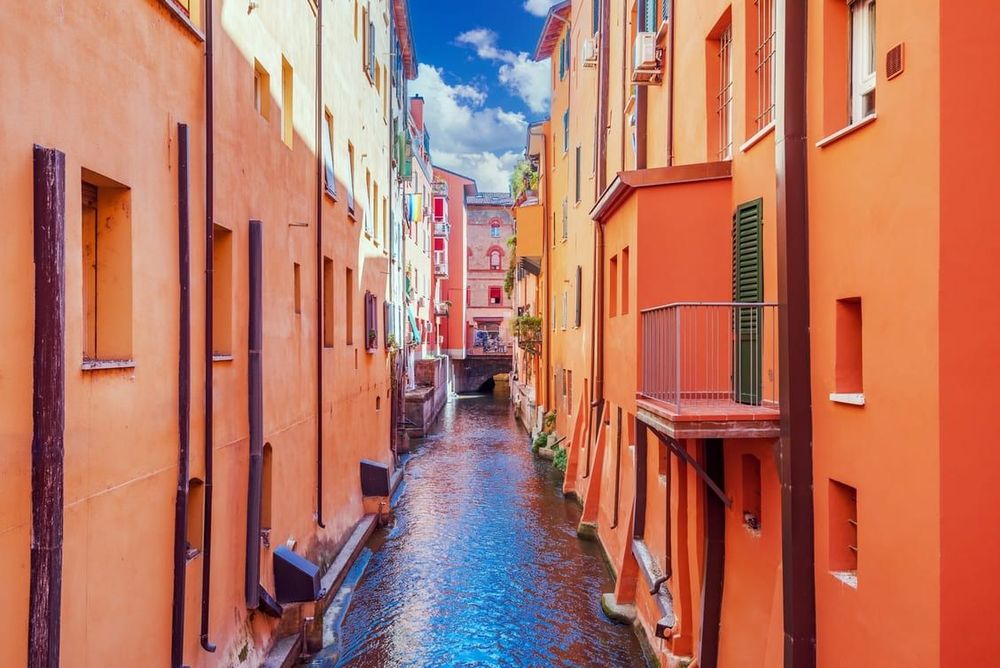
The canals of Bologna are a little-known and hidden heritage of the town, a legacy of its industrial past. The Bologna audio-guided tour stops here to evoke these secret waterways, which formerly made the prosperity of the town before being largely covered over.
Few visitors know it, but Bologna was formerly a town of water, criss-crossed by a network of canals. From the Middle Ages to the modern era, these canals, fed by the neighbouring rivers, played an essential economic role: they drove mills and numerous machines, and notably supplied a flourishing silk industry, which made the wealth of the town. The water also served for the transport of goods. During the twentieth century, for reasons of hygiene and town planning, most of these canals were covered over and disappeared under the streets, which made them invisible. A few sections however remain in the open air or can be glimpsed, witnesses of this past. A hidden and unusual heritage, the canals of Bologna tell a little-known history of the town and offer a few picturesque and secret corners to discover.
Here you discover the hidden network of canals that formerly made the prosperity of Bologna, driving mills and machines and supplying a flourishing silk industry, largely covered over in the twentieth century, of which a few sections remain in the open air, picturesque witnesses of a little-known past. The canals tell a secret history of Bologna. It is a stop for the curious, to be explored on foot.
The canals of Bologna can be guessed at a few points of the centre of the town, reachable on foot. The visible sections are public spaces; some are discovered from the street or small belvederes. You spot them during a walk in the centre.
They drove mills and numerous machines, supplied a flourishing silk industry that made the wealth of the town, and served for the transport of goods; most were covered over in the twentieth century.
At a few points of the centre of Bologna, where sections remain in the open air, in Italy.
Aucun avis pour le moment
