



Walk
The Vertical City
Matera, Italie
Walk
The Vertical City
Matera, Italie
Distance
3.7 kmDurée
1h30Audios
15Parcours
Loop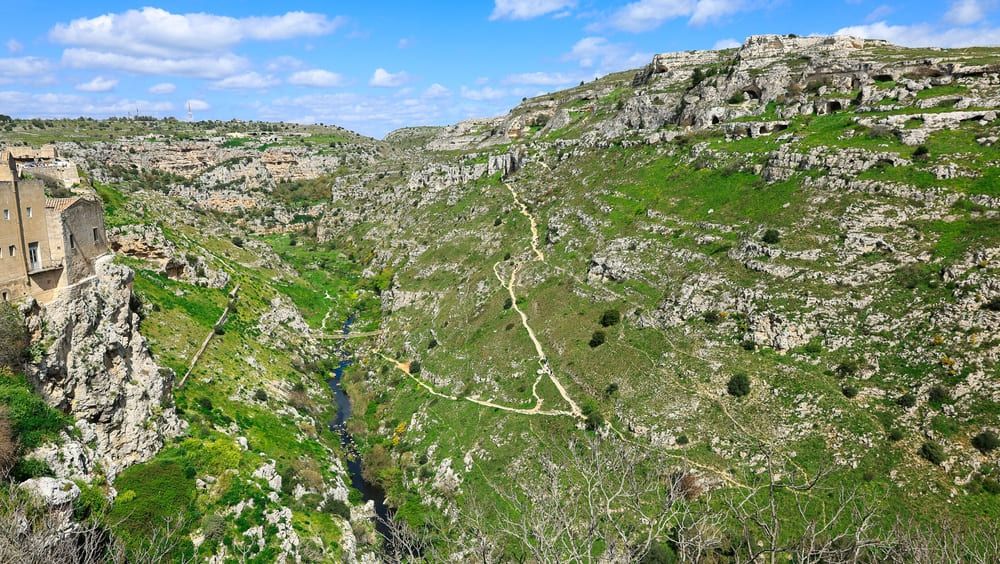
Shutterstock
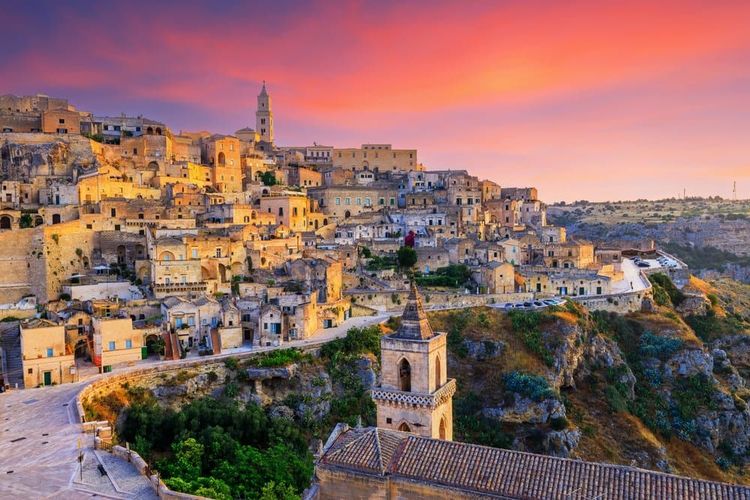
Hold on tight, because the scenery is about to change dramatically! As you wind along Via Madonna delle Virtù, you are walking right along the precipitous edge of the Gravina ravine. On one side, the ancient cave dwellings of the Sassi cling stubbornly to the rock face. On the other, a dizzying drop falls away toward the wild, untamed plateau of Murgia Materana Park. Feeling adventurous? Trace the winding trail down toward the stream, where a suspension bridge offers a thrilling passage across the canyon. Swaying gently from steel cables roughly 33 feet, 10 meters above the water, it draws you straight toward the towering cliffs beyond. And what a world awaits on the other side! Scattered across the plateau lie more than 150 rock-hewn churches and prehistoric caves. As you gaze at those dark, cavernous openings from the canyon's edge, you are looking at the echoes of human presence stretching all the way back to the Paleolithic era. With its dramatic, windswept stone and almost timeless atmosphere, it is no wonder Matera captured the imagination of cinema's greatest visionaries, turning the city into a magnificent open-air film set. Unable to film in Jerusalem, Pier Paolo Pasolini chose Matera for his 1964 masterpiece, The Gospel According to St. Matthew. Forty years later, Mel Gibson followed in his footsteps to film The Passion of the Christ. This majestic canyon has also provided a sweeping backdrop for epic blockbusters like Ben-Hur and Wonder Woman. And more recently, these narrow, cliffside streets saw high-octane drama as Daniel Craig's James Bond raced his Aston Martin through Matera in No Time to Die.
Aucun avis pour le moment
