





Walk
A world of art
Florence, Italy
Walk
A world of art
Florence, Italy
7.8 km
Distance
3h10
Durée
26
Audios
Loop
Parcours
Shutterstock
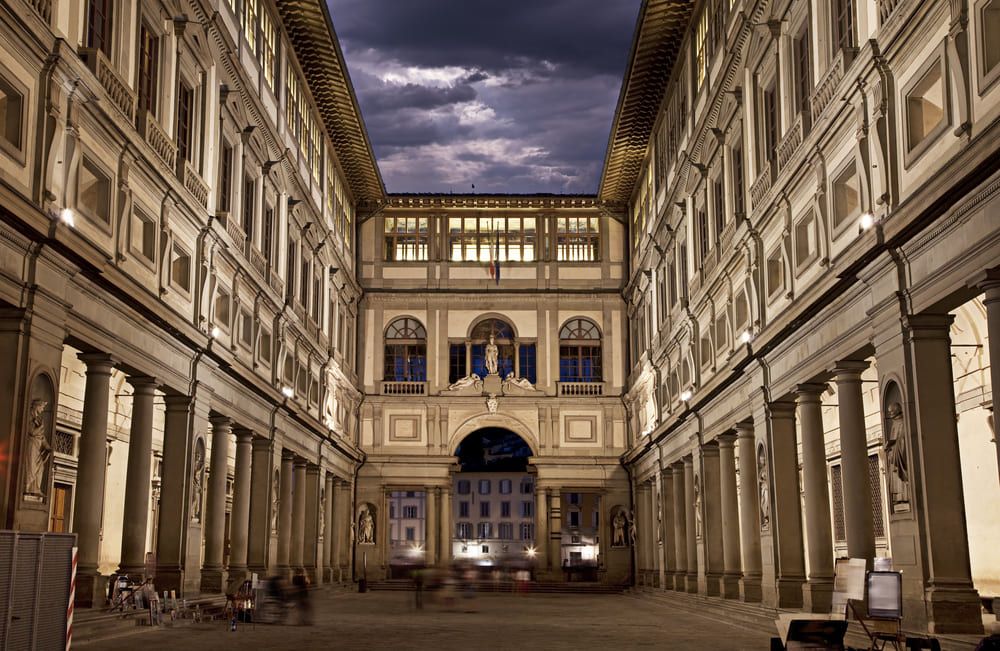
The Uffizi Gallery is one of the most famous art museums of the world, setting of the treasures of the Medici. The Florence audio-guided tour stops here to evoke this temple of the Renaissance, which shelters Botticelli's Birth of Venus and innumerable masterpieces.
The Uffizi Gallery is one of the most famous and most visited art museums in the world, and one of the sanctuaries of the art of the Renaissance. The building was built in the sixteenth century by the architect Giorgio Vasari to shelter the offices, the uffizi in Italian, of the administration of the Medici, the family that reigned over Florence. These vast galleries were then transformed into a museum to exhibit the fabulous collection of works of art gathered by the Medici. There you admire today absolute masterpieces, including the famous paintings of Botticelli, the Birth of Venus and the Primavera, as well as works by Leonardo da Vinci, Michelangelo, Raphael, Titian, Caravaggio and so many other masters. To go through the Uffizi is to cross centuries of artistic genius. A temple of art and the pride of the town, the Uffizi Gallery is a must-see stop of Florence.
You admire one of the most famous museums of the world, in the building built by Vasari for the offices of the Medici, become the setting of their fabulous collection, with absolute masterpieces like the Birth of Venus and the Primavera of Botticelli, and works by Leonardo da Vinci, Michelangelo, Raphael, Titian and Caravaggio. The Uffizi Gallery is a temple of the Renaissance in Florence. It is a major stop, to be explored on foot.
The Uffizi Gallery lies in the heart of Florence, near the Piazza della Signoria and the Arno, reachable on foot. The visit follows its own hours and conditions, which vary, and the museum is one of the most visited in the world. It is best to check the arrangements, to book in advance and to allow time.
Because the building was built in the sixteenth century by Vasari to shelter the offices, the uffizi in Italian, of the administration of the Medici; these galleries were then transformed into a museum to exhibit the fabulous art collection of the family.
In the heart of Florence, near the Piazza della Signoria and the Arno, in Italy.
Aucun avis pour le moment
