





Walk
Tuscany’s hidden surprise
Pistoia, Italy
Walk
Tuscany’s hidden surprise
Pistoia, Italy
3 km
Distance
1h20
Durée
23
Audios
Loop
Parcours
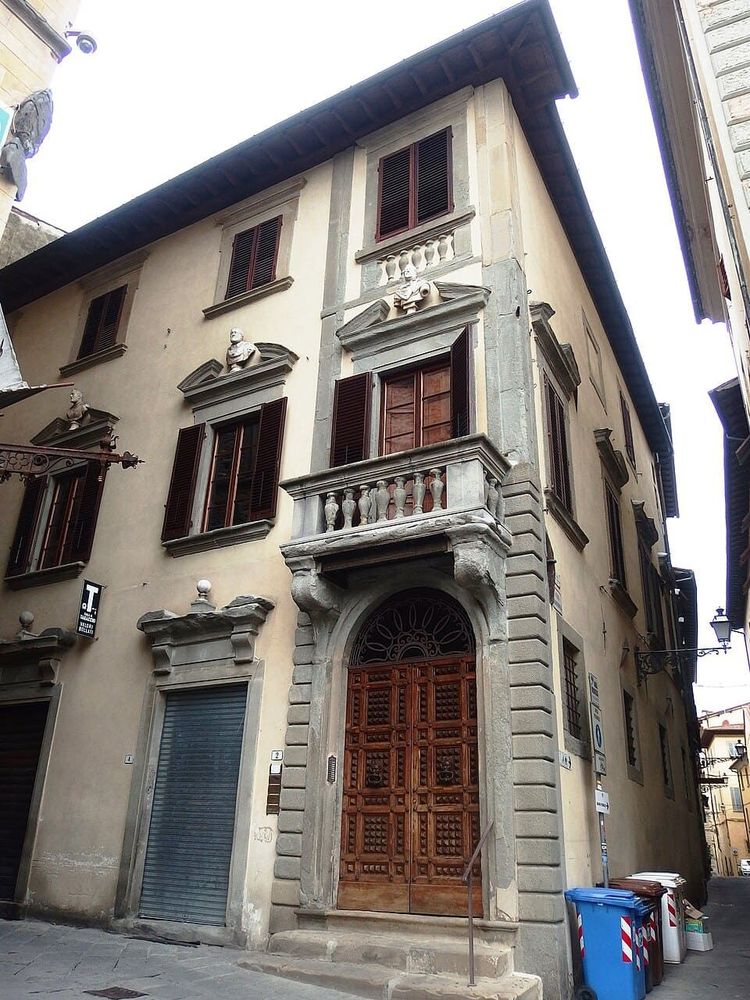
©Palickap, CC BY-SA 4.0 <https://creativecommons.org/licenses/by-sa/4.0/deed.fr>via Wikipedia Commons
You’re now on Via degli Orafi, one of the oldest and most important streets in Pistoia. As you walk along it, you’re actually following a route that dates back nearly two thousand years. This street was once the main axis of the Roman city, the decumanus maximus, running from east to west.
In the Middle Ages, it was known as Via Taberna, because of the many taverns located here. It was already a lively place, full of movement, trade, and everyday life, and that hasn’t really changed. Even today, it’s one of the busiest streets in the historic center.
As you make your way toward the end of the street, look to your left and you’ll see one of its most remarkable buildings: Palazzo Bracciolini delle Api. Built in the early 17th century, it stands out with its façade decorated with busts of members of the Medici family, a clear sign of political loyalty at the time. Its nickname, “delle Api,” refers to bees, a symbol borrowed from the powerful Barberini family.
The street also reflects a later chapter of the city’s history, with buildings in the Liberty style, the Italian version of Art Nouveau. These more recent façades, with their flowing lines and decorative details, show how Pistoia continued to evolve well beyond the Renaissance. In just a short walk, this street takes you through centuries of history, from ancient Rome to the transformations of the 20th century, right in the heart of the city.
Aucun avis pour le moment
