





Walk
Japan’s lively and food-loving scene
Osaka, Japan
Walk
Japan’s lively and food-loving scene
Osaka, Japan
4 km
Distance
1h45
Durée
19
Audios
Loop
Parcours

As you walk through the Namba district toward the famous Kuromon Market, also known as the Black Gate Market, let’s take a brief step back in time. Osaka has a long and eventful history, closely linked to its geography. Located along the Seto Inland Sea and at the mouth of several rivers, the area has been inhabited since ancient times and quickly became an important crossroads between maritime routes and the land roads of the Kansai region.
In ancient times, the site even played a political role. In the seventh century, it hosted the official port through which diplomatic missions traveled to China and Korea, making it a gateway for cultural and administrative influences coming from the Asian continent. During the Middle Ages, the city grew around the powerful fortified temple of Ishiyama Hongan-ji, the religious and military center of the Jōdo Shinshū Buddhist sect, which controlled the region for several decades.
This stronghold resisted major warlords for a long time, until the arrival of Oda Nobunaga and later Toyotomi Hideyoshi, who deeply transformed the city at the end of the sixteenth century. Hideyoshi ordered the construction of the monumental Osaka Castle, and around it a carefully planned city began to grow, crossed by canals and designed as both a political center and a hub for trade. After Hideyoshi’s death and the victory of the Tokugawa shogunate, Osaka gradually lost its political importance but experienced remarkable economic growth during the Edo period.
It became the main commercial center of Japan and earned the nickname “the nation’s kitchen,” because rice, fish, seaweed, and products from across the archipelago were traded here. A powerful merchant class shaped a lively urban culture that was practical and business-minded, but also deeply connected to entertainment and pleasure. This environment gave rise to forms of popular culture such as bunraku puppet theater and a rich street food tradition.
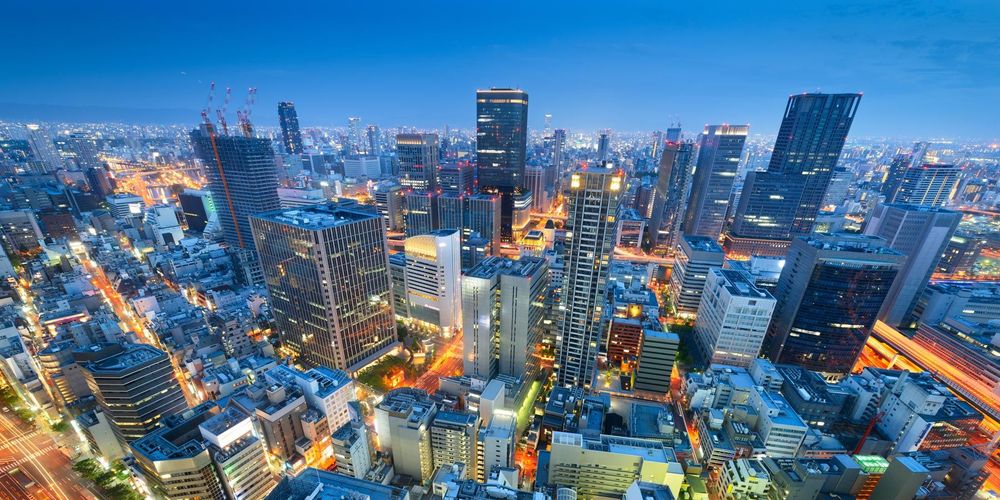
In the nineteenth century, the city industrialized rapidly and became one of the driving forces of modern Japan’s economy, before being heavily damaged by bombing during the Second World War. Almost entirely destroyed, Osaka rebuilt quickly, focusing on efficiency and economic vitality rather than preserving historic buildings. Today the city fully embraces this history: a dynamic, direct, and welcoming metropolis shaped by its merchant past, where skyscrapers, lively districts, and canals reflect a place that has constantly reinvented itself without ever losing its character.
Aucun avis pour le moment
