





Walk
The Phoenix City
Tokyo, Japan
Walk
The Phoenix City
Tokyo, Japan
5.6 km
Distance
2h15
Durée
20
Audios
Loop
Parcours
Shutterstock
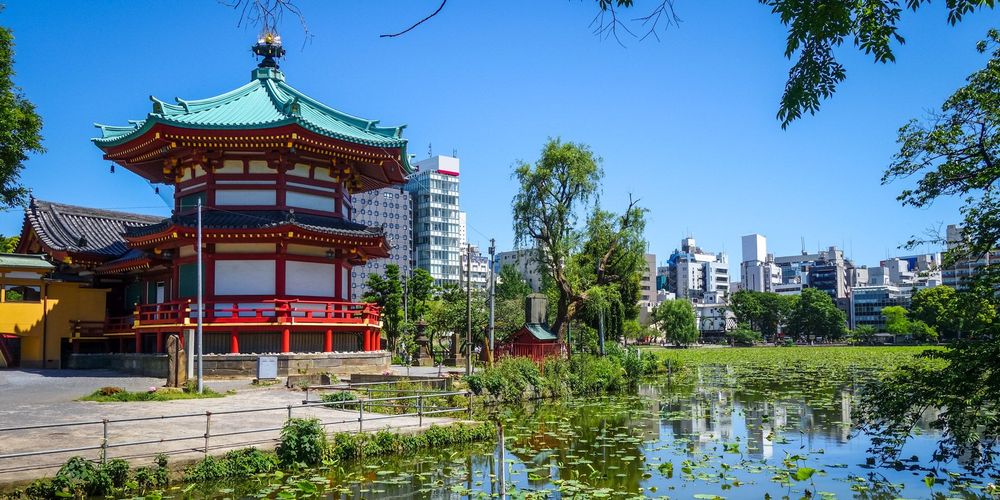
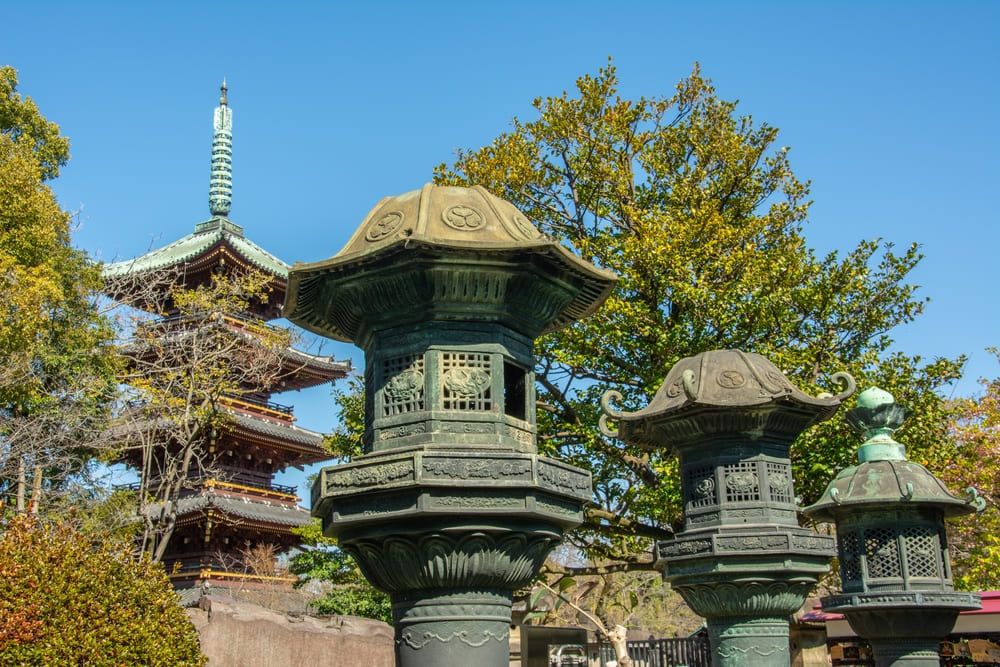
The Tokyo audio-guided tour invites you to quiet contemplation on the traces of Kan'ei-ji, the former religious complex on which Ueno Park was laid out, once the largest Buddhist temple of the capital.
Kan'ei-ji was built in 1625 by the Buddhist monk Tenkai, of the Tendai sect, at the very start of the Edo period. The complex then had more than thirty buildings, all prestigious, and was deliberately built to the north-east of Edo Castle, for a strategic purpose: to ward off the evil spirits supposed to come from that direction. The major part of the constructions was destroyed in the 1870s, at the beginning of the Meiji era. The surviving building still houses the tombs of six of the fifteen Tokugawa shoguns.
The vestiges of Kan'ei-ji, scattered in Ueno Park, testify to the power and the wealth of the Tokugawa. In contemplation, the visitor discovers the surviving building, which houses the tombs of several shoguns, and imagines the scale of the complex of the past. It is an essential place of memory to understand the religious and political history of Tokyo.
The vestiges of Kan'ei-ji are in Ueno Park, in Tokyo. A place of worship and memory, they can generally be visited during the day, with respect for silence and for the faithful, the hours possibly varying according to the season. Access is on the level.
The largest Buddhist temple of the capital in the Edo period, built in 1625 by the monk Tenkai, on the site of present-day Ueno Park.
A few buildings scattered in Ueno Park, one of which still houses the tombs of six Tokugawa shoguns.
Aucun avis pour le moment
