





Walk
The Echo of the Temples in the Ancient Capital
Kyoto, Japan
Walk
The Echo of the Temples in the Ancient Capital
Kyoto, Japan
5.4 km
Distance
2h15
Durée
25
Audios
Loop
Parcours
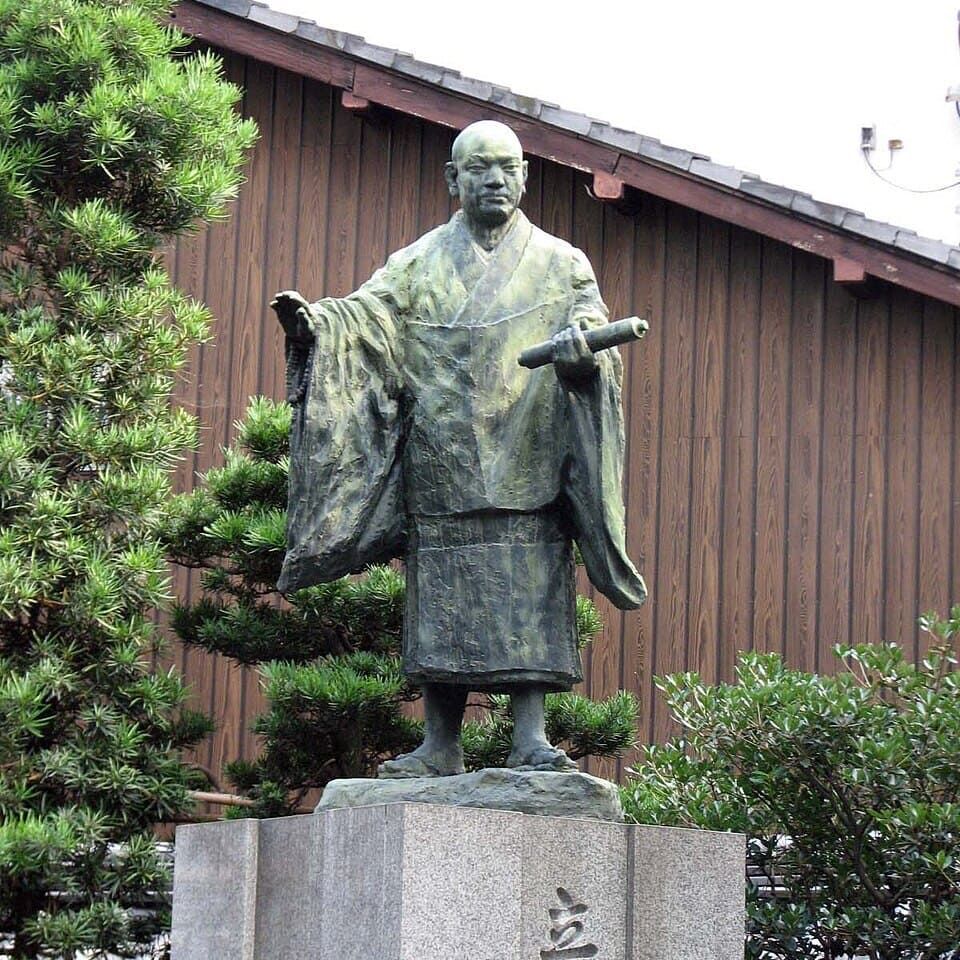
©Chris Gladis CC BY-SA 2.0 <https://creativecommons.org/licenses/by-sa/2.0/deed.fr>via Wikipedia Commons
At the entrance of Honnō-ji Temple, on Teramachi, a statue represents Nichiren, founder of a great school of Japanese Buddhism. The temple, famous for a dramatic episode in Japan's history, is also a place of memory. The Kyoto audio-guided tour stops here to evoke this spiritual figure and the eventful past of the sanctuary.
Honnō-ji Temple belongs to the Buddhist tradition of Nichiren and was founded at the beginning of the fifteenth century. It entered Japanese history for having been the scene of a famous episode of the feudal period, the Honnō-ji incident. The statue of Nichiren, at the entrance, pays tribute to the thirteenth-century monk whose teaching gave rise to this influential branch of Buddhism.
Here you discover the statue of Nichiren, the temple and its atmosphere of contemplation, a stone's throw from the bustle of Teramachi. The place invites you to take an interest in the spiritual and political history of Japan, between Buddhist tradition and great episodes of the feudal era. A stop full of meaning, contrasting with the nearby shopping arcades.
The statue of Nichiren is at the entrance of Honnō-ji Temple, on Teramachi, in the centre of Kyoto, reachable on foot. A working Buddhist place of worship, the temple can be visited with respect for contemplation; its opening hours may vary with the season and ceremonies. The statue, at the entrance, can be freely admired from the street.
A thirteenth-century Buddhist monk, founder of a great school of Japanese Buddhism; his statue stands at the entrance of Honnō-ji Temple.
Founded at the beginning of the fifteenth century, it is known for having been the scene of a famous episode in Japan's feudal history, the Honnō-ji incident.
Aucun avis pour le moment
