





Walk
The Phoenix City
Tokyo, Japan
Walk
The Phoenix City
Tokyo, Japan
5.6 km
Distance
2h15
Durée
20
Audios
Loop
Parcours
Shutterstock
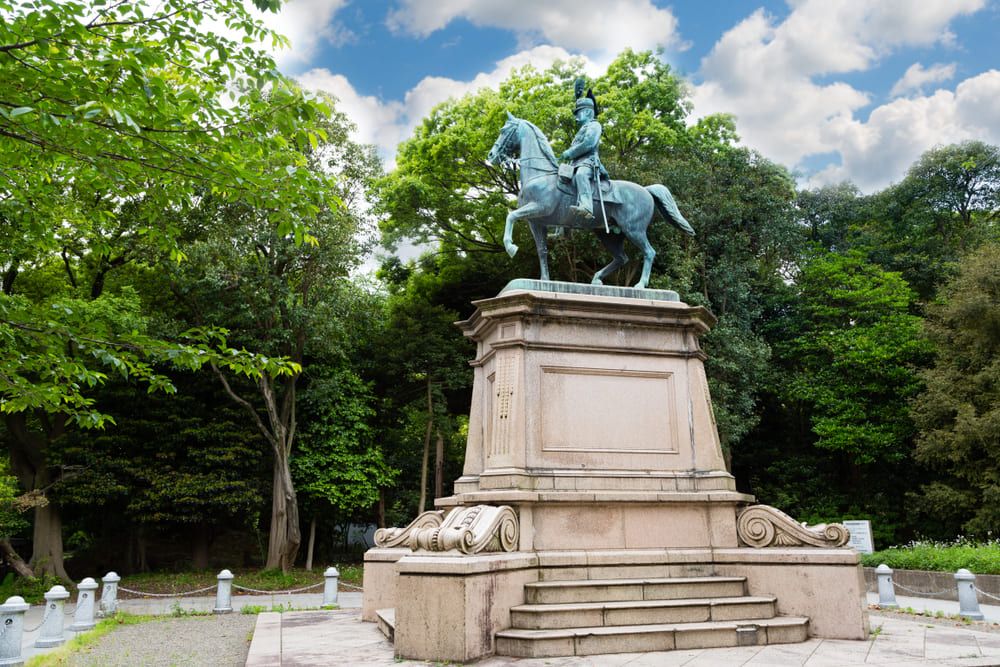
The Tokyo audio-guided tour has you notice, in Ueno Park, an imposing equestrian statue that one cannot miss: that of Prince Komatsu Akihito.
Komatsu Akihito belonged to one of the families considered close to the imperial family, whose children could accede to the throne in the absence of an heir of the emperor. Become a soldier in the imperial army, recognised for his sense of tactics, he took part in the battles that put an end to the Tokugawa shogunate in 1868, after more than two centuries of power. This year marks the end of the Edo period and the beginning of the Meiji era, which opened Japan to the world and engaged its industrialisation. Appointed lieutenant general, the prince received from the emperor the Order of the Rising Sun.
The statue, which represents the prince proudly seated on his horse, dominates the park by several metres in height. It pays tribute to a major actor of the transition towards the Meiji era, a pivotal period of Japanese history. It is a landmark easy to identify in Ueno Park and an invitation to discover the eventful history of nineteenth-century Japan.
The statue of Prince Komatsu Akihito stands in Ueno Park, in Tokyo. It is a public monument visible freely at all hours and on the level, along the walk.
A member of a family close to the imperial family and a general of the imperial army, who took part in the fall of the Tokugawa shogunate in 1868.
The period that succeeded the Edo era in 1868, marked by the opening of Japan to the world and its rapid industrialisation.
Aucun avis pour le moment
