





Walk
The Echo of the Temples in the Ancient Capital
Kyoto, Japan
Walk
The Echo of the Temples in the Ancient Capital
Kyoto, Japan
5.4 km
Distance
2h15
Durée
25
Audios
Loop
Parcours
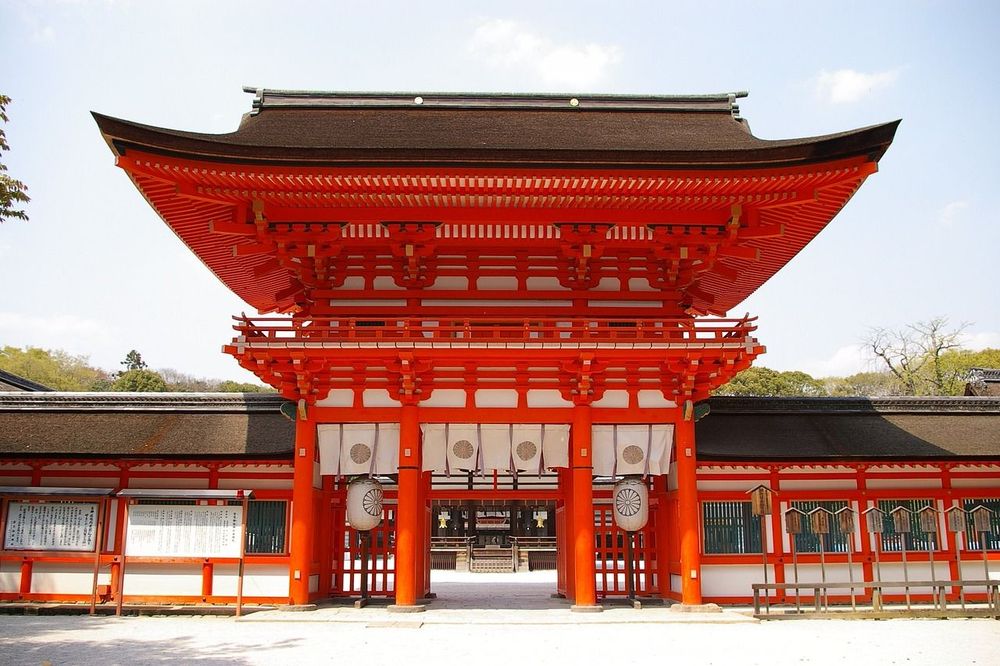
At the end of Shijo Avenue, Yasaka Shrine is one of the most venerated and lively Shinto sites in Kyoto. With its vermilion gate lit each evening, it marks the entrance to the Gion district. The Kyoto audio-guided tour stops here to evoke this high spiritual place, at the heart of the traditions of the former capital.
Also called Gion Shrine, the Yasaka-jinja is a Shinto shrine located at the eastern end of the Shijo shopping avenue. It is one of the most important religious sites in Kyoto, overflowing with energy during the great festivals. It is notably linked to the Gion Matsuri, one of the most famous festivals in Japan, which has enlivened the city each summer for centuries.
You admire the vermilion gate, the main pavilion and the many lanterns that light up at nightfall, creating a unique atmosphere. The shrine opens directly onto the neighbouring park and the Gion district. A place of prayer that is always lively, it offers a dive into Shinto spirituality and the living traditions of Kyoto.
Yasaka Shrine lies at the eastern end of Shijo Avenue, at the entrance of the Gion district, in Kyoto, reachable on foot and by public transport. It is a working Shinto shrine, whose grounds are generally freely accessible, including in the evening. The visit is made with respect for the places of worship and the faithful; ceremonies and festivals have their own dates.
It is a great Shinto shrine of Kyoto, also called Gion Shrine, located at the end of Shijo Avenue, famous for its vermilion gate and the Gion Matsuri festival.
The shrine grounds are generally freely accessible, including in the evening; ceremonies and festivals, like the Gion Matsuri, have their own dates and conditions.
Aucun avis pour le moment
