





Walk
The Little Paris of the Baltics
Riga, Latvia
Walk
The Little Paris of the Baltics
Riga, Latvia
4.3 km
Distance
2h00
Durée
28
Audios
Loop
Parcours
Shutterstock
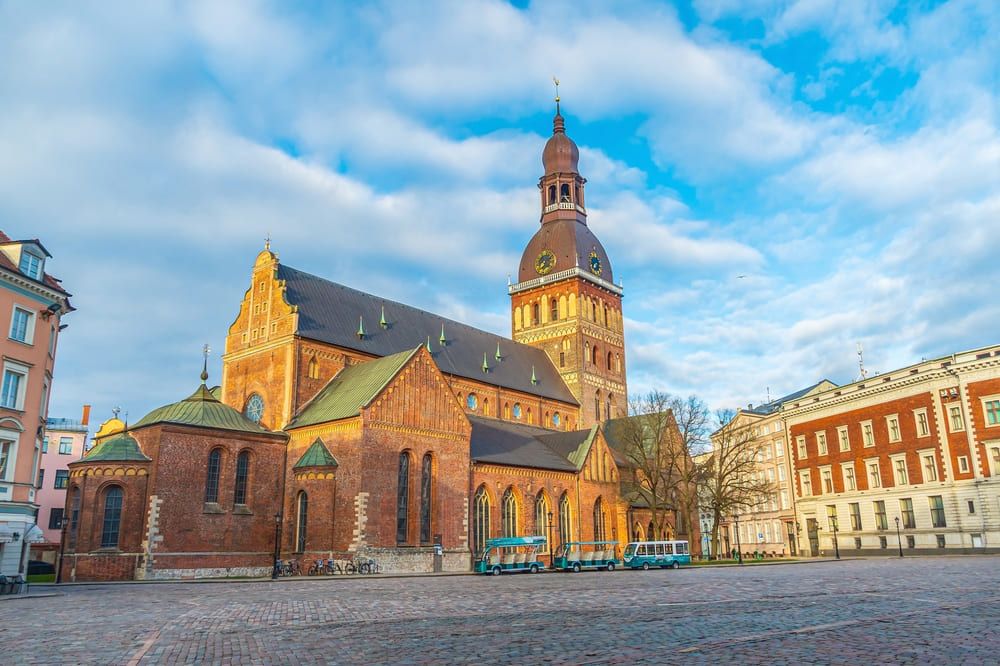
A contemplative stop on the Riga audio-guided tour, Riga Cathedral, officially dedicated to Saint Mary, is today the largest medieval church in the Baltic states. Founded in 1211 by Bishop Albert, shortly after the creation of Riga, it has gone through more than eight centuries of history.
Its many transformations are visible today in its blend of Romanesque, Gothic, Baroque and neo-Gothic elements. A surprising detail: one goes down several steps to enter. It is not the building that is sinking, but the level of the outside ground that has risen by more than three metres over the centuries. One must now go down about ten steps to reach the interior.
The cathedral is especially famous for its monumental organ of 1884, long considered the largest in the world, which still resounds during concerts. Enter this major building with quiet and respect for the place of worship to appreciate its scale and acoustics.
Riga Cathedral is on Dome Square, in the heart of Riga's old town. Like any place of worship, it is visited with respect for silence; hours and organ concerts should be checked depending on the season.
Because the level of the outside ground has risen by more than three metres over the centuries.
For its monumental organ of 1884, long considered the largest in the world.
Aucun avis pour le moment
