





Walk
The rebellious city on the water
Valladolid, Mexico
Walk
The rebellious city on the water
Valladolid, Mexico
4.6 km
Distance
2h00
Durée
17
Audios
Loop
Parcours
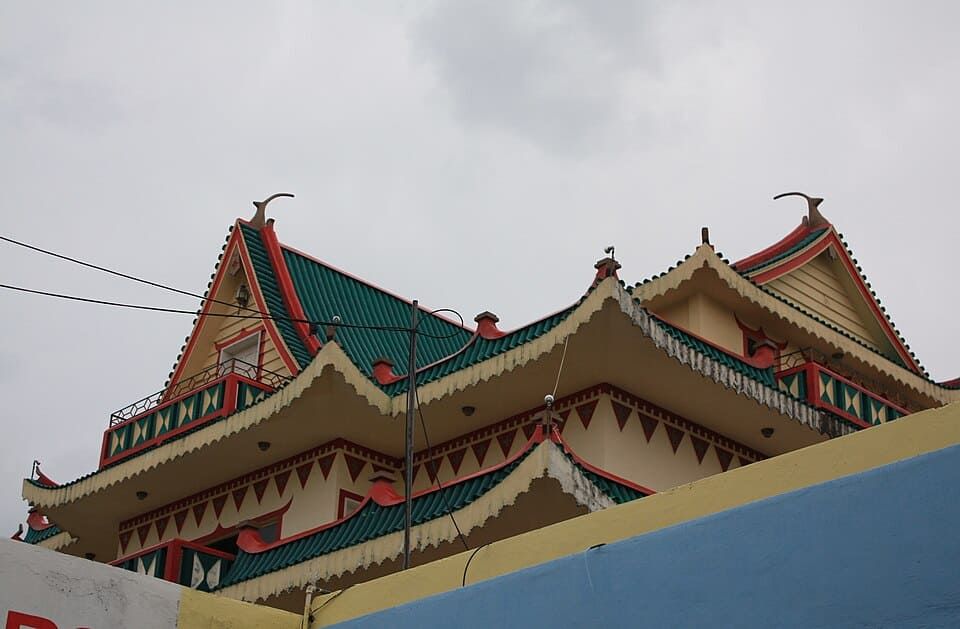
©David Cabrera, CC BY-SA 2.0. <https://creativecommons.org/licenses/by-sa/2.0/deed.fr>via Wikipedia Commons
If you continue about 50 meters to the left along Calle 40, you’ll come across one of Valladolid’s most surprising curiosities: a Chinese-style house right in the heart of a city shaped by Spanish heritage. An architectural oddity that owes its existence to a little-known story, that of Chinese immigration to Yucatán. Beginning in the late 19th century, Chinese workers arrived in the region, many of them employed on the henequén plantations.
In the early 20th century, merchants and craftsmen began settling here more permanently. The community integrated relatively well, creating associations and taking part in the economic and political life of the state. Casa China is believed to have first served as a meeting place for the local Sino-Mexican community, eventually becoming a symbol of this discreet Asian presence on the peninsula.
Over time, the house also took on a more political role when it became the residence of Jesús Chacón Vivas, nicknamed “Don Chuchi,” a former municipal president of Valladolid. He reportedly received residents there as if it were an unofficial office, sometimes preferring to work from his home rather than at city hall. Neighbors also remember spectacular Christmas decorations and even a private soccer field built on the property for his son.
Today, Casa China is for sale for several tens of millions of Mexican pesos—just in case you might be interested.
Aucun avis pour le moment
