





Walk
The rebellious city on the water
Valladolid, Mexico
Walk
The rebellious city on the water
Valladolid, Mexico
4.6 km
Distance
2h00
Durée
17
Audios
Loop
Parcours
Shutterstock
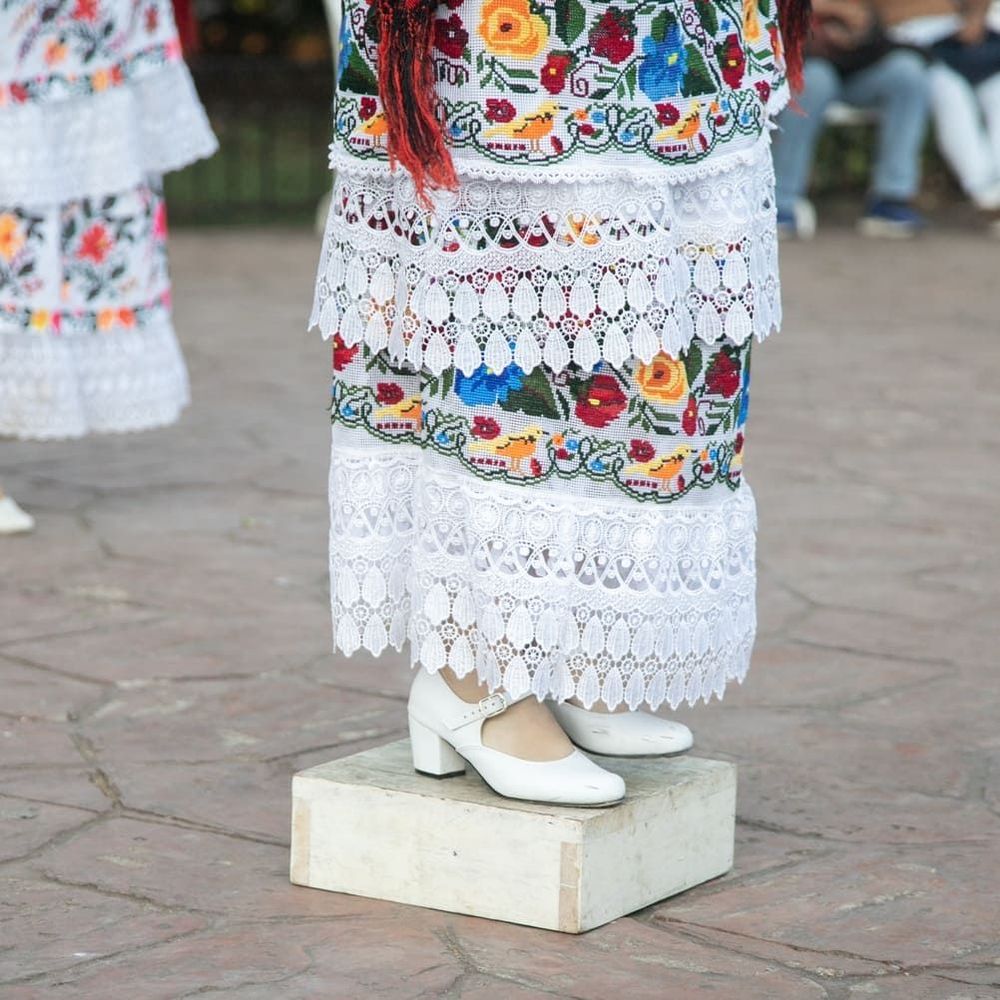
In Valladolid, craftsmanship is a living expression of Maya heritage, and embroidery is without a doubt its most visible soul. The artisans, most often women, preserve a textile tradition recognized as part of the intangible cultural heritage of Yucatán. The most emblematic garment is the hipil, a white cotton tunic dress worn since pre-Hispanic times, embroidered around the neckline and hem with colorful floral patterns such as roses or daisies, still commonly seen in the streets of the city.
For special occasions, the terno represents the ceremonial version: a three-piece outfit made up of a jubón, a square piece of fabric placed over the shoulders, a long hipil, and a fustán, a lace petticoat. The entire ensemble is hand embroidered and worn during weddings, baptisms, and traditional celebrations. The techniques used are ancient and varied.
The xmanikté is the oldest and most sacred. Of pre-Hispanic origin and unique to Yucatán, this serpentine stitch reproduces the diamond shapes of the rattlesnake’s skin, a sacred animal for the Maya. Its name means “the eternal flower,” and it does not appear in any embroidery book in the world.
It exists only in the villages of Yucatán, passed down from mother to daughter. A popular belief says that touching a snake’s skin helps you embroider quickly and skillfully. Beyond the superstition, the serpent is one of the most powerful deities in Maya cosmology, and wearing this motif on clothing is believed to call upon its divine protection.
There is also the chuuy k’ab stitch, made entirely by hand, as well as cross-stitch, introduced in the 16th century by Spanish women and later adapted to Maya geometric patterns. In eastern Yucatán, around Valladolid, embroidery is known for its bright colors, dense fillings known as macizo, and openwork designs cut into grid patterns. Embroidery accompanies the lives of Maya women from birth to death, from their first childhood garments to the hipil worn in the grave.
Alongside textiles, wood and stone carving inspired by pre-Hispanic motifs, basketry made from plant fibers, and hammock weaving complete the rich world of Yucatán craftsmanship. Now let yourself be drawn in by the colors and textures of the handicraft market in front of you—you might just find yourself tempted by an embroidered piece.
Aucun avis pour le moment
