





Walk
The rebellious city on the water
Valladolid, Mexico
Walk
The rebellious city on the water
Valladolid, Mexico
4.6 km
Distance
2h00
Durée
17
Audios
Loop
Parcours
Shutterstock
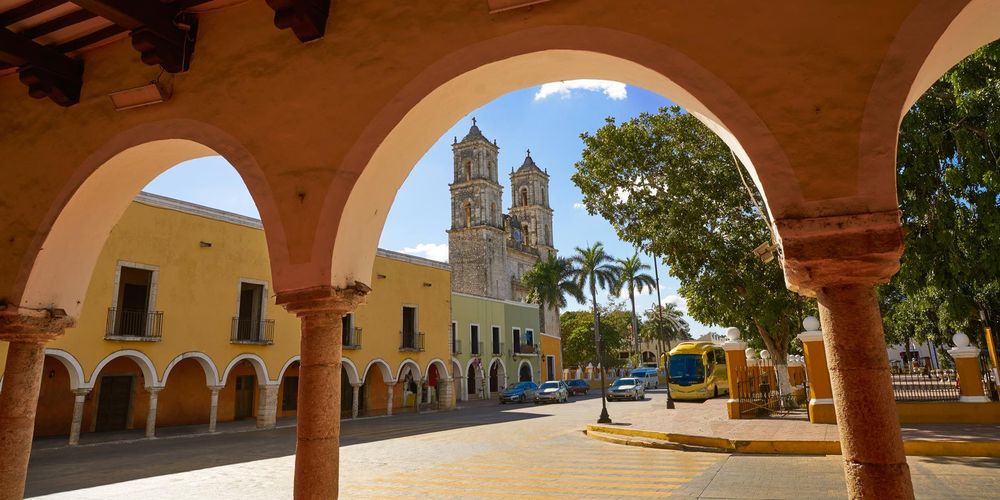
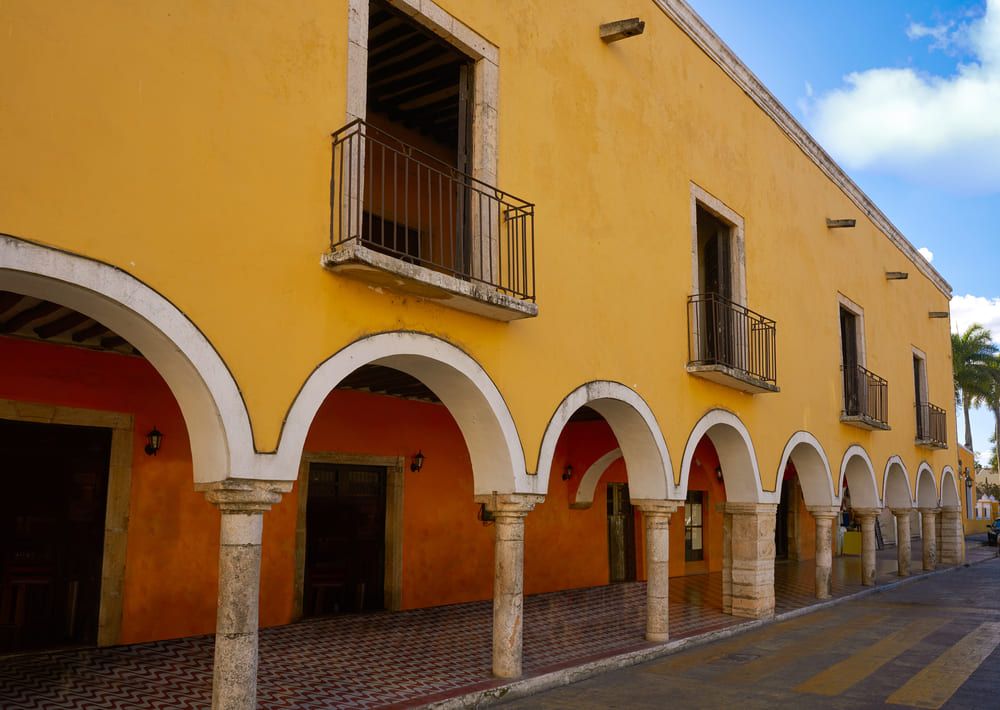
You are standing in front of the Palacio Municipal of Valladolid, which today houses the city hall. Its façade with regular arches, painted in the warm and light tones typical of Yucatán, reflects Spanish colonial architecture adapted to the local climate: open galleries allow air to circulate while thick walls help keep the interior cool. The inner courtyard follows the same elegant lines as the façade and reflects the classic layout of colonial administrative buildings.
Throughout its history, the building has served as the seat of the Cabildo, a private residence, a school, and a municipal library before becoming the administrative and cultural center of the city. Do not miss the Salón de los Murales on the first floor, where four large oil paintings by Yucatecan artist Manuel Lizama illustrate the major stages of local history. The first depicts the pre-Hispanic period and the Maya city of Zací, with the figure of Chilam Balam and symbols announcing the arrival of the Spanish.
The second represents the conquest and the founding of Valladolid in the 16th century, showing Francisco de Montejo, a Franciscan friar, and a defeated Maya leader. The third illustrates the Caste War of 1847, portraying both the tensions, the violence, and the social causes behind the uprising. Finally, the fourth commemorates the “Primera Chispa de la Revolución,” the uprising of June 4, 1910 in Valladolid, which took place several months before the official beginning of the Mexican Revolution later that same year.
At the beginning of the 20th century, Mexico had been ruled for more than 30 years by General Porfirio Díaz. His authoritarian regime favored large landowners, while agricultural workers, especially in Yucatán, lived under very harsh conditions. When these workers rose up on June 4, 1910 and briefly took control of the city, the federal army responded violently and quickly regained control.
This episode is considered the “First Spark” of the Mexican Revolution because it happened several months before the national uprising of November 20, 1910, a revolution that would last for ten years. On the ground floor, you can also see Valladolid’s coat of arms, whose symbols recall the Maya heritage, the historic neighborhoods, and the episodes of resistance that earned the city the title of “Ciudad Heroica,” the Heroic City. Entry is free, so feel free to step inside and take a look.
Aucun avis pour le moment
