





Walk
From Mayan heritage to colonial elegance
Mérida, Mexico
Walk
From Mayan heritage to colonial elegance
Mérida, Mexico
5.6 km
Distance
2h30
Durée
28
Audios
Loop
Parcours
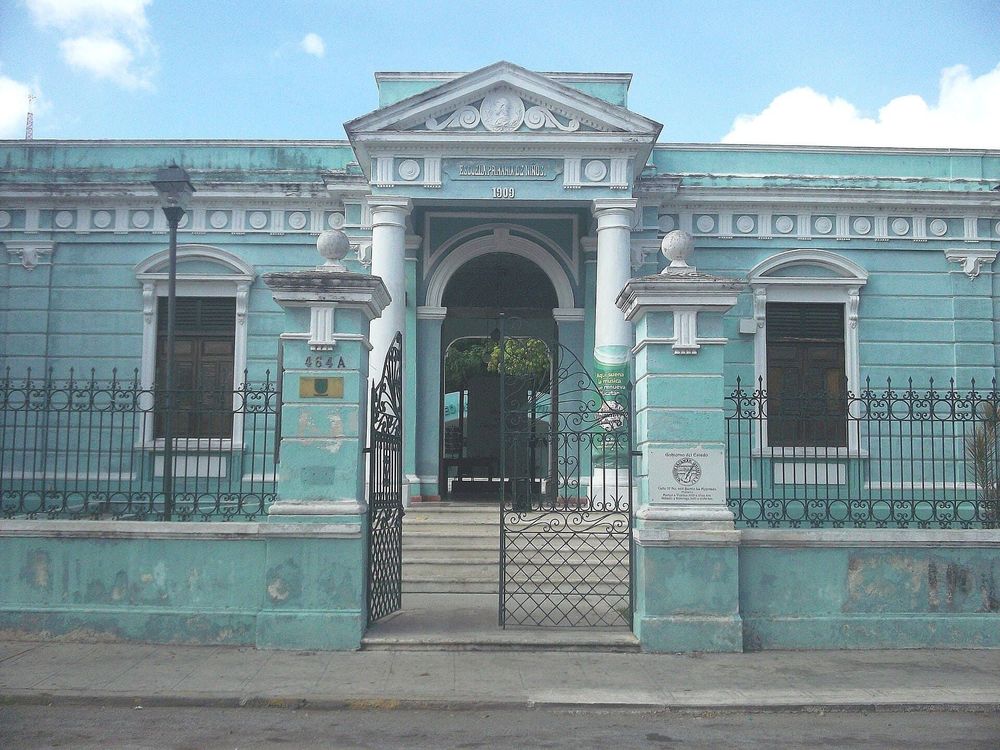
©Inri - CC0 <https://creativecommons.org/licenses/by-sa/3.0/deed.fr>via Wikipedia Commons
With its bright turquoise blue façade, the Museum of Yucatecan Song immediately catches the eye. Located in the Mejorada district, it is dedicated to the rich tradition of the romantic song of Yucatán. The Mérida audio-guided tour stops here to evoke this musical heritage dear to the heart of the people of Mérida.
The Museum of Yucatecan Song, housed in a building with a typical turquoise façade, is devoted to the history of the romantic song of Yucatán, a genre deeply rooted in the regional identity. It presents scores, instruments, photographs and mementos of the great local composers and performers. The museum thus preserves a musical tradition that made Mérida famous well beyond Mexico.
The museum presents scores, instruments and mementos that tell the history of Yucatecan song and its great figures. Its turquoise façade, in the Mejorada district, is already a pleasure for the eyes. It is a stop for lovers of music and local culture, revealing an intimate and romantic side of the soul of Mérida.
The Museum of Yucatecan Song lies in the Mejorada district, in Mérida, reachable on foot. A working museum, it can be visited; its hours and entry conditions vary by day and season, and it may be closed on certain days. It is best to check the arrangements before coming.
The history of the romantic song of Yucatán, through scores, instruments, photographs and mementos of its great composers and performers.
By its bright, typical turquoise blue façade, in the Mejorada district of Mérida.
Aucun avis pour le moment
