





Walk
The City that rose from the sea
Alesund, Norway
Walk
The City that rose from the sea
Alesund, Norway
3.6 km
Distance
1h50
Durée
18
Audios
Loop
Parcours
Shutterstock
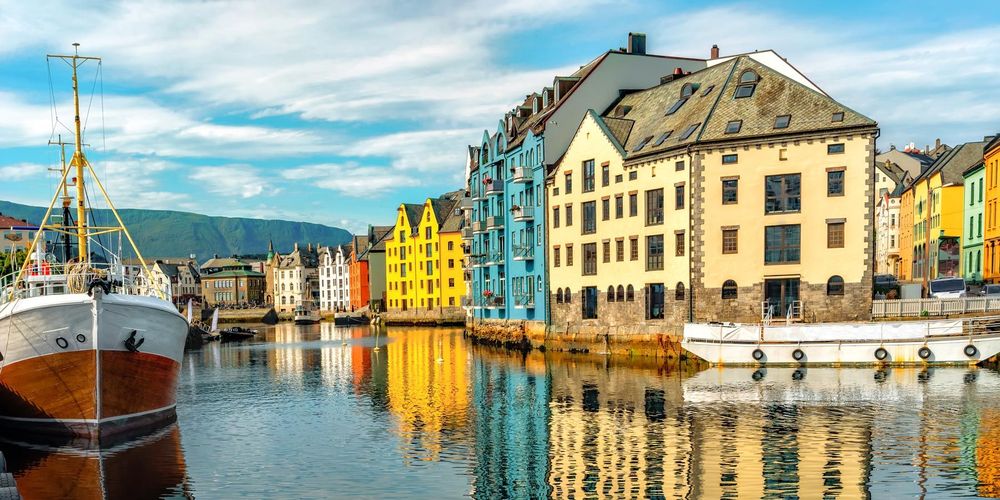
The Brosundet is the strait that forms the living heart of Ålesund, lined with the magnificent colourful Art Nouveau façades of the town. The Ålesund audio-guided tour stops here to evoke this emblematic canal, in the heart of a unique town deployed over an archipelago of islands.
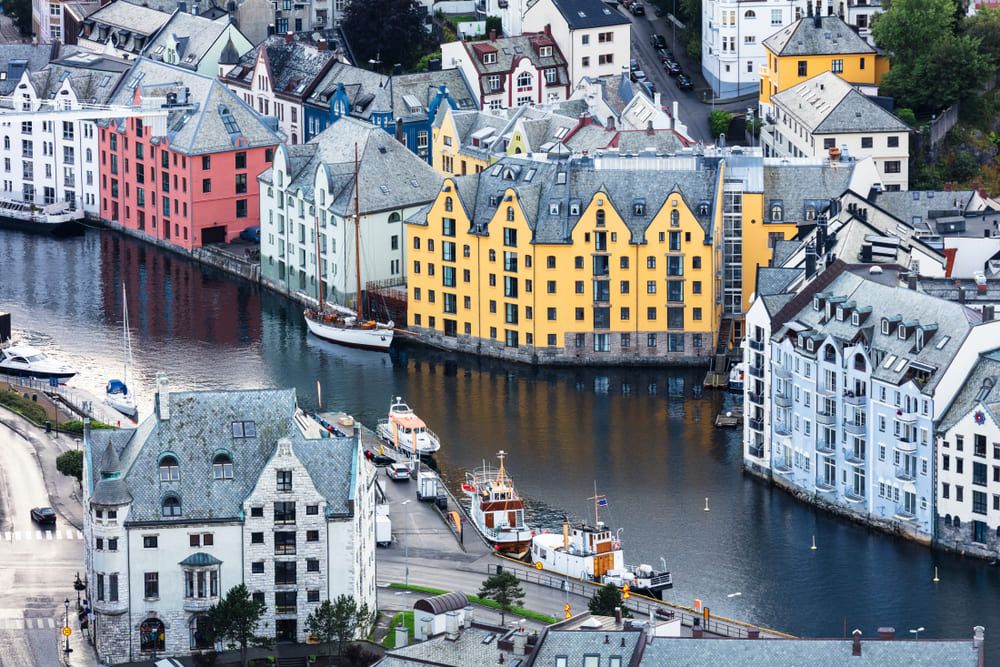
It is from the quays of Ålesund that you truly become aware of the unique layout of this town, which deploys over an archipelago of islands linked by bridges and canals. The Brosundet, this strait that separates the two main islands, Aspøya and Nørvøya, is the living heart of the town. Its name, which means the strait of the bridge, recalls its architectural and geographical history. All around are lined up the magnificent colourful façades that make the fame of Ålesund: for the town was entirely rebuilt in the Art Nouveau style, the Jugendstil, after the terrible fire of 1904 that ravaged almost all of it. The Hellebrua bridge offers one of the finest views over this enchanting setting, where the turrets, the ornate gables and the bright colours of the buildings are reflected in the water. Fishing boats, lively quays and refined architecture compose a picturesque picture. The beating heart and postcard of the town, the Brosundet is a must-see stop of the discovery of Ålesund.
You admire the strait that separates the islands of Aspøya and Nørvøya, the living heart of the town deployed over an archipelago linked by bridges and canals, lined with the magnificent colourful Art Nouveau façades rebuilt after the fire of 1904, of which the Hellebrua bridge offers one of the finest views, with the turrets and the gables reflected in the water. The Brosundet is the postcard of Ålesund. It is a must-see stop, to be explored on foot.
The Brosundet lies in the heart of Ålesund, between the islands of Aspøya and Nørvøya, reachable on foot. They are open-air public quays, freely accessible. The view is particularly beautiful from the Hellebrua bridge and in the light of the end of the day.
The strait that separates the two main islands of Ålesund, Aspøya and Nørvøya, the living heart of the town; its name means the strait of the bridge, and it is lined with the magnificent colourful Art Nouveau façades rebuilt after the fire of 1904.
In the heart of Ålesund, between the islands of Aspøya and Nørvøya, in Norway.
Aucun avis pour le moment
