







Créé par Camille, le 4 oct. 2026
Votre guide Ryo
Alesund, Norway
The City that rose from the sea
Parcours audioguidé pour visiter Alesund en 1 jour
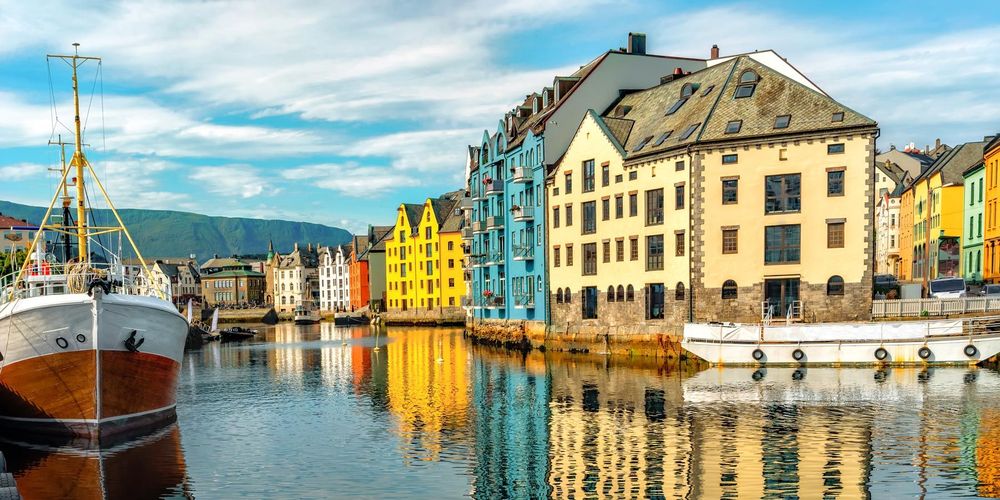
This tour of Ålesund invites you to discover the jewel of Norwegian Art Nouveau, nestled between fjords and mountains. Along the way, explore its elegant streets with sculpted facades and its authentic fishing port, witnesses to a unique reconstruction following the Great Fire of 1904. A simple and captivating immersion to savor the maritime atmosphere of this archipelago city at your own pace.
Quand partir à Alesund ?
Jan.
3°
21
Feb.
3°
19
March
3°
19
April
6°
16
May
9°
16
June
12°
17
July
14°
17
Aug.
15°
19
Sept.
12°
21
Oct.
9°
21
Nov.
5°
20
Dec.
3°
20
In Ålesund, the climate is oceanic, with relatively mild winters for this latitude. From December to February, temperatures usually range between 0°C and 5°C, often with frequent rain. Summers are generally cool and pleasant, with temperatures between 12°C and 20°C from June to August. Spring and early autumn often offer the most balanced conditions for visiting, with softer light, moderate temperatures, and fewer visitors, making the months of May, June, and September particularly well suited for exploring the city. The summer months are also very enjoyable thanks to comfortable temperatures and exceptionally long days, although it is also the busiest time of year, when accommodation prices tend to be higher.
Départ conseillé
Our tours are designed as loops, so you can easily start the visit from whichever point is closest to you, and the guidance will automatically adjust. If you happen to be nearby, we recommend an ideal starting point: Apotekertorget square.
Parking à proximité
Parking Aksla, Kipervikgata 17.
In Ålesund, several parking options are available depending on your needs. One of the most convenient is Aksla Parkering, a large underground parking garage in the city center. It is secure, paid, and open 24 hours a day, making it easy to leave your car and continue exploring the city on foot. Street parking is also possible, but it is regulated. Most spaces are paid during the week and often come with time limits, so it’s important to check the local signs carefully to avoid a fine.
À savoir
In Norway, driving is strictly regulated. Speed limits are carefully enforced, headlights must remain on at all times, and fines for traffic violations can be quite high. Tolls operate automatically through license plate recognition, with no physical barriers. Local ferries usually do not require reservations: vehicles simply board in the order they arrive, and payment is often processed automatically using the license plate. It is also useful to know that payments are made almost entirely by card, as cash is rarely used. In summer, the days are very long, sometimes with more than eighteen hours of daylight depending on the latitude, while in winter daylight becomes very limited, especially in the north. Finally, the weather can change quickly, so it’s always a good idea to bring waterproof clothing, even in summer.
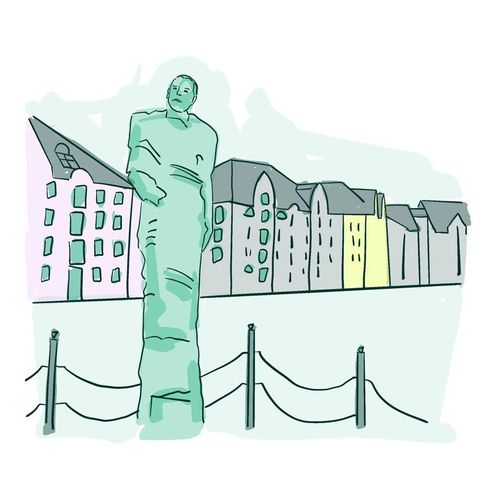
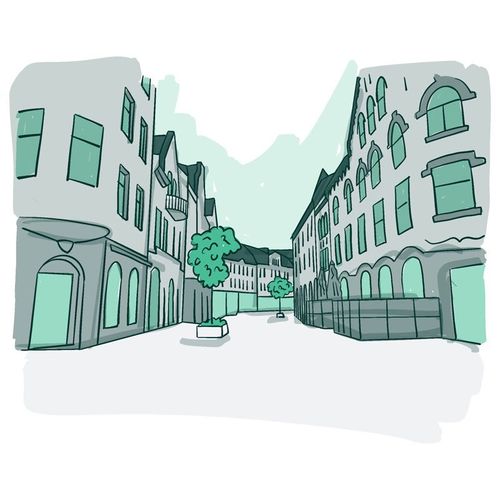
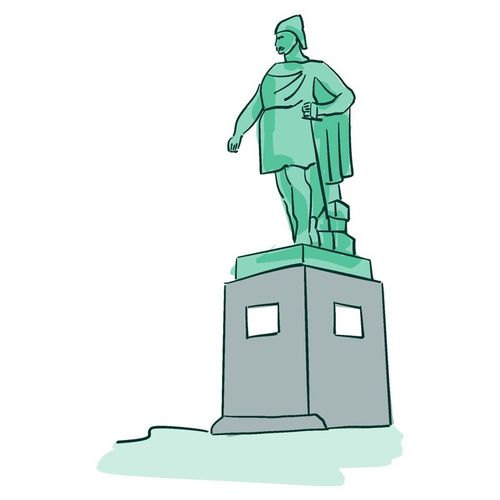
Découvrez 18 lieux d'intérêt pour visiter Alesund









Le plein d'inspirations
Explorez le monde en totale liberté, à pied au cœur des villes ou au fil des routes. Nos guides audios transforment chaque destination en une découverte culturelle immersive et unique.





FAQ for visiting Alesund
When is the best time to visit Alesund?
The best time to visit Alesund runs from May to September, when the weather conditions are at their mildest. Spring and early autumn, particularly May, June and September, offer an ideal balance between moderate temperatures, pleasant light and reasonable tourist numbers. Temperatures then generally range between 10 and 15 degrees. Summer remains very pleasant with especially long days and temperatures that can reach 20 degrees, but expect more visitors and higher accommodation rates. The Norwegian winter stays relatively mild for this northern latitude, with temperatures often between 0 and 5 degrees, but the short days and frequent rain can limit your explorations.
How many days do you need to visit Alesund?
Two to three days is the ideal length of time to fully appreciate Alesund. In one full day, you can explore the historic Art Nouveau centre, climb Mount Aksla for the panoramic view and stroll around the harbour. With two days, you will have time to deepen your architectural discovery, visit the local museums and quietly enjoy the town's unique maritime atmosphere. A third day would let you explore the surroundings, notably the nearby islands, or set off on an excursion to the neighbouring fjords. If you only have a single day, focus on the town centre and the Mount Aksla viewpoint to capture the essence of this port city.
How do you get to Alesund?
Alesund has its own airport, located on the island of Vigra, about 15 kilometres from the town centre. Direct flights link the town to the main Norwegian cities, notably Oslo and Bergen, with several daily connections. From the airport, regular buses and taxis take you to the centre in about twenty minutes. By road, Alesund is reachable from Oslo in around seven hours of travel, crossing spectacular landscapes. Long-distance buses are an economical alternative, while the Hurtigruten Coastal Express stops at the port, offering a memorable arrival by sea. In summer, ferries also link the town to other Norwegian coastal destinations.
Where should you stay in Alesund?
The town centre remains the preferred choice for staying in Alesund, letting you easily explore the main attractions on foot. Accommodation is concentrated around the harbour and in the Art Nouveau districts, offering a varied range from charming hotels set in historic buildings to modern establishments with fjord views. The districts of Aspøya and the historic centre are especially sought after for their proximity to restaurants and points of interest. For tighter budgets, several youth hostels and family guesthouses offer affordable alternatives. In summer, remember to book well in advance, as demand rises considerably, particularly for establishments offering water views.
How do you climb Mount Aksla and how many steps do you have to climb?
Mount Aksla, the essential viewpoint of Alesund, is reached mainly by a staircase that starts from the municipal park, near the town centre. This climb represents a moderate effort but is accessible to most visitors in good physical condition. The steps, built by Nepalese sherpas, wind through the vegetation and offer several resting landings. For those who prefer to avoid the effort, a driveable road provides access to the summit by car or taxi, with parking available near the viewpoint. Once at the top, the panoramic terrace reveals a spectacular view over the Art Nouveau town, the surrounding islands and the fjords, amply rewarding the effort of the climb.
What must you see in Alesund in one day?
A day in Alesund must absolutely include the discovery of the Art Nouveau centre, where every façade tells the story of the reconstruction after the 1904 fire. Start by strolling along Brosundet, the central canal lined with colourful converted warehouses, then explore the streets Kongensgate and Apotekergata to admire the finest sculpted façades. The climb up Mount Aksla is then a must, to take in the town in one unforgettable panoramic gaze. Finish at the still-active fishing harbour to feel the maritime soul of Alesund. The Ryo audioguide accompanies you on this discovery with a narrated route that reveals the architectural secrets and the fascinating history of this urban rebirth, unique in Norway.
How do you get around Alesund?
Alesund is best discovered on foot, its human scale and compact centre making walking especially pleasant. Most of the tourist attractions, from the harbour to the Art Nouveau districts, lie within easy walking distance of the centre. A network of urban buses serves the outlying districts and the neighbouring islands linked by bridges and tunnels, handy if you are staying outside the centre or wish to explore the surroundings. Taxis remain available but relatively expensive by Norwegian standards. For excursions to the surrounding fjords, renting a car offers more flexibility. Bicycles can also be rented to ride the cycle paths that run along the coast and connect the different districts.
What is the Art Nouveau architecture of Alesund?
The Art Nouveau architecture of Alesund is a unique ensemble in Norway, born from the ashes of the terrible 1904 fire that almost entirely destroyed the town. The reconstruction, carried out between 1904 and 1907, adopted the Art Nouveau style then in vogue in Europe, but with a distinctive Norwegian interpretation. The façades are adorned with turrets, decorative gables and ornaments inspired by Nordic mythology, Viking dragons and local nature. This architecture harmoniously combines continental influences with traditional Norwegian elements, creating a style known locally as Jugendstil. Local materials, notably stone and wood, were favoured, while the pastel colours of the façades bring a visual softness that contrasts magnificently with the surrounding maritime landscape.
Which day trips can you take from Alesund?
The town makes an ideal base for exploring the north-west coast. The Geirangerfjord, a World Heritage site, can be reached by boat or by road and unfolds its sheer walls, its farms clinging to the mountainside and its waterfalls. Inland, the Trollstigen road strings together spectacular hairpin bends among the peaks; it usually only opens from late spring to autumn, depending on the snow.
Closer by, the island of Godøy and its Alnes lighthouse are reached through undersea tunnels and make for a half-day escape by the sea, with pebble beaches and wind-beaten cliffs. The Sunnmøre Alps draw hikers, and the Atlantic Road, further north, is driven for its bridges strung between the islets. Do check connections and road conditions before setting off, as they vary a great deal with the season.
What can you do in Alesund with children?
The town lends itself well to a family stay: distances are short and the waterfront can be covered entirely on foot. The Atlanterhavsparken, an aquarium set on the ocean edge at Tueneset point, presents North Atlantic wildlife in large tanks and holds feeding sessions that fascinate younger visitors; the surrounding park then invites a walk out over the rocks.
The Sunnmøre Museum, laid out in the open air, lines up old houses and traditional boats that you can approach closely and sometimes step inside. Add the climb up to the Mount Aksla viewpoint and the Brosundet harbour with its colourful façades, and the day is comfortably full. The Ryo audio guide offers a dedicated Alesund route that tells the town's story as you walk, at a pace children can easily keep up with.
Vos commentaires, idées et suggestions
Aucun avis pour le moment
