





Walk
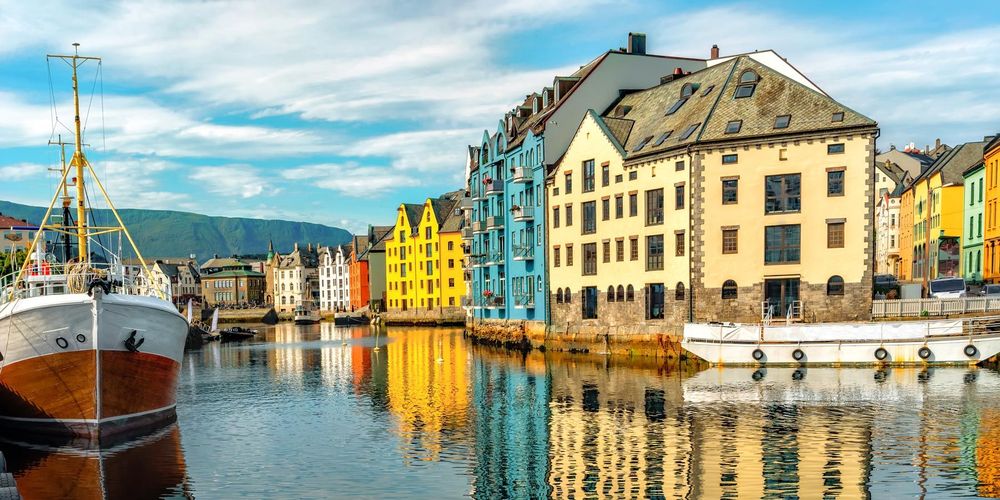
The City that rose from the sea
Alesund, Norway
Walk
The City that rose from the sea
Alesund, Norway
3.6 km
Distance
1h50
Durée
18
Audios
Loop
Parcours
Shutterstock
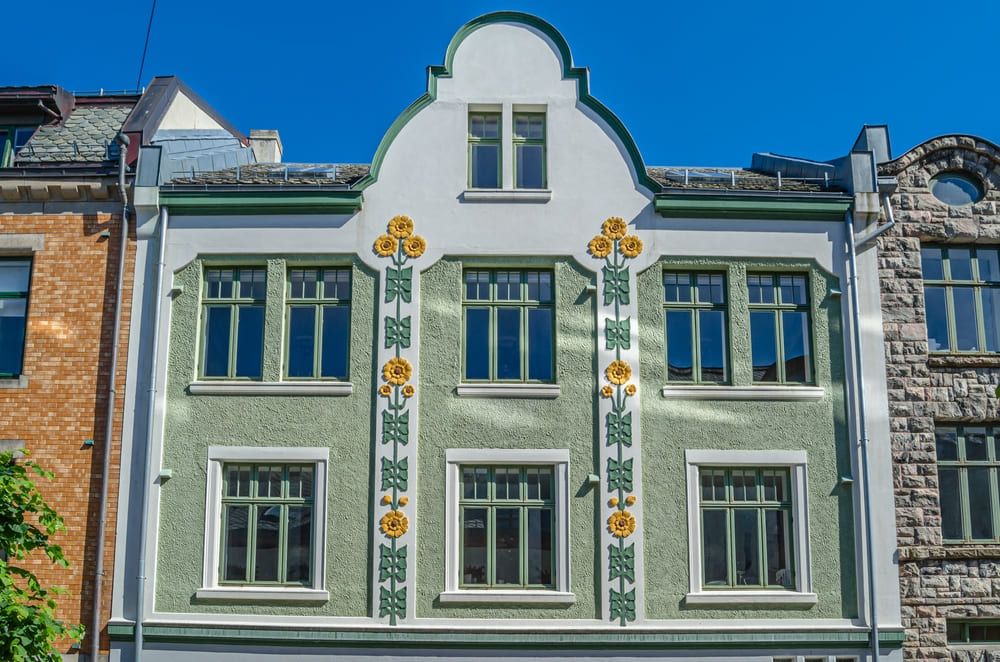
The Kongens Gate, the King's Street, is the central artery of Ålesund, a true open-air museum of Art Nouveau. The Ålesund audio-guided tour stops here to evoke this granite-paved pedestrian street, lined with remarkable buildings of the Norwegian Jugendstil.
You are here in the heart of the Kongens Gate, the King's Street, the central artery of Ålesund and a true open-air museum. This granite-paved pedestrian street, a few hundred metres long, shelters a remarkable collection of buildings in varied styles, each expressing a different aspect of the Norwegian Jugendstil, the local name of Art Nouveau. There you discover decorations inspired by traditional Viking motifs, elegant turrets, floral ornaments and asymmetrical motifs characteristic of this style. This architectural profusion is explained by the dramatic history of the town: after the great fire of 1904, which destroyed almost all of the town, Ålesund was rebuilt in only a few years, in the Art Nouveau style then in vogue, which makes it today one of the finest Art Nouveau towns of Europe. To stroll in the Kongens Gate, raising the eyes towards the façades, is a unique experience. The architectural heart and a jewel of the Jugendstil, the Kongens Gate is a must-see stop of Ålesund.
Here you wander in the central artery of Ålesund, a granite-paved pedestrian street and a true open-air museum of Art Nouveau, lined with remarkable buildings of the Jugendstil with decorations inspired by Viking motifs, turrets, floral ornaments and asymmetrical motifs, the fruit of the reconstruction of the town after the fire of 1904. The Kongens Gate is the architectural heart of Ålesund. It is a must-see stop, to be explored on foot.
The Kongens Gate lies in the heart of Ålesund, reachable on foot. It is a pedestrian street freely accessible; the shops have their own hours. You appreciate it by strolling and raising the eyes towards the Art Nouveau façades.
Because it shelters a remarkable collection of buildings of the Jugendstil, the Norwegian Art Nouveau, with decorations inspired by Viking motifs, turrets and floral ornaments; Ålesund was rebuilt in this style after the great fire of 1904.
In the heart of Ålesund, in Norway.
Aucun avis pour le moment
