





Walk
The City that rose from the sea
Alesund, Norway
Walk
The City that rose from the sea
Alesund, Norway
3.6 km
Distance
1h50
Durée
18
Audios
Loop
Parcours
Shutterstock
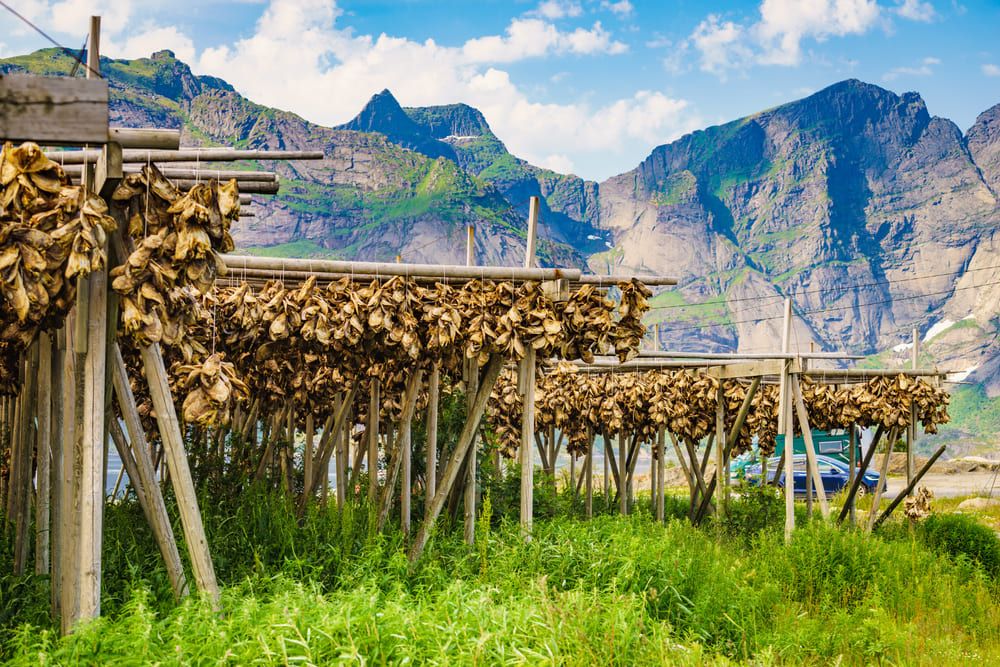
The gastronomy of Ålesund is turned towards the sea, marked by the klippfisk, the dried and salted cod emblematic of the region. The Ålesund audio-guided tour stops here to evoke the flavours and the culinary traditions of this coastal town of Norway.
In Ålesund, the sea meets the table to give life to a rich gastronomy, cradled by numerous culinary traditions typical of Norway. The town is characterised notably by the klippfisk, the dried and salted cod, which is the central element of its cuisine. This emblematic product of the region made the fortune and the fame of Ålesund: from the cod caught in abundance in the Nordic waters, a whole know-how of drying and salting was developed, which allowed to preserve the fish and to export it throughout the world, notably towards the Mediterranean countries and Latin America, great lovers of bacalao. This flourishing industry largely explains the prosperity of the town and its Art Nouveau architecture. Today, the klippfisk is savoured in tasty preparations, accompanied by the other treasures of the sea, fresh fish, crustaceans and seafood, as well as Norwegian specialities. A true cultural and gourmet heritage, the gastronomy of Ålesund is a tasty stop of the discovery of the town.
Here you savour the sea-turned gastronomy of Ålesund, marked by the klippfisk, the dried and salted cod that made the fortune and the fame of the town, exported throughout the world towards the lovers of bacalao, accompanied by fresh fish, crustaceans and seafood and Norwegian specialities. The gastronomy of Ålesund is a cultural and gourmet heritage. It is a tasty stop, to be explored on foot.
The gastronomy of Ålesund is savoured in the numerous restaurants of the town and around the Brosundet, reachable on foot. The establishments have their own hours and menus, which vary. It is best to taste the klippfisk and the products of the sea, according to the arrivals of the season.
The klippfisk, the dried and salted cod, the central element of the cuisine of Ålesund; this emblematic product made the fortune and the fame of the town, exported throughout the world, notably towards the lovers of bacalao of the Mediterranean countries and Latin America.
In the numerous restaurants of Ålesund and around the Brosundet, in Norway.
Aucun avis pour le moment
