





Walk
Short tour - The Princess of the Fjords
Bergen, Norway
Walk
Short tour - The Princess of the Fjords
Bergen, Norway
3.5 km
Distance
1h45
Durée
18
Audios
Loop
Parcours
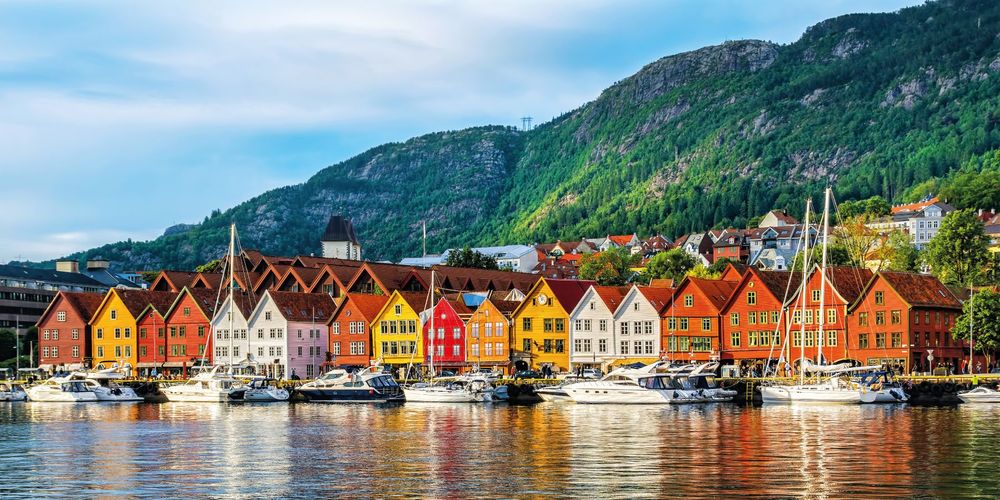
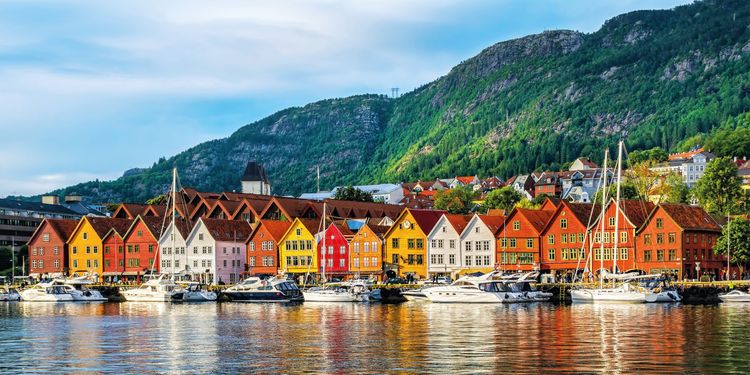
After admiring Bryggen’s iconic harbourside, full of colourful, orderly buildings, you’re now stepping into a more hidden part of the city. Welcome to the heart of Bergen’s Hanseatic past, beautifully restored for visitors to explore. This is the perfect place to do some shopping, grab a coffee, or sit for a moment and take it all in.
In fact, why not sit on a bench while we tell you a little about the history of Norway? Beyond the image of fierce, bearded Vikings charging through northern seas in dragon-headed warships, most of us don’t know much about this country’s past. It’s not exactly a simple story, but don’t worry, we’ll keep it clear and concise.
People have lived in Norway since the end of the last Ice Age, around 9000 BC. They survived by fishing and hunting whales, elk, seals, and deer. They spoke Old Norse, the ancient Germanic language that evolved into today’s Scandinavian languages.
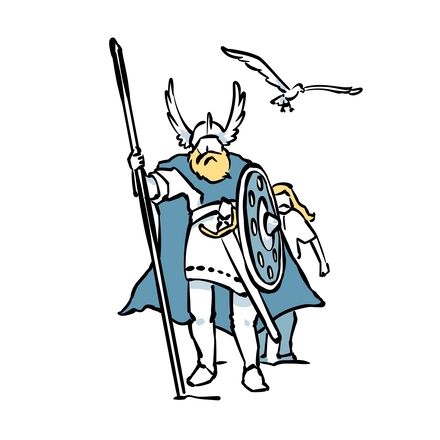
The word Norway comes from Nordhrvegr in Old Norse, meaning “the northern way.” The Viking Age was a central part of Norway’s identity, spanning from 800 to 1050. While Vikings were feared warriors, sailing fast ships known as drakkars (from the word dragon, referencing the carved figureheads), they were also skilled traders, administrators, and craftspeople. Their jewellery alone is still admired for its craftsmanship.
In 885, the many scattered Viking territories were unified under King Harald Fairhair, a more elegant name than some of his successors. Take his son, for example: Erik Bloodaxe. That name says it all.
When he took power, he executed 18 of his brothers, sparing only the one who fled to England under the protection of King Athelstan, a name you might not know, but who is considered the first King of England. Erik didn’t last long. He ruled only part of Norway before being replaced by his brother, Håkon I, who returned from exile to take the throne.
In 982, Norwegians colonised Greenland under Erik the Red’s reign, and by 1066, they had already reached North America, long before Columbus. 1066 also marked the end of the Viking Age, when King Harald Hardrada was killed trying to conquer England. Fast forward to the 13th century, a young adventurer named Sverre Sigurdsson seized the throne and founded a royal dynasty, with Bergen as its capital.
The Hanseatic League soon gained significant influence in Bergen, and by the early 1300s, the capital was moved to Oslo. In 1380, the Norwegian royal line came to an end with the death of King Håkon VI. Here’s where things get complicated.
His widow , the daughter of the King of Denmark, inherited the throne. This began a 400-year union between Denmark and Norway. Sweden later joined the mix as part of the Kalmar Union, though Denmark was still in charge.
Norway became more of a province than a partner. Protestantism was introduced, and Norwegian affairs were often sidelined in favour of Danish interests. Sweden eventually broke away in 1523, but Norway remained under Danish rule.
In 1814, after Denmark backed the wrong side in the Napoleonic Wars, it was forced to hand Norway over to Sweden. Yet another foreign ruler. By then, Norwegians had had enough.
They drew up a constitution, set up a parliament, customs system, borders, and even offered the throne to a Danish crown prince. After centuries of using written Danish, and with Norwegian existing mostly as a spoken language, they invented their own written language, practically from scratch. Norway still remained in a union with Sweden under a shared king.
It wasn’t until 1905 that Norway finally gained full independence. Instead of abolishing the monarchy, they once again invited a Danish prince to take the throne, he became King Håkon VII, the first modern monarch of independent Norway. The country remained neutral in global conflicts, a stance that worked during the First World War, but not in the Second.
In 1940, Nazi Germany invaded. When the European Union was formed, Norway declined to join, mainly to protect its fishing industry. It ended up applying later, but 70% of Norwegians voted no in a referendum.
Still, Norway is part of the Schengen Area, the European Economic Area, NATO, and the IMF, striking its own balance between independence and international cooperation. There you have it, you’re now officially caught up on Norwegian history!
Aucun avis pour le moment
