







Walk
Short tour - A humble Arabia
Mascate, Oman
Walk
Short tour - A humble Arabia
Mascate, Oman
3.8 km
Distance
1h50
Durée
14
Audios
Loop
Parcours
Shutterstock
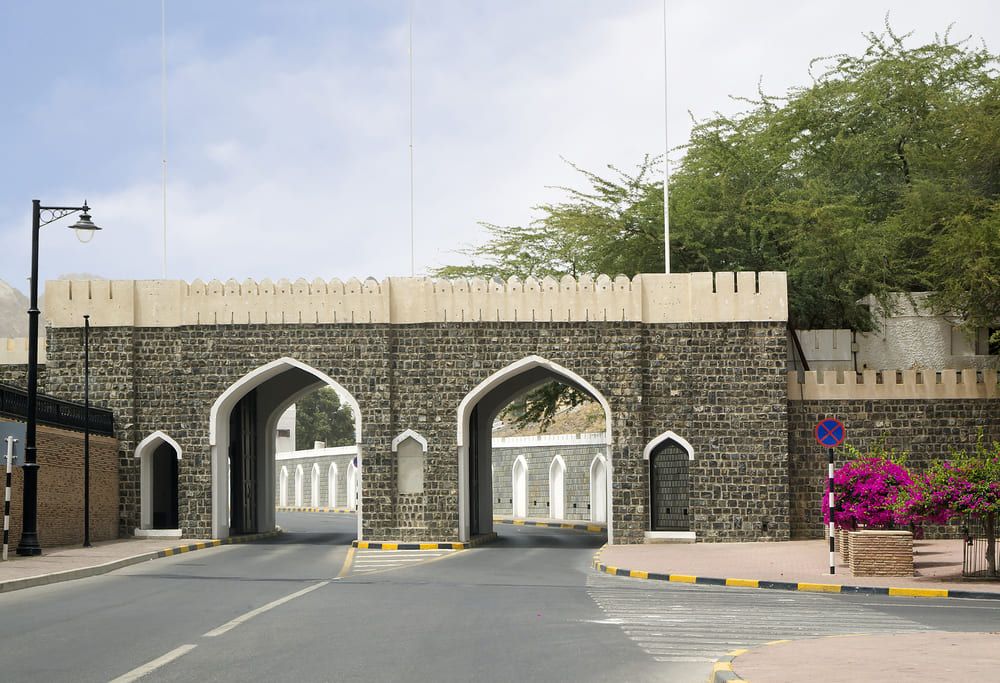
The Bab al-Kabir Gate is one of the old gates of the fortified town of Muscat, which marked the western limit of the capital. The Muscat audio-guided tour stops here to evoke this vestige of the ramparts, a witness of the defensive past of the town.
The Bab al-Kabir Gate, whose name means the great gate, is one of the old gates of the fortified town of Muscat. For centuries, it marked the western limit of the capital and controlled access to the town, which was enclosed in ramparts. Originally, it was known under the name of Bab at-Tuyan. Like the other gates of the town, it was closed at night and guarded, only letting in and out those who were authorised, in a town long turned towards maritime trade but careful of its security. Today, the gate recalls this fortified past and the layout of the old town. A vestige of the defensive system and a historic threshold of the Omani capital, the Bab al-Kabir Gate is a precious witness of the history of Muscat, to discover during the walk.
You admire the old great gate of the fortified town of Muscat, once known under the name of Bab at-Tuyan, which marked the western limit of the capital and controlled access to the town enclosed in its ramparts, closed and guarded at night, a witness of the defensive past of the town. The Bab al-Kabir Gate is a precious vestige of Muscat. It is a stop to be discovered, to be explored on foot.
The Bab al-Kabir Gate lies in old Muscat, reachable on foot. It is an open-air monument, freely visible from the public space. You discover it during a walk in the old town.
It marked the western limit of the capital and controlled access to the fortified town, closed and guarded at night; originally known under the name of Bab at-Tuyan, it was part of the defensive system of Muscat.
In old Muscat, in Oman.
Aucun avis pour le moment
