



Walk
A humble Arabia
Muscat, Oman
Walk
A humble Arabia
Muscat, Oman
10.4 km
Distance
4h00
Durée
29
Audios
Loop
Parcours
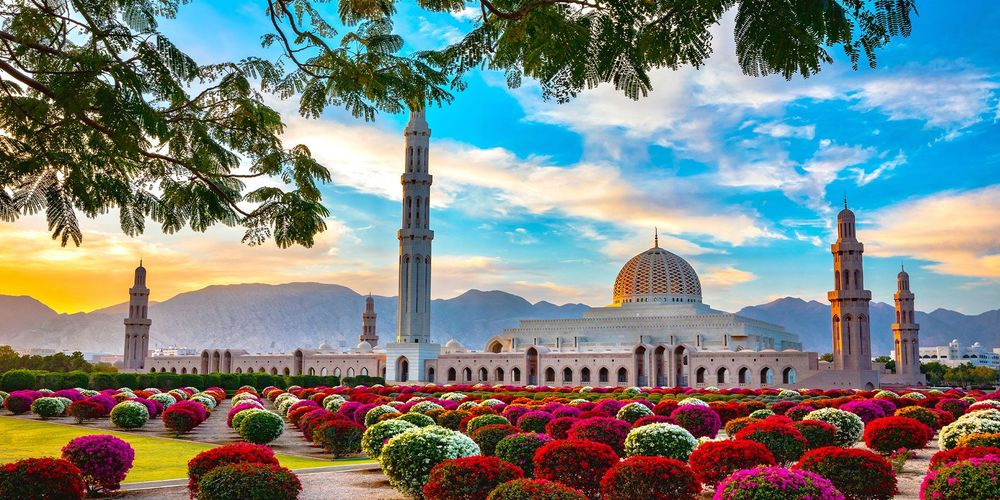
Muscat is an ancient city, shaped above all by the sea, the mountains and the great trade routes of the Indian Ocean. The presence of ports here since Antiquity is no accident. The coastline is made up of deep, narrow coves, naturally sheltered by steep rocky slopes, offering safe anchorages protected from winds and storms, a decisive advantage for ancient and medieval sailors.
Located at the entrance to the Gulf of Oman, Muscat also sits along a major maritime axis linking southern Arabia, Persia, India and East Africa. Ships stopped here to take on water, repair their hulls and trade goods such as frankincense, dates, spices and textiles. With the arrival of Islam in the 7th century, Oman converted relatively early, mainly through commercial and tribal networks connecting the coast to the interior rather than through military conquest.
The country largely adopted Ibadism, an early branch of Islam that values moderation, community cohesion and a degree of political autonomy, a religious specificity that has deeply shaped Omani history and society. Muscat became an active Muslim port, integrated into the wider Islamic world while keeping its international maritime role. From the 16th century onwards, its strategic position attracted European powers.
In 1507, the Portuguese seized the city and fortified the bay, notably by building the forts of Al Mirani and Al Jalali, to control maritime trade. For more than a century, Muscat lay at the heart of rivalries involving the Portuguese, Ottomans, Persians and British. In 1649, the Omanis retook the city and launched a period of maritime expansion, turning Oman into a regional power oriented toward the Indian Ocean, with strong links to Zanzibar and the Swahili Coast.
Muscat remained a fortified city, enclosed by walls and gates closed each night, organised around its port, souks and administrative quarters, a character it retained until the 20th century. The major turning point came in 1970, with the accession of Sultan Qaboos, who opened the country to the world, launched rapid modernisation and profoundly transformed Muscat. The fortifications lost their function, the city spread along the coast and became connected to Muttrah and new districts.
Today, Muscat is no longer a compact city but a long urban ribbon stretched between sea and mountains, where palaces, forts and mosques recall a history thousands of years old, while modern ports, museums and infrastructure reflect a capital looking firmly toward the future. One figure alone shows the scale of this transformation: in just over fifty years, life expectancy has risen from 49 years in 1970 to nearly 80 years today, one of the fastest increases ever recorded anywhere in the world.
Aucun avis pour le moment