

Walk
The Navel of the World
Cusco, Pérou
Walk
The Navel of the World
Cusco, Pérou
5.1 km
Distance
2h20
Durée
23
Audios
Loop
Parcours
Shutterstock
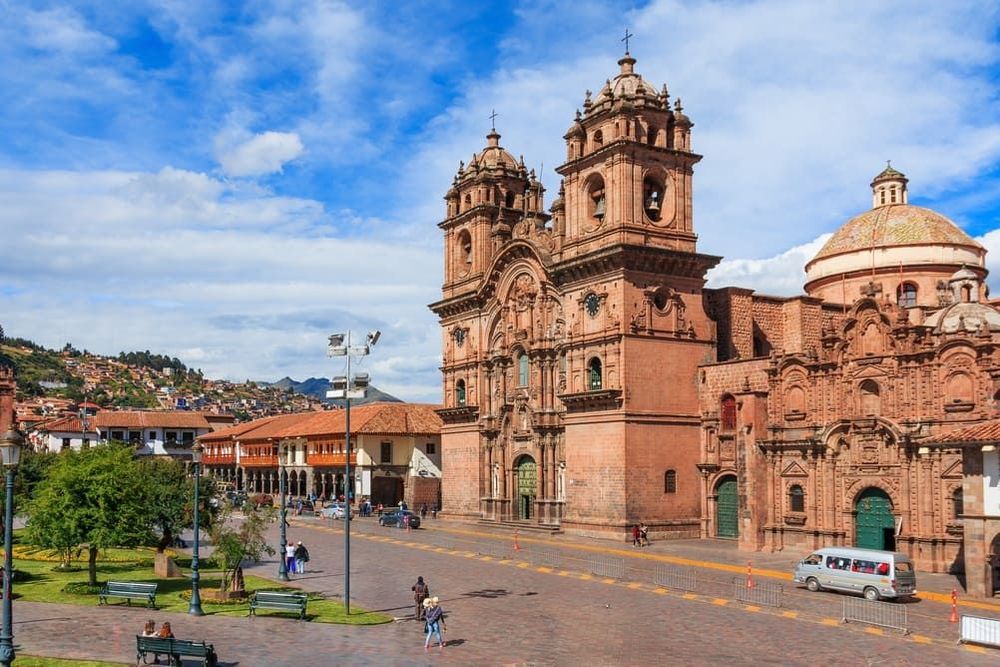
The enormous Cathedral Basilica of the Assumption of the Virgin rises majestically over the Plaza de Armas. Impressive, isn’t it? Construction began in the mid-16th century and took nearly a hundred years to complete.
And when the Spanish needed stone for this monumental mix of Renaissance, Baroque, and Gothic styles, they didn’t exactly look far. They simply dismantled the Inca fortress of Sacsayhuamán on the hill opposite and followed one of their favorite methods: building their own colonial monuments directly on top of Inca foundations. It’s a perfect example of Cusco’s colonial syncretism, where Spanish power was quite literally layered over the world that came before it.
That rather radical form of historical recycling continues inside, where there are two things in particular you’ll want to look for. The first is the large painting of The Last Supper by local artist Marcos Zapata. Take a close look at the dish in front of Jesus and the apostles.
Instead of the traditional lamb, there’s a vizcacha—an Andean rodent often confused with a guinea pig and commonly referred to as a cuy. It was a clever way for Indigenous artists to weave elements of their own culture into Christian art. The second is the deeply venerated statue of the Señor de los Temblores, the Lord of the Earthquakes, which came all the way from Europe.
According to legend, the statue saved the ship carrying it from a storm during the voyage, and then, after reaching Cusco, stopped the devastating earthquake of 1650. Its black color isn’t original, either. Over the centuries, smoke from the millions of candles lit by worshippers gradually darkened the statue—a powerful sign of just how deep that devotion runs.
Once you’re back outside, take a quick look at the smaller, more discreet building next door, which has mysteries of its own. This is the Capilla del Santísimo Sacramento, or Chapel of the Blessed Sacrament. This building has lived several very different lives and is even said to have served as the seat of the dreaded Tribunal of the Inquisition.
If you walk around the back, keep your eyes open. There’s a small architectural detail that almost every visitor misses: a carved lintel showing a skull above two crossed femurs. It’s a slightly chilling reminder of former funerary practices connected with the cathedral—and gives this quiet corner of Cusco an almost haunted feel.
Aucun avis pour le moment