





Walk
The Navel of the World
Cusco, Pérou
Walk
The Navel of the World
Cusco, Pérou
5.1 km
Distance
2h20
Durée
23
Audios
Loop
Parcours
Shutterstock
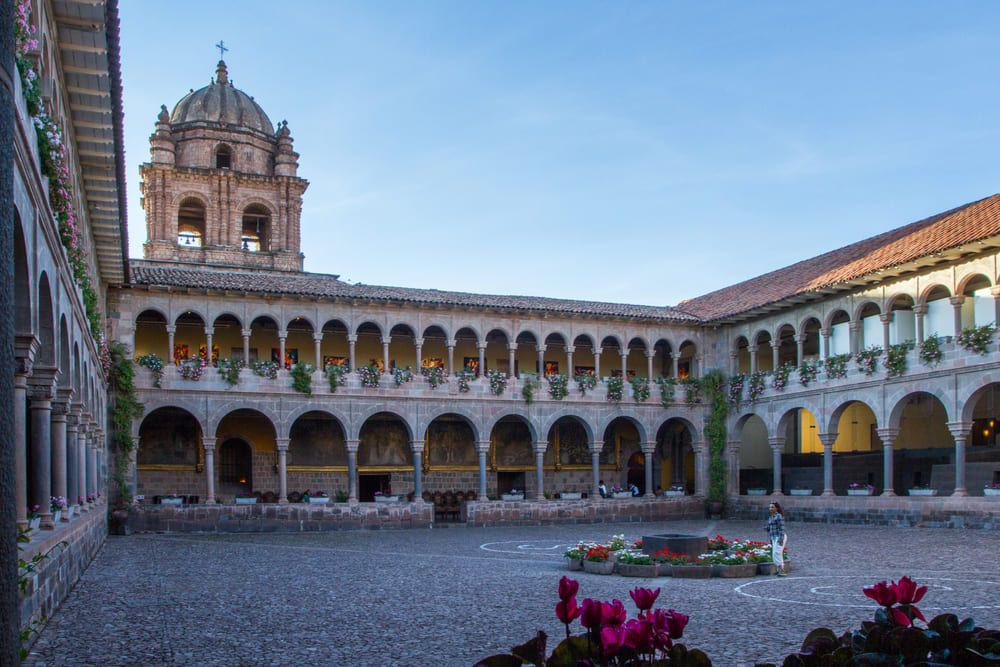
If you decide to step inside the Santo Domingo Convent, you’ll discover an extraordinary meeting of two worlds. The original church, consecrated in 1633, was hit hard by the major earthquakes of 1650 and 1950. And each time, the contrast was impossible to ignore: Spanish colonial structures collapsed, while the Inca foundations beneath them barely budged.
But in 1950, the earthquake unexpectedly exposed what had been hidden for centuries. It tore away plaster and sections of colonial walls, revealing Inca structures beneath them. That rediscovery sparked a fierce cultural and political battle during the 20th century.
On one side, Indigenous-rights intellectuals wanted the Spanish church demolished so the original sanctuary could be fully exposed. On the other, the Dominican friars fought to preserve their historic place of worship. The result of that dispute is the striking compromise you see today: a forced but remarkable coexistence of Inca and colonial architecture that has become a symbol of Cusco’s cultural blending.
And beneath your feet lies one final secret—far more mysterious. Local rumors and some historical chronicles suggest that the convent crypts may hold the remains of key figures from the conquest, including the conquistador Juan Pizarro, as well as the bodies of the last rulers associated with the Vilcabamba resistance, Diego Sayri Túpac and Felipe Túpac Amaru. Who knows what ghosts from the past may still be keeping watch over the city?
Aucun avis pour le moment
