





Walk
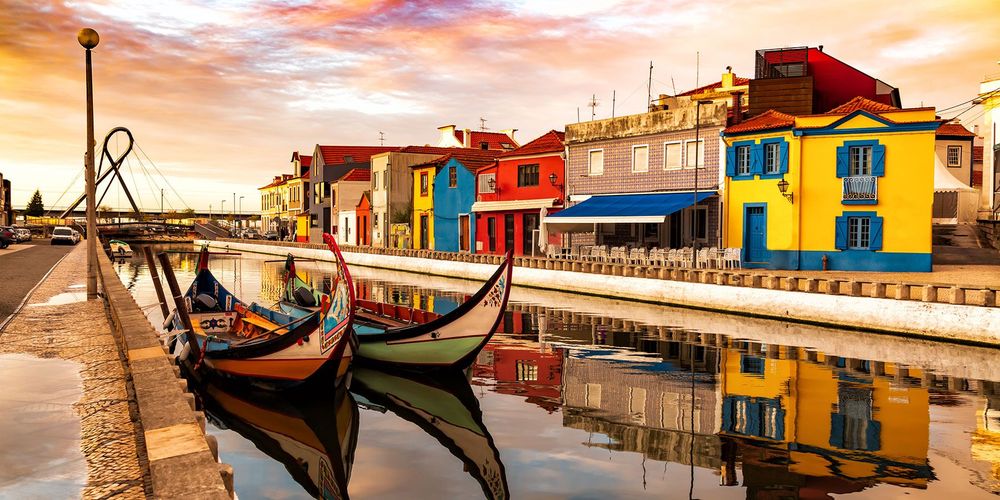
Where Water Weaves a Thousand Stories
Aveiro, Portugal
Walk
Where Water Weaves a Thousand Stories
Aveiro, Portugal
3.3 km
Distance
1h20
Durée
19
Audios
Loop
Parcours

Let’s take a quick break to tell you about some other points of interest that couldn’t be included in the itinerary. Among Aveiro’s must-sees is its old train station, widely considered one of the most beautiful in Portugal. Completed in 1916, the station is a gem of elegance and photogenic charm.
On its main façade, you’ll notice a striking contrast between the crisp white walls and the lower half covered in about fifty vibrant ceramic tiles, known as azulejos. Made at the former Jerónimo Pereira Campos ceramics factory, this colourful mosaic depicts railway scenes, landscapes, cultural moments, and traditional regional activities. The result is simply stunning!
If you enjoyed the Fonte Nova garden and want to explore another green space, head to Infante Dom Pedro Park. Created in the 19th century on land once owned by Franciscan monks, this peaceful spot is perfect for a quiet stroll, some photography, or a break from the busier streets. Of course, we can’t talk about Aveiro without mentioning salt.
It’s everywhere in the city’s story, so if you haven’t seen the salt pans yet, now’s the time. Just head over the flyover to the city’s western edge, where nature takes over. Here, around ten salt marshes make up part of the Ria de Aveiro Nature Reserve, a biodiverse ecosystem where salt and fleur de sel have been harvested for centuries.
You can visit on your own or join a guided tour at the Marinha da Troncalhada Ecomuseum, where you’ll get a close look at this fascinating, centuries-old tradition. For a more active experience, consider walking or cycling the Via Ecológica Ciclável, a scenic eco-route around the Ria. You can even hop on one of Aveiro’s free-to-use BUGA bikes.
If you want to explore beyond Aveiro, we recommend two nearby destinations, both within 12 kilometres. First, there’s Costa Nova, a charming beach town famous on social media for its brightly painted 19th-century fishermen’s huts, known as palheiros. They make a perfect backdrop for photos, and the rest of your visit can revolve around beach walks, swimming, water sports, fresh seafood, and a stop at the Barra Lighthouse, said to be the tallest in Portugal.
Last but not least, we recommend visiting Ílhavo. This small coastal town is best known for its maritime museum, housed in a striking building and dedicated to fishing and cod. It’s also home to the Vista Alegre museum, celebrating the iconic Portuguese ceramics brand founded in 1824, now internationally renowned.
The museum complex includes a stunning chapel, historic workers’ quarters, workshops, and a collection of over 30,000 pieces. Get ready for one of the most significant tributes to Portugal’s porcelain-making heritage. With all that, you’ve got plenty to do if you stay in the region for a little longer.
Aucun avis pour le moment
