





Walk
Where Water Weaves a Thousand Stories
Aveiro, Portugal
Walk
Where Water Weaves a Thousand Stories
Aveiro, Portugal
3.3 km
Distance
1h20
Durée
19
Audios
Loop
Parcours
Shutterstock
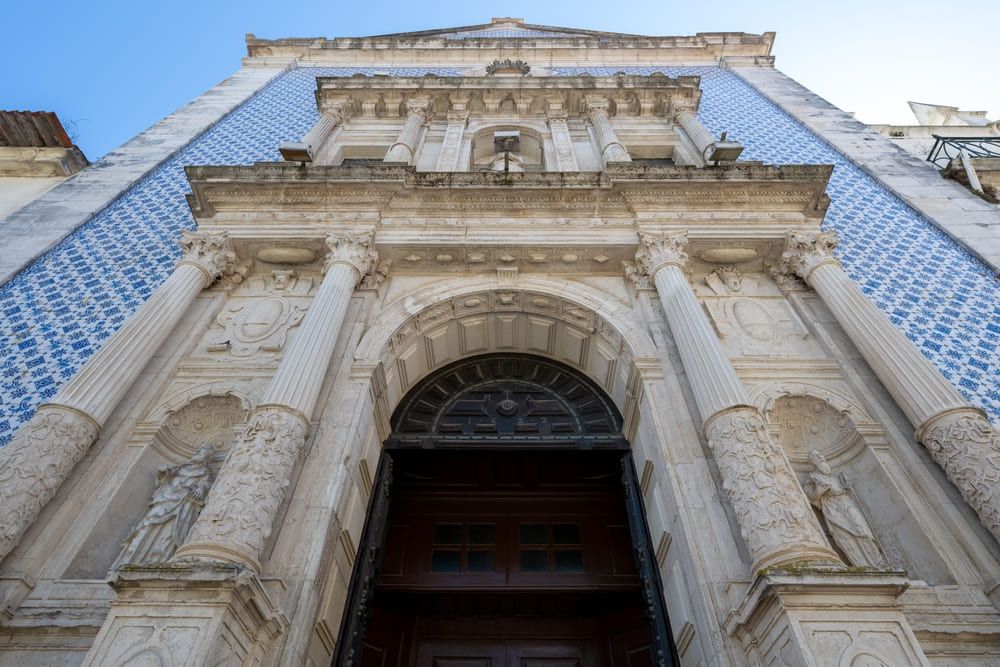
The church of the Carmelites, or church of São João Evangelista, is one of the numerous religious buildings of Aveiro, with a rich interior decoration. The Aveiro audio-guided tour stops here, with respect, to evoke this church born of a convent founded on the residence of the fourth duke of Aveiro, occupied from 1658 by the Carmelites come from Lisbon, and completed in 1738 in the full prosperity of Portugal.
Portugal is a deeply Catholic country, and there is not a city that does not possess its churches and chapels. Aveiro, although modest, counts about ten just in its centre, among which the church of the Carmelites, also called church of São João Evangelista. Its appearance goes back between the sixteenth and seventeenth century, when the family of the fourth duke of Aveiro, owner of the land, transformed his personal residence into a convent. In 1658, the first nuns of the Order of the Carmelites, come from Lisbon, took possession of the place. Over nearly two centuries, the convent knew campaigns of construction and enlargement, from which was born in 1738 the church of the Carmelites. If its exterior does not particularly attract the gaze, its interior, raised in the full era of Portuguese prosperity, conceals a decoration of great richness. You will visit it with respect, in the calm conducive to contemplation, keeping in mind that it is above all a place of prayer and spiritual memory.
Here you discover, with respect, the church of the Carmelites, or church of São João Evangelista, born of a convent founded on the residence of the fourth duke of Aveiro and occupied from 1658 by the Carmelites of Lisbon; completed in 1738, it hides behind a sober exterior an interior decoration of great richness. The church of the Carmelites is a place of prayer, to be visited with respect. It is a fine stop, to be explored on foot.
The church of the Carmelites lies on the square of the Marquis of Pombal, near the courthouse, in Aveiro, reachable on foot. It is a place of worship whose access is made in respect and contemplation; the hours of visit vary. It is best to enquire before coming and to adopt correct attire.
It was born of a convent founded between the sixteenth and seventeenth century, when the family of the fourth duke of Aveiro transformed his residence into a convent; the Carmelites come from Lisbon settled there in 1658, and the church, completed in 1738 in the full Portuguese prosperity, hides behind a sober exterior a rich interior decoration.
On the square of the Marquis of Pombal, in Aveiro, in Portugal.
Aucun avis pour le moment
