
Walk
Short tour - The City of Seven Hills
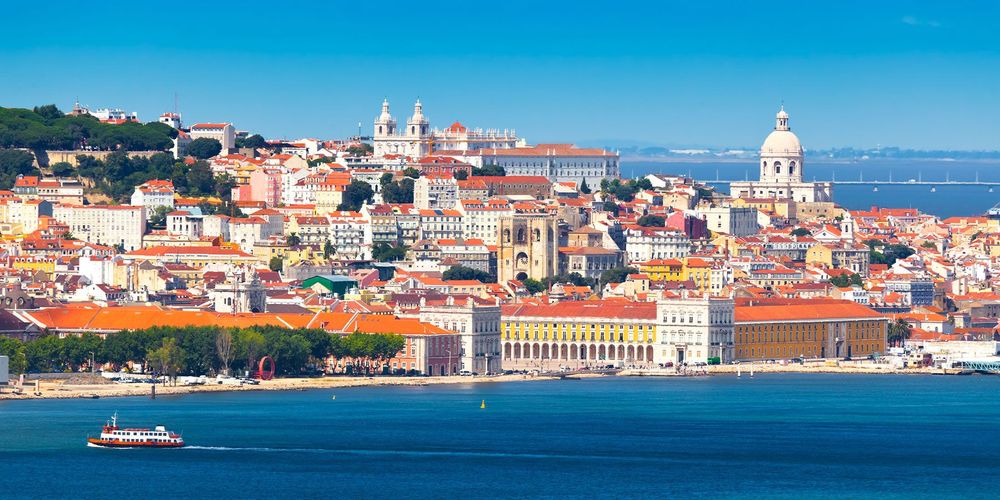
Lisbon, Portugal
Walk
Short tour - The City of Seven Hills
Lisbon, Portugal
Distance
4.3 kmDurée
1h45Audios
21Parcours
Loop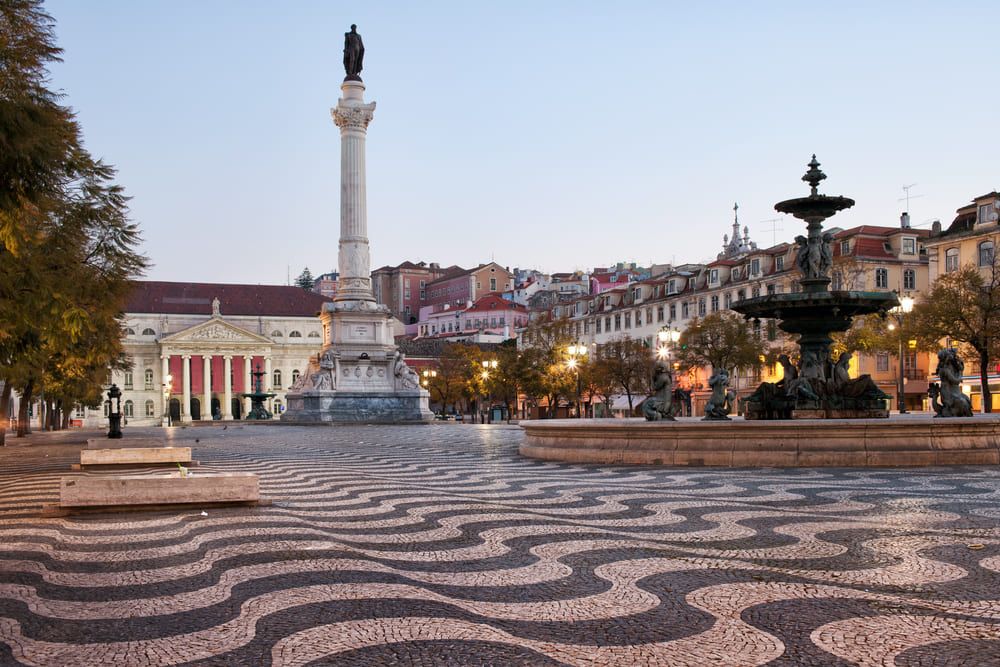
Shutterstock
The Lisbon audio-guided tour leads you to the Plaza Dom Pedro IV, also called the Rossio square, one of the liveliest and most emblematic of the city.
Lined with bars, restaurants and shops, the square is adorned with two monumental fountains, the Dona Maria II National Theatre and a statue of Pedro IV of Portugal, known as the Soldier King. Its ground, in black and white cobbles that seem to undulate, is an example of the famous Calçada portuguesa. These mosaics were developed after the earthquake of 1755, under the impulse of the Marquis of Pombal, from small stones of limestone and basalt. This know-how then spread to other cities of the world, from Rio de Janeiro to Brussels.
The square unfolds its fountains, its statue of Pedro IV, its theatre and its famous undulating paving, in an always lively atmosphere. A place of passage and meeting for centuries, the Rossio is one of the beating hearts of the Baixa, ideal for observing Lisbon life and admiring the Calçada portuguesa under one's feet.
The Plaza Dom Pedro IV, or Rossio square, is in the heart of the Baixa, in Lisbon. It is a public space freely accessible at all hours and on the level. Fountains, statue and paving can be contemplated freely; shops and theatre follow their own hours.
A paving of mosaics in black and white stones, developed after the earthquake of 1755, which adorns the ground of many squares of Lisbon.
The Rossio square, one of the liveliest of Lisbon, in the heart of the Baixa district.
Aucun avis pour le moment