


Walk
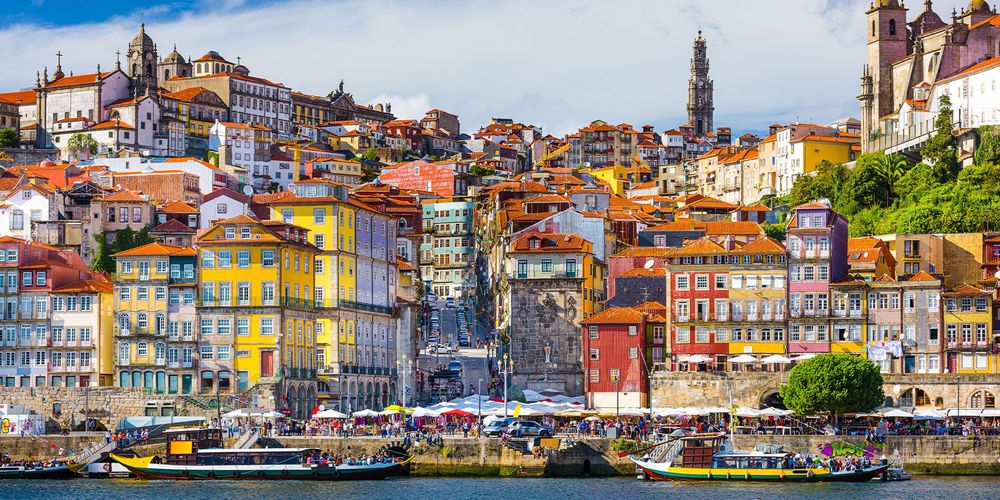
A Vintage Soul on the Douro
Porto, Portugal
Walk
A Vintage Soul on the Douro
Porto, Portugal
7.2 km
Distance
3h00
Durée
29
Audios
Loop
Parcours
Shutterstock
The Porto audio-guided tour leads you to the Praça da Liberdade, the Liberty Square, the most important of the city, which connects old Porto to its more recent part.
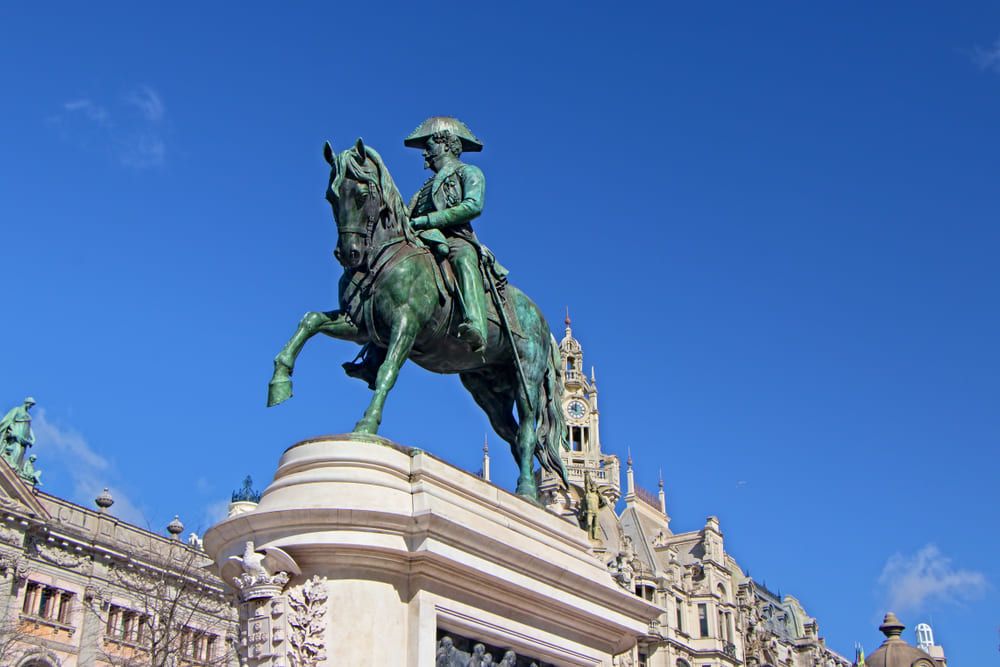
Built at the end of the eighteenth century, formerly surrounded by orange trees and gardens, the square has always been a place of meeting as well as of revolts. It owes its name to King Pedro IV, a symbol of Portuguese liberalism, whose ten-metre equestrian statue, inaugurated in 1866, stands nearby. He holds in his hand the Constitutional Charter of 1826, a fundamental document that established a constitutional monarchy separating the powers. This constitution was inspired by the one he had drafted in Brazil: Pedro IV of Portugal is indeed also Pedro I of Brazil, the first emperor of the country whose independence he proclaimed. It is therefore a key figure in the history of the two nations.
The Praça da Liberdade impresses with its scale, its fine buildings and the equestrian statue of Pedro IV that dominates it. An essential crossing point between the two Portos, it is one of the beating hearts of the city, animated at all hours. It is a central stage to understand the liberal history of Portugal and that of its links with Brazil.
The Praça da Liberdade is in the heart of Porto, at the junction of the old town and the more recent districts. A public square, it can be walked freely at all hours and on the level.
King Pedro IV, holding the Constitutional Charter of 1826; he is also known as Pedro I, the first emperor of Brazil.
At the end of the eighteenth century; the equestrian statue of Pedro IV was inaugurated there in 1866.
Aucun avis pour le moment