





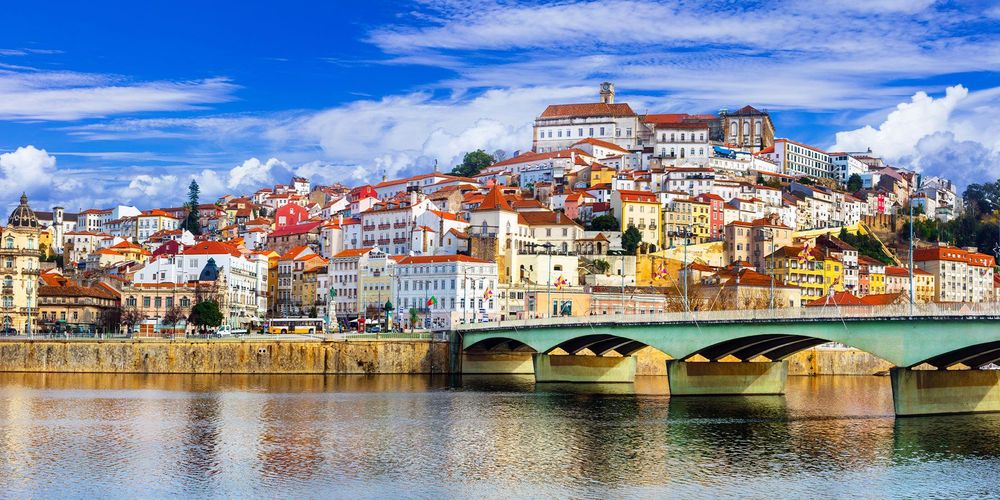
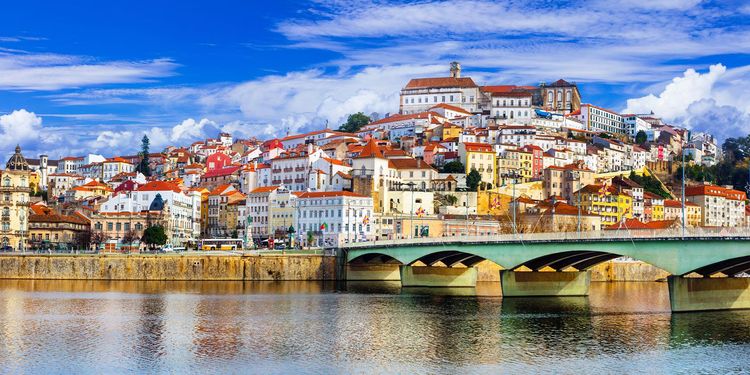
Walk
Where Wisdom Keeps You Young
Coimbra, Portugal
Walk
Where Wisdom Keeps You Young
Coimbra, Portugal
6 km
Distance
2h25
Durée
26
Audios
Loop
Parcours
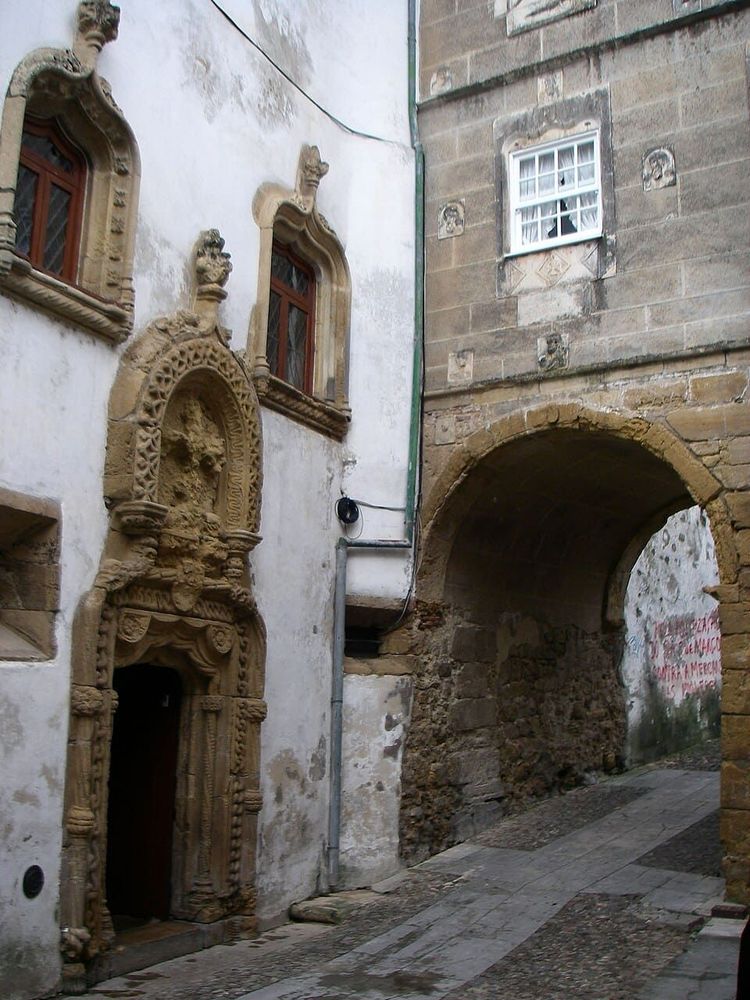
©Duca696 - CC BY-SA 3.0 <https://creativecommons.org/licenses/by-sa/3.0/deed.fr>via Wikipedia Commons
The Palacio de Sobre-Ribas is an elegant palace of Coimbra, remarkable by its Manueline portal with a rich decoration. The Coimbra audio-guided tour stops here to evoke this fine old residence, built above the river, in the old town.
As soon as the arch is crossed, you are pleasantly surprised by the portal with a rich naturalist decoration of the Palacio de Sobre-Ribas, attached to the Manueline architectural style, this typically Portuguese style born at the time of the great discoveries. As its name indicates, this palace was built above the river, sobre ribas in Portuguese. The old building is composed of two distinct parts, including the Casa de Cima, the upper house. Its façade and its sculpted portal testify to the refinement and the prosperity of the noble families who lived in the old upper town of Coimbra. Nestled in the network of the old alleys of the Alta, near the university, the palace is part of the rich heritage of the city of knowledge. A witness of the architecture and the art of living of the past, the Palacio de Sobre-Ribas is a fine stop of the discovery of the old town of Coimbra.
You admire the elegant old palace built above the river, its portal with a rich naturalist Manueline decoration and its sculpted façade, composed of two distinct parts including the Casa de Cima, nestled in the alleys of the old upper town near the university. The Palacio de Sobre-Ribas is a fine residence of Coimbra. It is a stop to be discovered, to be explored on foot.
The Palacio de Sobre-Ribas lies in the alleys of the old upper town of Coimbra, near the university, reachable on foot by climbs. You mainly admire its portal and façade from the street; it is a building whose access follows its own conditions. You discover it during a walk in the Alta.
Its name means above the river, sobre ribas in Portuguese, because the palace was built overlooking the watercourse; this fine building stands out by its portal with a rich naturalist Manueline decoration.
In the old upper town of Coimbra, near the university, in Portugal.
Aucun avis pour le moment
