





Walk
A Vintage Soul on the Douro
Porto, Portugal
Walk
A Vintage Soul on the Douro
Porto, Portugal
7.2 km
Distance
3h00
Durée
29
Audios
Loop
Parcours
Shutterstock
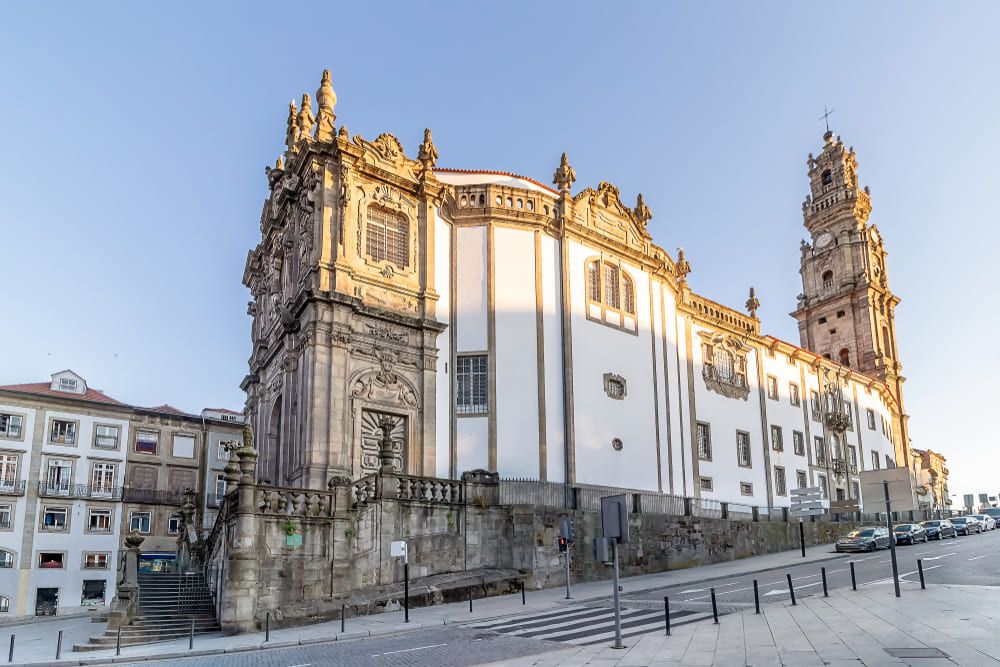
The Porto audio-guided tour presents you with the Torre dos Clérigos, a seventy-six-metre tower that is among the most emblematic symbols of the city.
Built in the eighteenth century at the same time as the Church of the Clergy to which it is attached, the Torre dos Clérigos is the work of the Italian architect Nicolau Nasoni. Separated from the building, as was common in Italy, it optimised the acoustics of the bells and created a spectacular visual landmark. Nasoni, who built many buildings in Porto, is buried in the church. Long the tallest tower in the country, it also played unusual roles: it served for a time as a lighthouse to guide sailors on the Douro, and received in the nineteenth century the optical telegraph, equipped with mobile arms transmitting signals at a distance.
The Torre dos Clérigos dominates Porto with its Baroque silhouette, and its climb rewards the brave with a 360-degree panorama over the city and the Douro. The Church of the Clergy, to which it is attached, also deserves a glance. It is an essential landmark, a witness of the genius of Nicolau Nasoni and of the history of the city.
The Torre dos Clérigos is in the centre of Porto, attached to the Church of the Clergy. The climb to the tower is made according to hours to be checked on site; access is generally subject to a charge and includes many steps.
Because its Italian architect, Nicolau Nasoni, followed the Italian custom of separating bell towers, to optimise the acoustics and the visual impact.
It served as a lighthouse for sailors on the Douro and received in the nineteenth century the optical telegraph.
Aucun avis pour le moment
